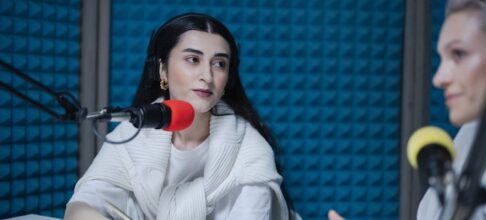
There’s a peculiar anxiety that bubbles up in Zagreb recording studios—one I’ve seen play out from the glass booth to the director’s chair. It isn’t about whether a line reads perfectly, or if the talent can roll their r’s just so. The real tension? Whether anyone outside Croatia will notice when something is off, and more importantly—whether they’ll care. This is the psychological (and business) fault line running through every Croatian voice over project that hopes to reach beyond local airwaves.
The Split Personality of Localization
Walk into any session at Studio 24 in Zagreb or Intonation Studios’ European division (with projects spanning Munich to Sofia), and you’ll find this double-identity at work: should the Croatian version of a game or series feel distinctly regional, full of idioms and cultural flavor? Or should it be flattened for pan-Balkan sensibilities—digestible for Bosnian ears, Serbian viewers, or even Slovenian gamers?
A common workflow here involves two rounds of script adaptation: first, literal translation by a linguist (often a freelancer juggling two other jobs), then a localization pass by someone who knows what “šalica” means in Split but also how it plays in Rijeka. The actual recording session may last half a day for a 20-minute animation episode, but pre-production eats up three times as long. That ratio hasn’t changed much since Croatian TV dubbing matured in the late 1990s—a period when state broadcaster HRT started pushing for full local language versions instead of simple subtitling.
Streaming Giants Set New Standards
The arrival of Netflix in Croatia circa 2016 did more than introduce binge-watching; it recalibrated expectations overnight. Suddenly, studios like Riječki Tonci had to match global synchronization standards—not just good enough for children’s cartoons on RTL Kockica, but seamless enough that international viewers wouldn’t notice lip-sync glitches or mismatched emotional beats.
Netflix’s internal metrics reportedly require less than 2% detectable sync errors across dubbed content—a standard few Balkan studios could meet until they began adopting tools like VoiceQ or NextDub by Zoo Digital around 2019. These cloud-based platforms let producers coordinate remotely with talent scattered across Eastern Europe—a necessity during pandemic lockdowns that became permanent practice afterward.
When Games Speak Croatian: A Case Study
Take Croteam—Zagreb’s pride in game development circles and creators of “Serious Sam.” Their leap into full Croatian voice support for select titles wasn’t just fan service; it was an experiment in community engagement. According to one project manager at Croteam (speaking off-record), uptake among domestic players rose by nearly 30% after adding localized dialogue options—a rare measurable bump attributed directly to hearing familiar dialects and references.
Yet there was friction: some fans found certain voice actors too stiff or “too Dalmatian” for roles set in generic sci-fi worlds. The compromise? For narrative-driven games targeting both regional and export markets, Croteam now tests voice samples with focus groups split between Zagreb locals and diaspora Croats living in Vienna or Toronto.
AI Voices Disrupt the Old Order—But Not Entirely Yet
If you ask anyone at TransPerfect’s Central European branch about workflow changes since early 2023, they’ll mention AI-powered voice generation almost before you finish your question. Their pilot projects used synthetic voices trained on native Croatian speakers for e-learning modules serving pharmaceutical clients based in Germany but recruiting staff from Osijek to Split.
The result? Production time dropped by up to 50%, especially for dry instructional content where emotional nuance was minimal. However, ad agencies working with major FMCG brands (think Podravka soups or Franck coffee) still insist on human reads—the subtle warmth needed for trust simply isn’t there yet with AI models like ElevenLabs’ Slavic language pack (at least as of late 2023).
Dubbing vs Narration: Choosing Sides Based on Medium—and Budget
There’s an unwritten rule among mid-sized production houses like AKT Media near Rijeka: If it moves (cartoon lips flapping), dub it fully; if not (documentary B-roll), go with narration overlay. This isn’t just tradition—it’s economics.
For example, localizing a short animated film can cost twice as much per finished minute as documentary narration due to casting multiple characters and meticulous lip-sync alignment. In recent years, budget-conscious clients have started requesting hybrid approaches—main character lines dubbed fully while background chatter is left unlocalized or merely summarized.
This patchwork solution has its critics (“It sounds cheap!” grumble old-school directors) but allows indie filmmakers and NGOs working on EU-funded educational shorts to afford professional sound without breaking their modest grants—typically under €10k per project according to sources at Zagreb Audiovisual Centre (HAVC).
The Hidden Role of Diaspora Talent Pools
A little-known secret: some top-tier Croatian voice over artists aren’t based anywhere near Croatia itself. Take Lana Jurčević—not the pop star but her London-based namesake who voices audiobooks distributed via Audible UK and German-language podcasts translated into Balkan languages. Her recordings are done from an acoustically treated spare room in Battersea using Source Connect to link with sound engineers back home.
Studios estimate that upwards of 15% of professional-grade Croatian voice work now comes from diaspora pros spread across Western Europe and North America—a pattern mirrored among Serbian and Polish peers chasing international contracts post-Brexit.
Advertising: Fast Turnarounds Meet Relentless Revision Loops
In real campaigns observed at Bruketa&Žinić&Grey (a leading regional agency), turnaround expectations have shrunk dramatically since mid-2020—the Covid remote-work era turbocharged client demand for same-day scratch tracks and next-morning revisions. A typical radio spot cycle involves:
Fast—but rarely final; up to five revision rounds are now routine according to one senior producer interviewed last year.
Legalese Gets Localized Too—But At What Cost?
Most people don’t think about legal disclaimers when considering Croatian voice overs—but financial services companies do. Austria-based Erste Bank rolls out dozens of video explainers each quarter tailored for its branches from Dubrovnik to Vukovar.
In these cases, scripts go through compliance checks both locally and at headquarters before being handed off to veteran narrators with legal translation experience—a niche skillset commanding premium rates compared to entertainment work.
Completion times average seven business days per video—even longer if cross-border approvals stall due diligence reviews on sensitive terminology (“jamstvo” versus “garancija”).
Future-Proofing—or Just Keeping Up?
Everyone talks about neural TTS models making traditional studio sessions obsolete—but even tech-forward shops like Adria Audio Productions admit most clients still want human oversight at every step beyond raw data ingestion. As one lead engineer put it last December: “We use AI mostly as an audition filter—it narrows down hundreds of submissions so we only pay attention to ten.”
What happens when ElevenLabs releases its next-gen Slavic model later this year? No one expects instant replacement; more likely is gradual integration into workflows already stretched between human artistry and algorithmic efficiency.
For now—the heart-stopping moment when an actor delivers a perfect line remains irreplaceable…even if no one outside Croatia notices just how hard won that perfection really is.