A few years ago, I spent a late afternoon in Helsinki with one of Yle’s veteran sound engineers, Jukka Niemi, poring over boxes of cassettes from the 1980s. You could hear everything in those tapes—the warble of analog, cigarette breaks left on tape. This is where the story of Finnish voice over begins for many industry insiders: state broadcasters, radio drama, and a peculiar hybrid tradition somewhere between dubbing and live commentary.
Back then—say, to —most foreign TV content was subtitled in Finland. Dubbing was reserved mostly for children’s programming; Disney’s "The Lion King" () marked a watershed moment when Hollywood realized that properly localized voice acting could drive box office numbers even in smaller European markets. The early Finnish dubs were recorded at studios like Filmiteollisuuden Studio in Pasila. Workflows were linear and laborious: script in hand, actors reading as reels spun, directors pausing between lines.
But if you fast-forward to today—or better yet, to last year’s game localization cycle at Remedy Entertainment—you’ll find a very different landscape. A typical AAA video game release now involves casting dozens of Finnish voice talents across multiple studios (often Pasilan Äänistudio or Helsinki-based SILK Sound), digital scripts with cloud-based collaboration tools like VoiceQ or Audiomovers, and real-time feedback loops between local directors and US or Japanese creative leads.
Evolving Workflows Inside Nordic Studios
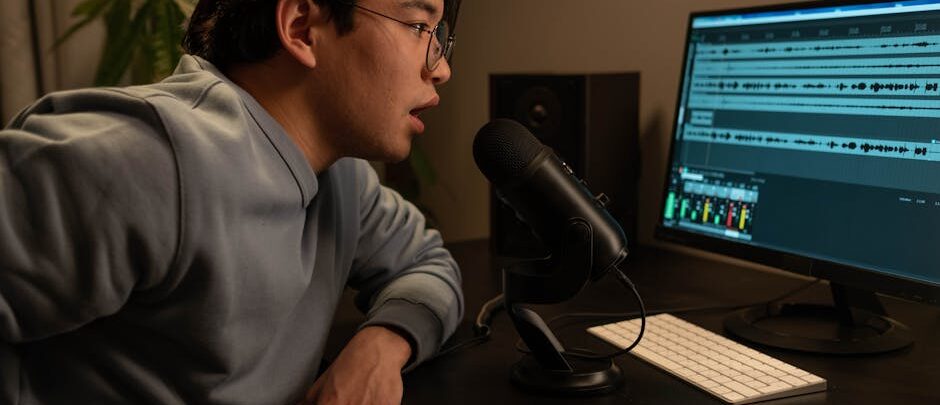
At Oulu Media Lab—a boutique studio handling both commercial VO and indie games—the workflow these days starts with AI-assisted transcription and pre-matching using Respeecher or similar neural net platforms. Actual actors are still brought into professional booths (the union rates demand it), but the prep work has become almost entirely digital. One engineer there told me that for a typical -minute eLearning module, the manual cutting stage dropped by about % since switching to AI-powered waveform matching in .
Not every studio has jumped aboard this train with equal enthusiasm. In Tampere, old-guard outfits like Studio55 stick to their tried-and-tested Pro Tools setups; they rely more on seasoned editors than algorithms. There’s an ongoing tension here—a generational split between human nuance and machine efficiency.
Netflix Arrives: New Demands on Old Voices
The arrival of global streamers changed everything yet again. Take Netflix Finland: by , their local content pipeline required not only high-volume dubbing but also new standards for performance direction and lip-sync accuracy. Gone were the days when quirky regionalisms slipped through unnoticed; today’s productions are checked against multilingual style guides shared via cloud platforms like ZOO Digital.
In one case observed in early —a Scandinavian noir series dubbed for Netflix—the post-production team used AI-flagged retake recommendations before sending files back to Los Angeles for final review. The director confessed that while these tools speed up delivery by roughly %, “they miss things only Finns would catch,” such as subtle shifts between formal and informal address—a cultural landmine easily missed by non-native supervisors.
From Radio Play to Game Dialogue: The Growing Breadth of Application
Game studios have become unexpected trailblazers for Finnish voice over innovation. Supercell’s Brawl Stars localization effort reportedly cycles through three rounds of remote casting per character—with each round using sample dialogue sourced from Twitch streams or social videos popular among young Finns. It’s not just about translation anymore; it’s about finding voices that resonate with meme-savvy players who’ll spot an outsider instantly.
Meanwhile, advertising agencies like Hasan & Partners have embraced rapid-turnaround workflows enabled by text-to-speech prototypes—in some cases producing entire radio campaigns within two days using synthetic voices as placeholders before final actor sessions.
A Historical Pivot Point—and What Might Come Next
There was a time—not so long ago—that most Finns associated professional voice over with Saturday morning cartoons on MTV3 or scratchy educational tapes distributed by Otava Publishing House circa . Today? The spectrum ranges from deepfake-powered corporate explainers to fully immersive VR training modules commissioned out of Espoo tech labs.
Industry insiders estimate that around % of all new commercial audio content produced in Finland now passes through some form of automated workflow—be it initial AI draft voices or post-processing clean-up—before reaching human ears for final sign-off.
No one expects full automation soon; union rules remain strict (and for good reason). Still, every major player—from Rovio Entertainment to smaller shops servicing pan-Nordic ad buys—has retooled their pipelines at least once since just to keep pace with streaming-era demands.