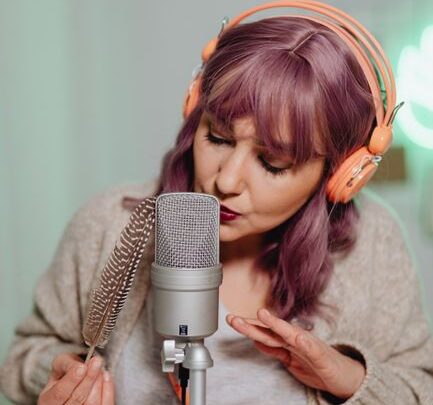
The subtitle could read: “Everybody’s dubbing in English, but who’s actually listening?”
Let’s begin with the contradiction at the heart of English voice over. For years, global studios and platforms have funneled huge budgets into localizing content for Anglo audiences—think blockbuster Netflix originals dubbed for US, UK, and Australian release. But speak to an engineer at a mid-tier London post house, and you’ll hear: most native English viewers still prefer subtitles or even muted background audio. There’s a friction between investment and actual cultural adoption.
The Case of Poland’s Gaming Scene
Rewind to : CD Projekt Red, the Polish gaming powerhouse behind Cyberpunk , invested heavily in premium-level English voice casting—A-list actors flown into Warsaw studios, multi-day ADR sessions with directors from LA dialing in on Zoom. Yet internal reports revealed that over % of their Western European players switched back to original-language audio within hours. “Gamers say they want ‘full immersion’,” says Tomasz Zielinski, an audio lead at a Kraków-based localization vendor who has handled AAA titles for both CDPR and Ubisoft. “But given the option, they usually toggle off voices that feel too ‘neutral’ or generic.”
A Psychological Tug-of-War
The mainstream logic goes like this: global equals English; therefore, if you want your production to travel—especially on streaming—English voice-over is non-negotiable.
But here’s what happens on the ground: In German markets, Amazon Prime Video deploys both localized German dubs and international English tracks for nearly all Originals released since . According to data shared by Munich-based Studio Funk (who handle major VO projects for streaming giants), less than % of German subscribers ever click on the English dub track after sampling it once.
What does this signal? That language comfort isn’t so easily overwritten by globalization—and that "prestige" English voice acting doesn’t guarantee resonance.
Workflow Realities Inside Sydney Agencies
Move south. Sydney creative agencies working with Asia-Pacific campaigns increasingly rely on hybrid workflows: scripts written in Mandarin or Korean are first translated to colloquial Aussie-English before being sent for VO recording. According to one project manager at Heckler Sound (whose recent client list includes Samsung APAC), about half these campaigns revert to subtitling during final delivery review.
“Clients say they want an ‘international tone’, but then worry about losing humor or nuance,” notes Sarah Chen, Senior Producer at Heckler Sound. Projects often see up to % budget wasted on unused English VO tracks as brand teams pull back toward subtitles or native language re-dubbing after test screenings.
The AI Wildcard: Promise vs Reality
Enter AI-powered tools like ElevenLabs and Respeecher—offering near-instant synthetic dubbing into neutral North American accents. On paper, this should be a revolution for indie creators or low-budget agencies in Berlin or Tallinn; suddenly there’s no need to fly talent across continents.
Yet when Estonian e-learning startup Lingvist piloted AI-generated English voice-overs last year for their B2B product demos, user engagement dropped slightly compared to videos featuring real human narration—even though cost per minute was slashed by almost %. As their CTO quipped after reviewing feedback surveys: "Flawless pronunciation isn’t enough—it needs soul."
Historical Pivot Points – From Disney Days To Streamer Surge
If you trace back far enough—to early Disney animation imported into Europe in the 1960s—the template seemed simple: record new voices for big markets (French, Italian) but always keep an eye on how much is lost in cultural translation. Fast-forward six decades; now Netflix alone invests more annually in international dubbing than Hollywood did throughout all of the '90s (industry estimates place streamer localization budgets above $ million per year).
And yet… survey data from London-based IYUNO Media Group suggests audiences outside North America still gravitate toward high-quality subtitling instead of defaulting exclusively to dubbed tracks—even when options abound.
When Does It Work?
A Contrarian Example From Dubai Animation Studios
Consider Barajoun Entertainment in Dubai: With animated features targeting cross-border MENA markets plus Western festival circuits, their workflow includes parallel recording sessions—in Arabic dialects as well as distinctly British-accented English voice overs (sometimes with talent sourced from small theater groups in Manchester). Here’s where things get interesting:
After testing trailers at local cinema chains across UAE cities last autumn, viewership retention rates were highest among youth audiences only when both language versions played back-to-back during marketing previews—a hybrid exposure that sparked lively debate about which format felt more “authentic.”
This scenario underscores a truth few streaming execs articulate aloud: sometimes dual-language presentation doesn’t dilute impact; it creates new audience rituals altogether.
So Is This The Future?
The drive towards ubiquitous English voice over is not stopping—the pipeline from script-to-screen grows more automated every quarter; pricing pressure means even boutique Paris studios report clients asking about AI-enhanced workflows as of late . But beneath the surface runs resistance from local audiences who crave familiar rhythm and accent—or simply prefer captions over transplants.
In practical terms? Expect the next wave of successful media products not just to check off "English VO complete" as a distribution box—but rather build flexibility into releases: letting viewers switch seamlessly between native audio, dubbed options (including region-specific varieties), and crisp subtitles tailored for each market segment.
As one industry producer summed up during a recent panel at Berlinale: “The future isn’t only about translating voices—it’s about giving every audience agency over how stories sound.”