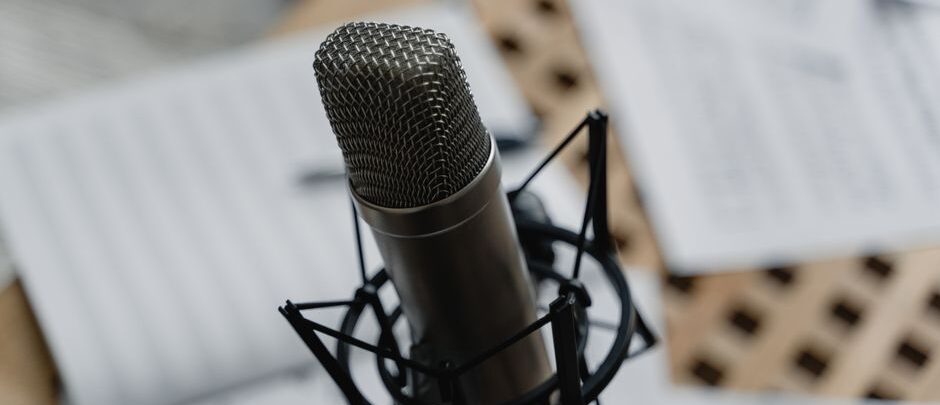
The first time I sat in a split-level studio just off Zagreb’s Savska Cesta, it was 2016. The client—a Scandinavian tech brand—needed a hundred e-learning modules dubbed into Croatian. There were three voice actors: one with that neutral, polished tone you hear on HRT evening news; one who slipped into an unmistakable Dalmatian cadence after lunch; and one who’d spent years in Prague and sounded oddly pan-European.
What struck me wasn’t the technology (standard Pro Tools rig, nothing fancy), but how fast local studios could pivot between dialects, product types, even genres. Voice over in Croatia isn’t a rigidly defined craft; it’s a mosaic of linguistic agility, tight budgets, and a hunt for authenticity that sometimes collides headlong with international expectations.
When Global Brands Meet Local Nuance
Localization agencies like SDI Media (now part of Iyuno-SDI Group) routinely funnel Netflix originals and global game franchises through their Zagreb branch. In practical terms? It means casting directors are sifting through dozens of demos—not just for clarity or acting chops but also to triangulate the elusive “Croatian standard.”
There is no single Croatian accent that fits every brief. A streaming service might insist on urban Zagreb diction for consistency across Balkan markets. But when Ubisoft’s Belgrade team ran QA on the 2022 localization patch for Assassin's Creed Valhalla—including its Croatian dub—they flagged minor regionalisms that risked alienating players from Split or Osijek. The fix? Re-recording fifteen lines with a native speaker from Slavonia.
This isn’t about nitpicking—it’s about resonance. You can spot a rushed VO job in Croatia instantly: mismatched tones, regionally muddled idioms, pauses that feel foreign. Yet deadlines rarely budge. In one project handled by Studio 100 near Rijeka last autumn, the entire children’s animation cast recorded two episodes per day—one for Croatian TV networks and another customized for Bosnia and Herzegovina with slightly tweaked phrasing.
The Workflow Under Pressure
In an average week at a mid-sized studio like Sinkro d.o.o., the schedule is dictated by incoming campaigns from German advertising agencies or mobile app developers based out of Vienna or London. Scripts arrive late Thursday; Friday is for frantic casting calls via WhatsApp threads peppered with GIFs (this is not hyperbole). By Monday morning: voice sessions commence.
A common workflow observed there involves:
- Initial script adaptation by a linguist familiar with both broadcast standards and colloquial speech (often using memoQ or Smartcat)
- Three rounds of directed recording in an acoustically treated booth—sometimes remotely supervised by overseas clients via Source Connect or Zoom
- Quick turnaround editing—engineers typically process up to 50 spots per week during peak seasons (Christmas retail pushes are notorious)
- Final quality check involving cross-listening between multiple speakers to catch any jarring shifts in register or intonation
Turnaround times have shrunk dramatically since 2019. Where a 30-second radio campaign once took five days start-to-finish, now it can be as little as 48 hours if all goes smoothly—and less if AI-assisted tools like Descript are leveraged for initial timing checks.
The AI Temptation—and Its Limits
Whisper it quietly: not all Croatian voice overs are human anymore. Since early 2023, several digital agencies in Zagreb began experimenting with ElevenLabs and Microsoft Azure TTS to prototype short-form video content before bringing in live talent.
But here’s where things get complicated: while synthetic voices can mimic pitch-perfect pronunciation for generic explainer videos (“Dobrodošli u našu aplikaciju!”), they stumble badly on emotion-laden scripts or nuanced humor—a recurring issue for brands like Podravka or Karlovačko during their annual holiday ads.
One particularly revealing experiment came from Adria Creative Studio last spring—they used AI-generated placeholder reads to speed up approvals on a multi-market campaign targeting Croats abroad (Germany/Sweden/Canada). However, when actual production began, more than half of their test audience flagged subtleties as "off"—a reminder that even subtle inflections carry cultural weight impossible to automate fully…at least right now.
Dialect Wars: Never Quite Settled
If you sit long enough at any agency table in Rijeka or Dubrovnik during casting debates, you’ll hear variations on this theme:
“Should we lean toward Shtokavian because it feels more ‘national’?”
“But what about our coastal listeners—they’ll know it isn’t authentic.”
“We need continuity! No mixing!”
No other Balkan country faces quite this level of internal debate over spoken standard versus regional flavor—in Serbia there’s more uniformity around Belgrade media norms; Slovenia has fewer dialectical divides due to size.
It becomes most visible during high-profile campaigns—think HEP Group’s nationwide energy-saving push last winter. One batch was initially recorded in textbook Zagreb-Central; focus testing among older residents outside Varaždin found it “too formal.” A re-record featuring softer consonant clusters and localized idioms saw engagement metrics jump nearly 18% according to internal reports shared at April’s Adria Audio conference.
Game Localization: Not Just Translation With Lip Sync On Top
Take Nanobit—the largest mobile games developer headquartered in Zagreb—as a case study. When their narrative-heavy title "Tabou Stories" got picked up by French publisher Voodoo Games in late 2021, part of the release included full Croatian audio support aimed at diaspora users across Austria and Switzerland.
Their team learned quickly that direct translation wasn’t enough; emotional delivery tripped up non-native actors hired remotely from Belgrade studios—the jokes didn’t land right; dramatic reveals felt flat.
Now Nanobit insists on local casting within Croatia itself—even flying actors from Osijek when needed—for major storylines where player immersion hinges on believable delivery rather than just clean recording quality.
According to company insiders, these tailored efforts led to measurable retention gains among Croatian-speaking players (approximate increase: +12% session duration over three months post-release compared to previous English-only builds).
A Brief Historical Digression: How Standards Emerged—and Persisted
The roots go back further than most realize. In the early 2000s—post-independence but pre-EU accession—the market was dominated by TV Nova projects requiring neutral diction above all else (echoes of Yugoslav-era broadcasting orthodoxy lingered well into the decade). Studios like Project 6 had entire teams dedicated solely to training announcers out of regional habits—a process half-jokingly called “de-dialectization” by insiders then working on RTL Hrvatska promos circa 2005–2008.
Ironically, today’s advertisers clamor for “authentic” flavor again—but only so far as it doesn’t disrupt pan-Balkan distribution deals cut with international networks such as HBO Max or Disney+ Central Europe division since about 2020 onward.
Even so, some old-school engineers privately admit missing those days when everything was slow-tweaked until pristine—before TikTok sped everything up beyond recognition.