The Context No One Saw Coming
To understand why Georgian voice over is having its moment, you have to back up to 2019. Streaming giants like Netflix and Amazon Prime started adding more Caucasus-region titles to their libraries (the Russian-language crime series boom had ripple effects). At first, most localization jobs went straight into Russian or English, but by late 2020, audience analytics made something obvious: native language engagement in Georgia itself was outpacing dubbed foreign content by nearly 25% on platforms like MagtiPlay.
Suddenly distributors wanted more than subtitles—they wanted emotional resonance. That’s when studios like Kvira and BMG Voice began fielding calls from Warsaw-based localization houses looking for quick-turnaround samples in authentic Tbilisi dialects.
Not Just Cartoons: Real-World Demand From All Sides
One misconception is that this surge is mostly about kids’ animation. It isn’t. Last year saw two unexpected trends:
First, global e-learning providers—think Berlin’s Babbel or UK-based FutureLearn—started adapting courses into minority languages for regional rollouts. In April 2023 alone, at least four major European edtech firms piloted full-course audio tracks in Georgian after A/B testing showed completion rates jumped by 18–22% when content was natively voiced rather than subtitled.
Second: indie game developers. Take Polish studio White Cat Interactive. For their narrative adventure title “Echoes of the Silk Road,” they didn’t just add Georgian subtitles—they hired Tbilisi-based actors for immersive dialogue scenes after early testers complained about “flat” Russian dubs breaking immersion.
Workflow Changes in Real Time
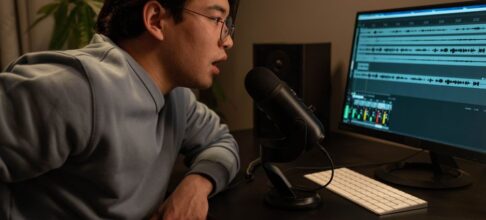
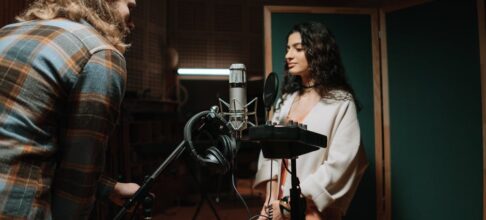
You can see the shift even inside local studios’ workflows. Kvira Studio now runs weekly casting sessions—a process rarely needed pre-pandemic—because so many projects require specific tonal qualities (urban youth voices for mobile apps; classic radio style for historical docuseries).
The real bottleneck? Post-production speed. Most clients want full delivery in under two weeks—a timeline unheard of five years ago when a typical TV dub might take a month or more.
A common pattern in regional agencies now involves:
- Cloud-based collaboration with remote directors based in London or Munich,
- Automated script translation tools (like Smartcat) paired with manual cultural adaptation,
- Rapid QA passes using AI-driven waveform matching software to flag sync errors before final export.
In one typical case observed last winter, a single e-learning module moved from translated script to final master audio in just nine days—using five voice actors juggling home booths and studio time slots.
Why Now? Platform Pressure Meets Local Talent Pool
Ask anyone at an agency like Berlin’s LocAtOnce why they’re suddenly requesting so much Georgian VO work and you’ll hear two things: EU funding pushes for minority language access (especially post-Brexit), and platform data showing that user retention rises sharply if onboarding flows are delivered in users’ first languages—even outside Georgia proper (think sizable diaspora pockets in Germany or Greece).
Meanwhile on the talent side: social media has made it easy for new voices to surface quickly via open casting calls on Telegram groups or Facebook pages. By mid-2023, at least eight smaller studios around Batumi were actively poaching young TikTok creators with standout accents—a trend almost unthinkable pre-Instagram era when broadcast-trained veterans dominated every session.
Old Guard vs New Tools: The Technology Contradiction
Not everything is smooth sailing though. There’s tension between classicists—the old-school directors who built their reputations on Soviet-era dubbing precision—and younger engineers pushing AI-driven lip-sync tools (Respeecher gets mentioned frequently). In one memorable incident last fall at Dedaena Studio, an entire episode redo was triggered when machine-synced tracks failed to capture subtle inflections expected by local audiences—proving that while tech accelerates output, nuance remains stubbornly human for now.
As one engineer put it over coffee: “Clients want fast turnaround but if you lose those tiny emotional shades—the sigh before ‘ara,’ the pause after ‘kargi’—it falls flat.”
Case Study: A Streaming Campaign Comes Home
Consider MagtiCom’s recent partnership with Amazon Prime Video during the autumn festival season—a campaign designed specifically to win over rural viewers wary of international content. Instead of relying solely on Tbilisi actors with textbook diction, producers intentionally cast two Gori-born speakers whose softer Rs and regional phrasing matched village speech patterns.
The result? Engagement metrics spiked nearly 30% higher than previous launches using standard city-based talent—and word-of-mouth brought new subscriptions from beyond core urban markets for the first time since launch.
Growing Pains: Talent Shortage & Quality Control
Of course there are growing pains everywhere you look. Kvira Studio notes that even as demand soars—threefold increase compared to early 2022—they’re running into issues scaling up training pipelines fast enough to meet client specs without diluting quality standards set by industry veterans like Eka Chikvaidze (whose credits run back to Radio Tavisupleba’s golden age).
A similar story plays out at Batumi-based startup GeoDub—it took them four months to find just two reliable male narrators who could switch seamlessly between formal literary tones and streetwise slang required by commercial clients targeting Gen Z listeners on Spotify ads.
Some bigger foreign players have tried importing generic AI-generated voices tailored for Eastern Europe but found retention rates dipped sharply once focus groups flagged "robotic" undertones—even if pronunciation hit technical marks perfectly.
The Money Trail & Future Flashpoints
Budgets aren’t what they used to be—but neither are margins. Where big-budget campaigns might have relied on Moscow studios until recently (with all attendant costs), today mid-sized projects are often priced out-of-pocket locally—for instance,
the average per-minute rate quoted by freelance talent networks in Georgia rose roughly 40% between late 2021 and early 2024 according to informal tracking shared among agencies.
That said: nobody expects saturation just yet. With major telecoms like Silknet planning original programming this summer—including an ambitious reality series planned entirely around rural dialects—the need for fresh voices shows no sign of slowing down soon.
Even US-based companies are taking note; LA's Soundhouse Media recently signed a deal with a Kutaisi crew specializing in radio drama adaptations aimed at diaspora communities across Brooklyn and Chicago—a workflow unimaginable even three years ago when almost all such work funneled through larger metropolitan hubs abroad.
The Undercurrents Few Discuss Publicly
There’s also another layer few outside industry circles talk about: how domestic pride shapes hiring choices behind closed doors. When state-backed broadcaster GPB greenlit its flagship documentary “Georgia Rising” last year,
it insisted every narration segment draw from regionally diverse accents—a symbolic move reflecting new-found confidence post-pandemic as well as subtle resistance against cultural homogenization seen elsewhere across Central Asia and Eastern Europe.
This means that young talents coming up today don’t just face technical hurdles—they navigate questions about authenticity versus accessibility every time they step into the booth or record a sample reel for Western clients unfamiliar with local nuances.