You can’t talk about Armenian voice over without first talking about silence. For years, Armenia’s audiovisual landscape ran on subbed and dubbed Russian content, a hangover from Soviet times that left little room for local voices. Even as late as 2005, most children in Yerevan watched foreign cartoons in Russian or—at best—a clunky off-screen narration. That was the backdrop against which modern Armenian voice over found its footing.
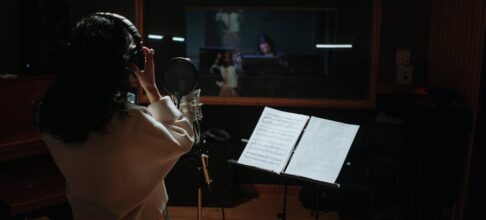
Let me walk you through a day at Arpi Studio, one of Yerevan’s longest-running audio production houses. On a Wednesday last spring, their small team wrestled with adapting a French animated series for the Armenian Public Television’s children’s programming block. The show had already been dubbed into eight languages; this was its ninth version. But unlike German or Spanish dubs—where budgets accommodate dozens of actors and hours of retakes—Arpi’s project manager Ruzanna explained that they’d be lucky to hire more than five voice talents for all twenty-four speaking parts. “We need to sound like ten people with just three,” she laughed, prepping her two regulars and a newcomer who’d never voiced an old lady before.
This isn’t uncommon in smaller markets. In fact, studios across Central and Eastern Europe operate under similar constraints: tight budgets, limited casting pools, quick turnarounds demanded by broadcasters eager to keep pace with Netflix and Disney+. But Armenia adds another wrinkle—the language itself is less standardized in performance than French or Polish; there are dialectical quirks and historical baggage tied to every accent choice.
In practice, what this means is that every Armenian voice over session becomes part translation workshop, part improvisational theater. Actors stop takes halfway because a line sounds “too literary” or not colloquial enough for kids who mostly speak Russian at home. Directors debate whether to use Western or Eastern pronunciation—a surprisingly political decision when your audience includes diaspora communities from Los Angeles to Paris.
The Technology That Changed Everything (Almost)
If you look back to the late 2010s, tools like Pro Tools and Nuendo began making real inroads into even modest Yerevan studios. Suddenly engineers could run multi-track sessions on laptops rather than ancient PCs patched together with spare cables. This democratized post-production workflows but also changed what clients expected.
By 2022, streaming platforms like Hayu TV and local variant Kinodaran started requiring faster delivery cycles for dubbed content—sometimes slashing timelines from weeks down to four days per episode. A producer I met at DigiCode Media described how they leaned heavily on Izotope RX cleanup tools to mask acoustic imperfections in hastily recorded ADR sessions (the infamous “echoes of basement booths,” as he put it).
But technology didn’t solve everything: talent management remained messy. While European dubbing agencies—think VSI Group in Berlin or BTI Studios out of Warsaw—have extensive rosters and digital casting databases, most Armenian shops still rely on personal networks and WhatsApp groups. It’s not unusual for the same voice artist to record three different shows in one afternoon across multiple studios scattered from Kentron district up towards Ajapnyak.
Diaspora Demands: A Different Kind of Localization
One thing international brands quickly learn is that "Armenian" isn’t monolithic—and that matters deeply for voice over projects aimed at global audiences.
Back in 2019, an American mobile game publisher contracted SoftConstruct—a well-known tech firm headquartered between Yerevan and London—to localize their popular puzzle app into Armenian for both App Store regions (US/Global Armenian vs RA/Armenia). The catch? Diaspora users wanted Western Armenian while locals needed Eastern dialects. That meant recording two separate VO tracks per character.
The workflow got complicated fast: scripts bounced between translators based in Glendale, CA and editorial teams inside Yerevan's Tumo Center for Creative Technologies (yes—the same Tumo known internationally for its animation labs). QA checks flagged jokes that didn’t land cross-culturally; one line about "khash mornings" mystified LA teens who'd never set foot outside California.
In the end, SoftConstruct delivered dual-dialect support—a rare feat mirrored only by select productions targeting Catalan/Spanish or Serbian/Croatian splits elsewhere in Europe. According to their lead PM Marina Sarkisyan, it added roughly 20% time overhead compared to single-language pipelines—but boosted user engagement among diaspora players by nearly 30%. That kind of result has inspired other media firms (including several documentary producers working with France Télévisions) to experiment with split-dialect approaches when subtitling or voicing major releases.
From Audiobooks To AI Dubbing: Shifting Sands Since COVID-19
No discussion would be complete without mentioning how COVID-19 forced rapid adaptation everywhere—including Armenia’s still-nascent audiobook market. During lockdowns in 2020–21, publishers like Antares Media saw requests triple as teachers sought native-language storybooks for distance learning modules distributed via Telegram channels nationwide.
Their solution? Home-studio kits shipped directly to narrators stuck outside Yerevan—complete with portable mics and step-by-step guides written by Antares’ chief engineer Artur Stepanyan (himself once famous as the “voice” behind late-90s TV ads). Recordings returned over patchy rural WiFi connections were cleaned up using cloud-based Descript software before final mastering at HQ.
Globally active AI dubbing tools like Papercup have yet to make deep incursions into niche languages such as Armenian—but things are shifting fast here too: As recently as early 2024, DigiCode Media began trialing custom neural voices trained on samples provided by veteran actor Hrachya Margaryan himself (a household name thanks to his film work since the early 2000s). Early feedback from focus groups has been mixed; while synthetic speech passes basic comprehension tests among younger viewers streaming short-form web videos, older audiences still overwhelmingly prefer "real" human narration—with all its regional inflections intact.
Contradictions Everywhere: Quality Versus Scale Versus Identity
That tension—between efficiency-driven mass localization and fiercely held cultural authenticity—is everywhere you look inside Armenia’s VO industry circles today.
A case-in-point surfaced last year when Germany-based distributor Beta Film licensed several high-profile European miniseries to Armenia TV channel Shant Premium. Instead of outsourcing full dub tracks abroad (as is common practice for Hungarian or Czech releases), Shant insisted on hiring local stars—even when it meant delaying premieres by weeks due to scheduling conflicts during Yerevan's busy theater season.
The logic? As program director Narek Manukyan told me bluntly: “Audiences here spot fakes instantly.” He recounted viewer complaints after one imported Turkish drama aired briefly with generic pan-Balkan voice actors—the backlash online was immediate and fierce enough that Shant reverted to subtitled versions until new sessions could be arranged locally.
What Comes Next?
The truth is no neat future awaits Armenian voice over—not yet anyway. Studios continue racing against deadlines imposed by global streamers while fighting off cost-cutting pressures from advertisers who see voice work as just another line item on shrinking budgets (in 2023 alone, some estimates suggest average per-minute rates dropped nearly 15% compared even with pre-pandemic numbers).
Yet demand keeps rising—from e-learning providers seeking inclusive courseware across provincial schools to indie game developers angling for Apple Arcade featureships contingent on quality native-language assets.
If there’s any lesson here worth carrying forward from those cramped basement booths—or slicker digital suites now humming above Northern Avenue—it’s this: every Armenian voice over session carries more than just words across airwaves; it transmits histories still being written scene by scene.