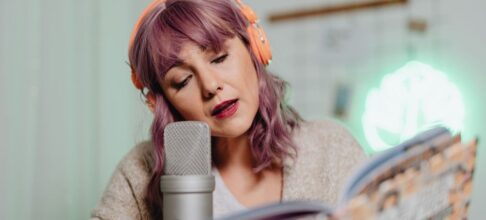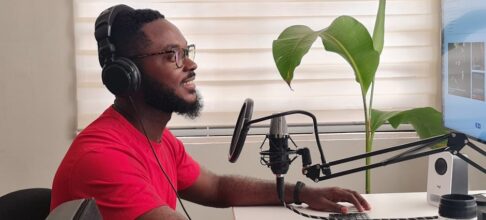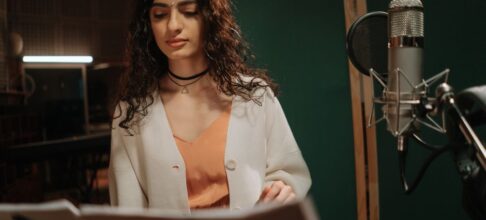
Three years ago, a group of voice actors in Los Angeles huddled around a laptop, not in a studio but at a kitchen table, auditioning for roles on an indie game being produced out of Montreal. They used Source-Connect and Zoom, improvising as the session director dialed in from Europe. Nothing about this setup would have made sense in . But by it was almost unremarkable.
Yet something else is starting to feel strange: who’s actually doing the talking? In real campaigns for animation series at LA-based SDI Media (now part of Iyuno-SDI Group), producers are quietly slipping AI-generated voices into crowd scenes or background chatter. Not just as placeholders—sometimes these synthetic voices go live to air if deadlines or budgets demand it.
The Shifting Soundscape
American Voice Over once meant crisp, neutral accents piped from glass-walled booths in Burbank or Manhattan. The classic workflow: casting through agencies like CESD or Atlas Talent, union contracts, ISDN patch lines for remote clients. Then came YouTube localization at scale (think early 2010s), then Netflix’s global dubbing push after —each wave broadening what “American” sounded like.
But now? Major platforms such as TikTok and Audible want hundreds of localized assets per week—often with turnaround windows under hours. A mid-sized Seattle game studio recently told me their last RPG project needed over unique voice files in three dialects delivered inside two weeks—a job that would have been impossible using standard agency rosters ten years ago.
AI Voices Are Here, But Not How You Expect
There’s a lot of noise about synthetic narration replacing actors outright. The reality is messier and more hybridized.
Take Respeecher—a Ukraine-born tool that lets studios create convincing voice doubles with legal clearance from talent. In practice, US-based ad agencies are using tools like this to generate scratch tracks or revise lines without needing multiple pick-up sessions. Sometimes they blend snippets of human read and AI augmentation to hit tight campaign schedules; in a recent example observed at a New York post house working on streaming docuseries, one actor’s voice was digitally extended for two extra scenes due to illness—seamlessly enough that even production staff missed the swap until flagged during QC.
These experiments don’t signal imminent extinction for American voice talent but do force new questions about contracts (who owns your digital likeness?), rates (is an AI pass worth half a session fee?), and creative credit.
Voice Diversity Is No Longer Optional
A decade ago, "neutral American" ruled e-learning modules and corporate explainers from Sydney to Stuttgart. Now the pattern is splintering fast. Meta's internal video teams recently started requesting regionally specific American dialects—the difference between Midwestern warmth and Southern grit—for social platform content aimed at targeted US demographics.
One Chicago-based localization firm described how casting requests for African-American Vernacular English or authentic Appalachian voices have doubled since , driven partly by both audience demand and algorithmic targeting needs on platforms like Spotify Ads Studio.
In typical European workflows—say, Parisian studios localizing US content for French TV—the trend is mirrored but inverted: now there's appetite to keep traces of US regional color rather than flattening everything into textbook General American.
Workflow Disruption—and Opportunity—for Small Studios
The old guard might grumble about quality loss or race-to-the-bottom budgets—but small players are adapting fast. Case in point: a boutique audio house in Austin recently overhauled its roster management entirely around cloud-collaborative dashboards linked to freelance pools across Latin America and Eastern Europe. They can assemble voice casts overnight based on time zone advantage alone—a feat unimaginable when every session meant booking union booths weeks ahead.
This speed arms smaller studios against giants like Deluxe Media or Iyuno-SDI Group when pitching episodic animation work for global streamers. It also means more obscure voices get heard; an Austin producer told me their most-requested accent last quarter was Utah Mormon English—a micro-niche request powered by algorithmic demographic analysis from brand clients running national podcast ads.
Data Points Hidden Behind the Curtain
Nobody likes sharing hard numbers here—NDAs rule—but several insiders estimate that up to % of background dialogue (walla) on big-budget streaming shows released since late has been synthesized rather than recorded live, especially among LA post houses balancing cost and speed pressures from platforms like Apple TV+ and Disney+.
Likewise, according to informal surveys among New York audiobook producers using Findaway Voices (acquired by Spotify), roughly one in four longform narration projects now includes some degree of automated dialogue replacement—usually minor touch-ups for pacing or pronunciation consistency across chapters recorded months apart by different narrators.
The Human Factor Persists…For Now?
Despite all this automation churn, there’s little evidence genuine star performances are going away soon. A-list animated features still lock down premium LA talent with six-figure deals; AAA video games funnel millions into cinematic VO capture rigs every year—see CD Projekt Red’s work on "Cyberpunk ," which involved dozens of native-English actors flown into Warsaw pre-pandemic because Polish teams wanted authentic regional flavor alongside technical polish only Americans could provide at scale.
But mid-market campaigns? Explainer videos? Social platform dubs? That landscape is already shifting beneath our feet—and the next five years will likely see another doubling down on hybrid workflows blending human creativity with algorithmic efficiency.