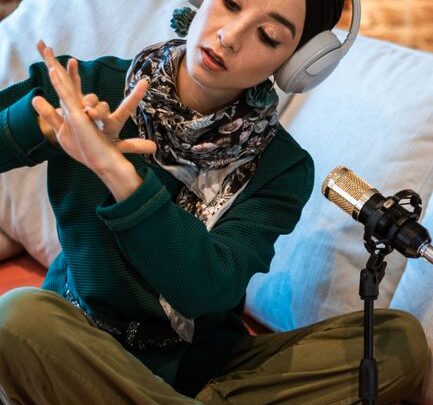
The elevator pitch for most voice over projects goes something like this: “Make it local. Make it human.” Yet, the way Arabic voice over seeps into daily life from Casablanca to Riyadh is neither neat nor predictable. If you’ve ever watched a dubbed episode of “Money Heist” on Shahid or heard a navigation app instruct you through Cairo traffic, you’ve experienced just how deeply these voices—often anonymous—shape not only comprehension but behavior and even cultural perception.
A Fragmented Soundscape: More than One Arabic
It’s not as simple as turning English into “Arabic.” Studios and streaming platforms long ago discovered that Moroccan audiences may balk at Levantine dialects, and Gulf viewers tune out at the whiff of Egyptian street slang. In 2018, Netflix quietly started commissioning multiple localized dubs for major Arabic-speaking markets after early user metrics showed a 30% higher engagement rate when content was dubbed in regional dialects rather than Modern Standard Arabic (MSA). The cost? More time in the studio, more talent searches across cities like Beirut and Dubai, and an endless balancing act between authenticity and pan-Arab reach.
Case in Point: Animation in Dubai’s Production Circles
Take Lammtara Art Production in Dubai. Back in the mid-2000s, they launched "Freej," an animated series that became a local phenomenon precisely because its characters sounded like the audience’s grandmothers—not generic news anchors. In real production workflows, casting sessions often involved bringing in actual elderly women from nearby neighborhoods to test authenticity against script lines. This level of specificity fueled Freej's popularity across the UAE, but also highlighted how one-size-fits-all MSA narration failed to connect elsewhere; attempts to syndicate Freej into Egypt floundered without re-voicing key roles.
Navigating Everyday Tech—Literally
Voice-guided navigation is another underappreciated frontier. By late 2022, Google Maps reported a surge in user retention across Saudi Arabia after rolling out regionally tailored voice packs—complete with colloquial greetings and contextually relevant phrasing. Drivers reported fewer misunderstandings (especially with roundabout-heavy road designs), while brands such as Careem noticed reduced customer service calls linked to misheard directions.
In Cairo taxis today, half the drivers seem to treat their GPS units less as functional tools than talkative companions—a subtle shift attributed by some ride-hailing managers to the increased personalization made possible by updated voice libraries.
Brand Voices: When Ad Campaigns Get Personal
No bank advertisement or telco jingle makes it onto prime-time screens without careful voice casting. In European campaigns adapted for Arab markets—think Vodafone Egypt or Pepsi’s Ramadan spots—the industry pattern involves collaborating with both local agencies (like Leo Burnett Cairo) and established VO actors who can calibrate energy levels for different regions. There’s an unspoken rule among audio producers in Beirut: never use a Lebanese-accented narrator for anything targeting Khaleej markets during Eid; conversion rates reportedly dip by up to 15%. That’s not small change at campaign scale.
A recent campaign by STC (Saudi Telecom Company) even sparked debate within agency circles because they swapped out their long-standing male announcer for a female voice—a move reflecting shifting social norms more than pure marketing logic. The result? A measurable uptick in brand sentiment scores among young urban listeners according to internal tracking data released mid-2023.
Gaming Realities: From Console Titles to Mobile Apps
Gaming localization has its own quirks—and budgets rarely stretch far enough for multiple dialects unless a title is AAA-scale. Ubisoft Abu Dhabi, tasked with adapting global hits like "Rayman Adventures" for mobile users across North Africa and the Middle East, has experimented with hybrid approaches since 2016: main storylines get MSA treatment, but promotional trailers and onboarding tutorials switch accents depending on geo-targeting data drawn from download patterns.
Players notice—even if only subconsciously. Community forums regularly light up when dialogue feels off-key (“Why does my hero sound like he’s reading school news?”) or when jokes fall flat due to literal translation choices prioritizing clarity over character.
Education Sector: Learning Beyond Literal Translation
In Jordanian ed-tech startups like Abwaab (founded 2019), audio content is king—and so are nuanced decisions about pronunciation and register. During remote learning spikes post-2020 lockdowns, student engagement feedback led production teams to swap robotic-sounding narrators for regionally accented teachers whose delivery matched classroom realities rather than textbook formality. User analytics revealed longer average session times whenever familiar intonation was present—a practical lesson for anyone still clinging to one-size-fits-all models.
The AI Experimentation Phase
AI-generated voices have entered the fray since around 2021—but not always smoothly. Qatari broadcaster Al Jazeera tried automating breaking news segments using synthetic MSA voices last year; initial rollouts were met with complaints about tone-deafness (“emotionless robots,” as one Doha-based editor put it). Industry insiders now report hybrid workflows where AI drafts are reviewed by human actors who inject necessary nuance before airplay—a compromise between speed and relatability.
Meanwhile, smaller studios from Amman to Rabat are quietly experimenting with open-source toolkits such as Mozilla TTS or ElevenLabs’ Arabic modules—not yet perfect at handling dialectal variation but improving incrementally every quarter based on growing contributor datasets.
Subtlety Over Spectacle: Why It Matters Day-to-Day
For most people outside media bubbles, none of this feels dramatic—it unfolds subtly inside living rooms, car rides, shopping apps, classrooms. But every line redubbed from stiff formalism into playful slang or everyday idiom signals an invisible negotiation between tradition and modernity; between mass address and personal resonance.
Ask any parent trying to keep kids immersed in locally produced cartoons instead of YouTube imports why those familiar voices matter—they’ll cite laughter that breaks out only when Grandma sounds “right.” Or ask a Saudi commuter why she switched her phone assistant back from English: “It just gets me better.” These aren’t headline-grabbing trends but persistent patterns visible wherever spoken language meets digital interface.
One could argue that beneath all this technical maneuvering lies something stubbornly human—the desire not merely to be understood but recognized; not just informed but included.