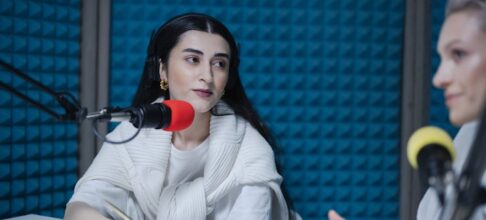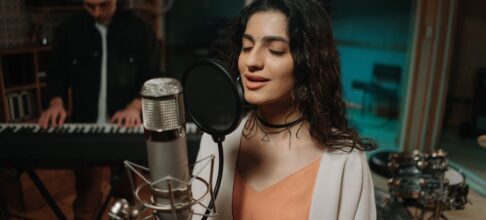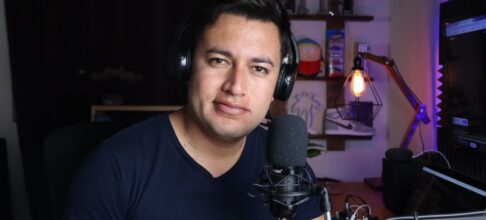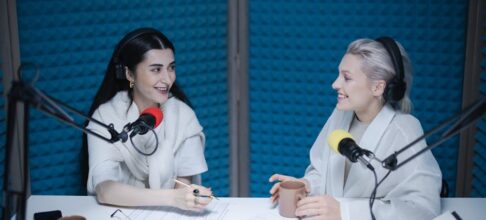
There’s a small soundproof studio on Vazha-Pshavela Avenue in Tbilisi. If you walked past it in 2012, you’d have seen a handful of actors, a battered MacBook, and two engineers crammed into an overheated room, arguing about whether the word სიხარული (sikharuli – joy) should be stretched or snapped for a TV drama dub. That was my first real look inside the world of Georgian voice over – and little has changed about the passion, even as everything else has shifted.
Georgia’s voice over scene isn’t large by global standards. But since 2017, with streaming platforms looking beyond big-language markets, demand for authentic local voices has picked up. Netflix’s investment into Eastern European content adaptation is no secret; their 2021 regional push included both subtitling and full-cast dubs for four Georgian films previously only available in Russian or English audio. Local studios like Pulsar Media handled those projects with a mix of pride and panic: at one point, the deadline for "My Happy Family"’s dubbed release forced overnight shifts for three consecutive weekends.
When Authenticity Becomes Non-Negotiable
It’s tempting to think that all voice over work is just about translation fidelity, but listen closely to ad spots produced by TBSC Consulting’s media division in Batumi and you’ll hear something else: micro-modulations tailored to resonate with regional dialects. In Western Georgia, particularly Samegrelo and Guria, slight vowel elongations are deliberately maintained so ads don’t come off as “Tbilisi-centric.”
In practice? A typical workflow starts with script localization not just by language professionals but also regional consultants—often old radio hands who know how Kutaisi kids actually talk. The casting sessions can last days because directors want native Megrelian inflections even when reading standard Georgian lines.
Technology Changes Everything…Almost
Voice technology crept into Tbilisi studios around 2019 via tools like iZotope RX for cleaning up recordings—a blessing for rooms never really designed for pristine acoustics. But most studios resisted synthetic voices until late 2022, when AI tools like Respeecher began offering convincing samples in minority languages.
Pulsar Media ran a test campaign using cloned voices for an insurance spot: three out of twelve focus group participants clocked it as artificial within seconds; the rest didn’t notice but reported lower emotional connection compared to traditional reads. Since then, the company reverted to human-only talent for culturally rooted campaigns but still uses AI narration on e-learning modules where neutrality trumps warmth.
Game Studios and Their Balancing Act
The gaming sector provides its own flavor of challenge. Take Qube Studio—a boutique developer based in Tbilisi working on cross-platform indie games since 2016. For their narrative-driven game "Dust Under Our Feet," they had to produce both Georgian and English VO tracks while keeping costs manageable (the total budget didn’t break $120k).
Their solution? Hybrid sessions: main characters voiced by seasoned actors flown from Rustavi Theatre; minor parts filled by studio staff doubling roles between bug testing sessions. They used Audacity and Reaper DAWs patched through Focusrite interfaces—no fancy gear here—to keep files clean enough for Unreal Engine integration.
Half their audience played the game in original Georgian audio according to post-launch Steam data gathered in late 2023—a surprise even to them given that less than 0.03% of Steam users set their platform language to Georgian.
Historical Footnotes That Still Matter Today
To understand why some things move slowly in this industry, consider the late Soviet era (1980s), when most foreign films arrived dubbed first into Russian rather than directly into Georgian. It wasn’t until mid-2000s private TV stations (like Rustavi 2) started investing in local dubbing that the craft gained cultural cachet again—emerging from beneath layers of state control and creative indifference.
Even now, older engineers reminisce about reel-to-reel tape edits done blindfolded during power outages—the artifacts of which linger whenever an old-school director insists on analog warmth over Pro Tools precision.
Real Numbers? Sort Of…
Getting precise data is tricky—Georgian voice over remains niche compared to Turkish or Polish localization industries—but interviews with project managers at GDS Studio suggest that year-on-year volume of scripted voice projects doubled between 2019 and 2023 (from roughly sixty per year to more than one hundred twenty). Most are short-form pieces (ads or infotainment), though long-form series dubs have grown alongside local streaming services like Adjaranet.
Interestingly, international brands entering Georgia often miscalculate timelines due to underestimating revision cycles: "We had Microsoft send us scripts assuming one week turnaround," recalls Lasha Gigauri at GDS Studio. "But once we flagged idioms that simply don’t exist here—and sourced appropriate metaphors—it took nearly twice as long.”
From Radio Drama Roots To Modern Podcasting
Some patterns repeat themselves: today’s top voice artists often cut their teeth on radio dramas broadcast by Georgian Public Broadcaster (GPB). You’ll find these same voices leading podcast productions launched post-pandemic—where listeners demand casual delivery instead of theatricality.
One ongoing example is GPB’s collaboration with PIK Podcast Agency since early 2021—the resulting true crime podcast consistently ranks among Spotify Georgia’s top five shows each month despite being produced out of a repurposed news booth adjacent to Parliament Square.
Not Just About Language—A Case From Kutaisi Animation House
Animation brings another layer: small houses such as Animaze Kutaisi face unique hurdles syncing mouth movements originally animated in French or Japanese with rapid-fire Georgian dialogue—all while working under license constraints set by Paris-based distributors. Their pipeline now includes custom-written software plugins (developed locally) to time-stretch dialogue without distorting pitch—a hack born purely out of necessity after missing two major festival submission deadlines back in spring 2022 due to sync issues.
A senior engineer there joked last November: “Every six months we ‘invent’ something just so our lips match!” But recent improvements mean their turnaround times have improved by almost a third versus pre-automation days—even if every third line still needs manual retiming before final render.
Looking Forward Without Hype
It would be easy to predict explosive growth or sudden AI domination—but neither matches what I’ve seen on actual projects across Tbilisi and Batumi studios this year. Instead:
the sector grows by fits and starts; every surge exposes new skill gaps; every workflow tweak gets debated endlessly at late-night wrap parties above Chavchavadze Avenue kebab shops.
For outsiders eyeing this market—from pan-European platforms like Viaplay considering expansion eastward—to local agencies experimenting cautiously with neural synthesis tech—the lesson is simple: nothing replaces lived nuance or boots-on-the-ground knowledge here just yet.