In 2017, an Oslo-based game developer faced a dilemma familiar to many studios targeting Scandinavian markets: how do you deliver authentic Danish voice work when your client expects more than just native speakers reading lines? The answer seems straightforward—hire Danish actors. But in practice, ensuring authenticity means navigating a complex web of linguistic nuance, technology constraints, and commercial expectations unique to Denmark’s compact yet demanding media landscape.
The Subtle Art of Sounding "Right"
It's easy to assume that voice over for Danish projects is simply about clear diction and regional accuracy. Yet in Copenhagen's advertising agencies—the kind that produce campaigns for Carlsberg or Maersk—the brief often contains unwritten codes. The difference between “jysk” (Jutlandish) and “københavnsk” (Copenhagen dialect) can decide whether an ad resonates or falls flat. In actual campaigns observed at agencies like &Co., casting sessions often involve heated debate over whether a speaker sounds too "posh" for a supermarket spot or not youthful enough for mobile gaming ads.
One senior producer at SDI Media Scandinavia described a 2022 campaign where three different versions of the same line were tested on focus groups before settling on an actor with faint traces of North Zealand inflection—a compromise between urban polish and mass appeal. For brands with national reach, even minor dialectal cues are measured against audience segmentation data.
Beyond Broadcasting: Streaming’s Demand for Precision
The rise of Netflix—and local streaming platforms like Viaplay—has triggered a surge in demand for high-quality Danish localization since around 2019. According to internal reports from Nordisk Film Shortcut, their volume of scripted content requiring full-cast voice over doubled between 2018 and 2022. This isn’t just about children’s animation anymore; adult dramas and documentaries increasingly get localized audio tracks, with viewer surveys suggesting up to 40% preference for dubbed options among younger audiences.
But this expansion hasn't made things easier. A project manager at BTI Studios’ Copenhagen branch notes that working on international co-productions often means syncing dialogue not just phonetically but emotionally—a challenge compounded by Denmark's small talent pool. More than one studio has had to juggle schedules so the same six seasoned voices don’t appear in every other show premiering that quarter.
Microphones in Silkeborg: A Workflow Snapshot
Take Viborg-based indie production house Supervoice.dk, which specializes in e-learning modules for corporate clients across Europe. Their workflow illustrates both the strengths and limitations of working within Denmark’s voice market:
- Scripts arrive translated from German or English via an agency partner in Hamburg.
- Sessions are scheduled during late afternoons to accommodate freelance actors who also work on national radio.
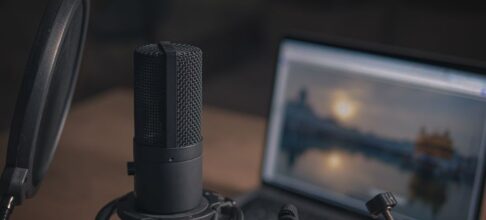
- All recordings take place using Neumann TLM 103 microphones—standard fare in European studios—but files are reviewed twice: once by the linguist overseeing terminology consistency (especially technical vocabulary), then again by the client’s own reviewer based in Aarhus.
- Typical turnaround for a 15-minute module is under five business days, unless last-minute script changes require rebooking already-busy voices.
- Fewer than two dozen full-time VOs dominate most commercial bookings nationwide.
- Agency rosters overlap heavily; double-bookings are routine unless managed tightly via Google Sheets and Slack channels shared between rival casting directors (a quirk less common elsewhere).
- Nearly all major projects run through Copenhagen hubs; rural studios rarely handle anything larger than audiobook contracts without partnering upstate or cross-border into Malmö, Sweden.
Supervoice.dk estimates they handle roughly 30 such projects per month—a modest volume compared to London or Berlin but significant within Denmark’s scale.
Tech Meets Tradition: AI and Voice Synthesis Enter the Scene
Since mid-2021, there's been cautious adoption of AI-assisted tools for Danish voice generation. Companies like Respeecher have offered neural voice cloning services that promise scalability—but as seen in trial runs with education publisher Gyldendal, synthetic voices still struggle with subtle elements like glottal stops or softening consonants characteristic of spoken Danish.
For now, most agencies use these technologies only for scratch tracks or prototype versions during pre-production phases. However, several localization managers interviewed at January's Nordic Game Conference predict hybrid workflows will become standard by 2025—human actors still record final output while AI handles bulk narration for internal drafts and low-stakes content.
A Glance Back: How Danish Dubbing Found Its Voice
Historically, Denmark maintained strict limits on dubbing outside children's programming through much of the late twentieth century—subtitles dominated cinema culture from the 1960s well into the early digital era. It wasn’t until broadcasters like TV2 began experimenting with dubbed imports in the late 2000s that demand surged beyond cartoons and toy commercials.
By early 2010s, investment from global players like Disney+ raised standards further; workflows became standardized around multi-track recording environments similar to those used by major German or French dubbing houses. Today it’s common practice for even short-form branded content to undergo multiple takes with directorial oversight reminiscent of live theater rehearsal—a far cry from single-take sessions typical prior to 2005.
Case Study: Mobile Games Go Local—and Get Personal
Consider SYBO Games—makers of Subway Surfers out of Copenhagen—which launched regionally adapted audio updates starting mid-2020 after internal analytics showed higher engagement rates among Gen Z players when characters spoke native Danish rather than generic English-accented lines. SYBO brought in two veteran VAs known from DR Radio dramas but also ran informal auditions via TikTok influencers popular with local teens. Their approach blended conventional studio technique (Neumann mics again) with street-casting tactics usually reserved for reality TV promos—a workflow described by their Head of Audio as “half traditional, half guerilla.”
Within six months post-launch, metrics tracked an uptick (estimated at nearly 15%) in user retention among under-18s engaging with new voice-led storylines compared to previous quarters relying solely on text overlays.
Challenges Unique to Denmark’s Scale—and Size
Unlike Germany or France—where vast pools exist thanks to decades-old networks—Danish voice over faces constant logistical puzzles:
Some industry insiders hint this bottleneck keeps rates higher than elsewhere—though it limits experimentation since taking risks means gambling limited bandwidth on uncertain results.