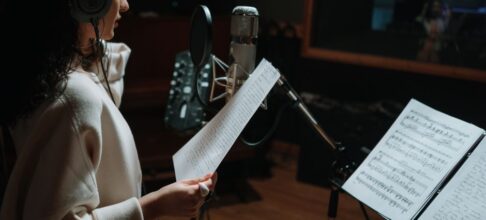
A friend in Barcelona once told me that everyone loves a good contradiction. The Catalan voice over industry is full of them. On paper, the demand for Catalan audio has never been higher—yet behind closed doors at dubbing studios from L'Hospitalet to Sant Cugat, there's a faint whiff of unease.
The Paradox of Popularity and Scarcity
Walk into the offices of Deluxe Spain, one of the regional arms of the global localization giant, and you’ll hear it straight: there’s more work than ever for big projects (think Netflix originals or PlayStation exclusives), but less stability for freelancers and mid-sized actors who rely on steady advertising or corporate gigs. It’s an odd kind of abundance—a feast for some, famine for others.
When platforms like Filmin announced in 2021 their commitment to Catalan audio tracks for international series, it was hailed as a cultural milestone. And yet, many in the industry quietly braced themselves for crunch conditions: tighter turnarounds, budget ceilings that haven’t kept pace with inflation, and increasingly hybrid workflows blending human talent with AI voices.
A Glimpse Inside a Barcelona Studio Workflow
Take La Masia Studios—not to be confused with FC Barcelona’s famed youth academy—nestled near Plaça de les Glòries. They handle everything from indie film ADR to mobile app tutorials. Two years ago, 80% of their VO bookings were fully human-directed sessions; now nearly half involve AI-generated pre-reads or temp tracks using Descript or Respeecher before final casting decisions are made.
Their pipeline looks something like this:
- Client sends script in Spanish or English.
- Initial read-through is generated by an AI tool trained on local dialectal nuances—sometimes even attempting regional inflections unique to Lleida or Girona.
- Studio directors use these AIs as benchmarks when casting real talent—often younger actors adept at mimicking digital cadence (a strange reversal).
- Final sessions still happen in-person (or remote via Source Connect), but always against the backdrop of those machine-perfect drafts.
It’s efficient—perhaps too efficient. One producer jokes that “the ghost of TTS” is always lurking just off-mic.
Not All Clients Want What They Say They Want
Major Catalan broadcasters like TV3 maintain traditional expectations: clean diction, neutral accent, unambiguous delivery. But branded content agencies working out of Madrid often request what they call “hyper-local authenticity”—which sometimes means breaking old VO taboos around slang or casual speech patterns.
In practice? I’ve seen scripts revised six times between agency and client because nobody could agree whether "collonut" sounded charmingly local or just… too street. Ironically, these debates rarely concern non-Catalan projects—where English or Castilian Spanish campaigns breeze through approvals without so much as a pronunciation note.
Legacy Meets Algorithm: An Uneasy Coexistence
There’s an established lineage here: from historic radio voices like Salvador Escamilla (whose early ‘60s broadcasts set a gold standard for Catalan elocution) to contemporary talents like Núria Trifol (famed for voicing Emma Watson across Harry Potter films). The new breed coming out of Eòlia Conservatory workshops are asked not only to master character acting but also to match tone maps provided by neural TTS prototypes developed by startups such as Voicemod in Valencia.
The result? Demos sent to clients often feature both versions—the actor and their synthetic twin—for side-by-side comparison. One creative director at an advertising agency told me last winter that 20–30% of all first-round auditions now start this way: "We want to know if your natural delivery can beat what we’re already getting from our AI toolkit." For veteran actors raised on analog tape reels and four-hour sessions in Sant Gervasi basements, it feels equal parts exhilarating and existentially unsettling.
Scale Versus Identity: Who's Actually Listening?
Numbers tell part of the story. According to data collected by Plataforma per la Llengua during the 2022–23 broadcast season, about 12% of streaming content available in Spain offered full Catalan dubbing—a significant jump from under 5% five years prior. Yet dig deeper into user analytics from providers like Rakuten TV (headquartered in Barcelona) and you’ll find usage rates lagging behind availability; viewers sometimes default back to Castilian Spanish out of habit—or simply because subtitles load faster than dubbed streams during peak hours.
Meanwhile, Catalonia-based game developers such as Novarama have experimented with partial voice localization strategies: key narrative scenes get high-quality human recording while incidental dialogue falls back on automated pipelines powered by Unity-integrated plugins like Replica Studios’ AI toolset. In production sprints where budgets are tight (and deadlines tighter), this hybridization isn’t just practical—it’s essential for shipping multilingual products without blowing up cost projections by 20% or more.
The Painful Math Behind Ad Campaigns—and Why Some Disappear Overnight
Here’s something not talked about openly enough: most pan-Spanish ad campaigns don’t include Catalan versions unless mandated by law (as with certain public sector spots). When they do get localized, agencies often treat them as afterthoughts—a late Friday afternoon session squeezed into whatever studio slot remains open after Castilian VO is wrapped up Wednesday night.
At small creative shops such as BCN Soundlab—in Poble-sec since 2017—it’s common knowledge that some insurance and telecom brands will commission Catalan reads only if their compliance team flags potential fines under linguistic parity statutes passed after 2010. Even then, these reads may never air outside YouTube pre-rolls geo-targeted within province limits. One producer described it bluntly: "Last year we recorded six separate auto insurance commercials in perfect Catalan; only two ever left our servers."
AI Dubbing Arrives—But Not Without Friction
Since mid-2022 there’s been an uptick in inquiries about end-to-end synthetic dubbing solutions among documentary producers seeking rapid turnaround on festival submissions. One recent example involves a French-Catalan co-production based out of Perpignan—the team used Papercup’s cloud-based service to generate draft narration before flying a voice artist up from Tarragona for cleanup passes ahead of Cannes’ Marché du Film deadlines.
Did it save time? Absolutely—a typical three-day post cycle shrank down to one long afternoon plus coffee breaks at Café del Centre nearby. Did everyone love the results? Not exactly; purists grumbled about robotic phrasing while execs shrugged off complaints (“Who listens closely anyway?”). Still, those savings mean next year’s festival entry fee actually fits inside the grant budget—a tradeoff unlikely ten years ago when every second had to be hand-polished by seasoned ears at Sonomedia studios downtown.
Generational Shift—or Momentary Fad?
There’s tension bubbling beneath all this speed and scale: younger talent entering through TikTok content creation expect flexibility—quick edits via Riverside.fm sessions done between classes at Universitat Pompeu Fabra—but older hands recall when even minor promo spots meant three takes minimum plus careful direction from someone who’d been doing it since Catalunya Ràdio went FM stereo back in 1983.
iCat Radio recently ran a segment comparing archival children’s show dubs from the late ‘90s against today’s fast-paced e-learning modules voiced almost entirely remotely due to pandemic routines cemented since 2020. The difference isn’t just technical—it’s tonal; what once sounded leisurely now comes across as clipped urgency designed more for algorithmic recommendation engines than immersive storytelling moments shared over Sunday lunch broadcasts circa 2004.
What Keeps People Up at Night?
Ask any studio manager north of Diagonal Mar what worries them most right now and you’ll rarely hear complaints about lack of technology—or even language politics per se—but rather uncertainty about sustainable income streams when automation pressures keep creeping upward each quarter without corresponding increases in client rates or contractual stability for freelance readers who’ve built careers around week-long booking calendars rather than hourly gig work via Upwork links forwarded on WhatsApp groups late Thursday nights.
Afterword From Sant Just Desvern—and Some Unanswered Questions
I ended up chatting recently with Carme Muñoz at her modest home studio near Sant Just Desvern station—a place filled with battered microphones salvaged from defunct Ràdio Miramar archives alongside state-of-the-art Avid interfaces humming quietly beside stacks of old scripts annotated in red pencil.
She summed it up best:
“We’ve got more tools now than ever before—but sometimes I wonder if we’re losing something essential every time another client asks if we can match their synthetic sample word-for-word.”
That tension defines where things stand today—the reality beneath headlines promising boom times for minority languages online but delivering uneven rewards offline where real voices still matter most—even if only by a narrow margin these days.