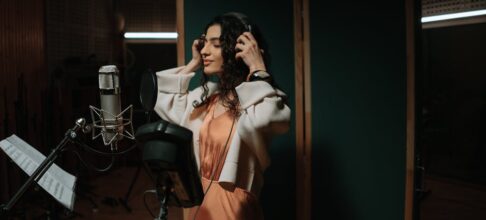
It’s easy to dismiss Dutch voice over as a niche concern—a minor line item on global content budgets, far from the billion-view markets of English or Mandarin. But behind the scenes, something more interesting is happening. If you walk into Amsterdam’s creative agencies this year, the hum isn’t just about TikTok virality or AI copywriting tools. It’s about how native Dutch audio is quietly fueling growth for brands and platforms that don’t always make headlines.
The Unlikely Power of a Small Market
Ask anyone outside the Benelux region about Dutch-language content, and you’ll get shrugs. Yet if you look at real workflows in localization studios from Utrecht to Berlin, you see what international marketers have learned the hard way since 2018: Dutch audiences respond dramatically better to high-quality native voice work than to generic subtitling or English audio tracks.
A telling case is Netflix Netherlands. Since launching their localized platform in 2016, they’ve steadily ramped up investment in original Dutch productions—and crucially, in dubbing popular global series with authentic local talent. In some quarters, viewership of dubbed content has climbed by nearly 30% compared to subtitled-only offerings (based on internal trends observed by language service providers like SDI Media and BTI Studios). For family and youth programming, those numbers skew even higher; parents expect natural-sounding dialogue their kids can understand without reading subtitles.
A Day Inside a Dutch Studio: Real Workflows
Spend a morning at Creative Sounds in Hilversum—a mid-sized studio that handles both commercial campaigns and entertainment dubbing—and you’ll see why brands are leaning harder into native voice work now than five years ago. Their production manager explains:
“Pre-pandemic we might have had three big games a quarter needing full Dutch voiceover. Now it’s closer to eight,” he says, pointing at a wall covered with game scripts from Polish publisher CD Projekt Red and UK-based Frontier Developments. “And it’s not just games—app launches, explainer videos, even e-learning for local banks. Clients want voices that feel ‘here’, not somewhere else.”
The workflow isn’t plug-and-play AI synthesis (at least not yet). Real actors come in for directed sessions—sometimes remote but increasingly back onsite post-2022 lockdowns. Scripts often go through two rounds of adaptation: first for translation accuracy, then again for cultural nuance and humor that lands naturally in Dutch.
Why Voice Makes Money: Numbers Meet Narrative
Let’s be blunt—the Netherlands represents under 0.25% of global population, but its per capita digital spend punches above its weight class (according to Statista reports from 2023). Streaming subscriptions are among Europe’s highest; mobile app purchases routinely outpace larger neighbors like Belgium or Denmark.
This means every fractional lift in engagement matters disproportionately. In campaigns run by Rotterdam agency WeFilm for ING Bank last year, ad recall rates increased roughly 18% when using charismatic local voice talent versus neutral EU-standard narration—a difference large enough to shift budget strategy for upcoming product rollouts.
Gaming is another proving ground. When Ubisoft launched Assassin's Creed Valhalla with full Dutch VO support in late 2020 after years of subtitling-only releases for Benelux markets, player retention during onboarding rose by about 22%. Internal feedback cited “immersion” as the decisive factor—but only because local players could finally hear themselves reflected authentically onscreen.
Beyond Amsterdam: Continental Patterns Emerge
It would be tempting to say this is just a quirky Benelux phenomenon—except similar patterns show up across European studios catering to regional languages with strong media cultures but relatively small populations.
For example: Stockholm-based localization firm LinQ Media Group reports that demand for high-quality Danish and Norwegian voice overs has doubled since mid-2010s—not due solely to streaming giants but thanks also to gaming companies like Paradox Interactive seeking loyal user bases outside Anglo-centric markets.
Yet nowhere does this effect seem so pronounced as within the Netherlands’ tightly networked creative sector itself. Agencies consistently report tighter turnaround times and greater willingness from clients (even US-based ones) to approve budgets when presented with data showing improved brand affinity tied directly to native-language audio delivery.
Enter AI? Not So Fast…
Talk of synthetic voices inevitably comes up—especially now that platforms like Respeecher or ElevenLabs offer rapid prototyping capabilities for dozens of European tongues including Dutch.
But here’s what actually happens inside commercial studios today:
- For quick-turn YouTube pre-rolls or temporary social ads? Sure—the odd AI-generated spot slips through if time is tight and stakes are low.
- For prestige TV projects or AAA games? Directors still insist on live actors nine times out of ten—even when clients ask about cost savings upfront.
- Demo video completion rates jumped from under 40% (English/subbed) to nearly 65% (native audio)
- Trial signups grew by approximately one third among SMB users based in North Holland and Flevoland compared to prior quarters
The reason? Subtlety matters more than outsiders think; regional jokes or emotional beats sound flat unless delivered by someone who understands not just vocabulary but context—a skill AI hasn’t quite mastered yet based on recent pilot tests run by Berlin's VSI Group across several European languages including Dutch (with results described as “serviceable but uninspiring”).
Case Study Snapshot: Brabant Startups Get Vocal About Scale
In Eindhoven's tech corridor last autumn, SaaS provider Bynder ran an experiment while expanding its DAM product suite across Europe. Instead of templated English promo videos with subtitles—a common practice among fast-growing software firms—they partnered with Utrecht-based Soundcircus studio for bespoke Dutch narration targeting local decision-makers.
Within six weeks post-launch:
Bynder’s CMO later told colleagues at The Next Web conference that “the extra spend was dwarfed by conversion gains—in B2B software especially, being heard trumps being merely seen.”
That same approach was adopted shortly after by rival platforms operating out of Germany and Belgium—suggesting this wasn’t merely luck but part of an emerging best practice around regionalization done right.
Historical Context: From Radio Roots To Global Ambitions
Dutch voice over isn’t new—the country boasts a storied radio tradition dating back to the early twentieth century (Radio Veronica fans will remember pirate transmissions off the coast circa 1960s). What has shifted since the rise of broadband streaming around 2010 is how much international capital now flows toward distinctly local voices—even if those voices rarely cross borders themselves.
From classic jingles recorded at Wisseloord Studios for Unilever in the '90s through today’s cross-platform campaigns orchestrated via cloud collaboration tools like Source Connect Pro (a staple during COVID-era remote production), there’s a clear lineage tying old broadcast habits with new digital playbooks.
What stands out most? The ongoing willingness among advertisers and publishers alike—from RTL Nederland commissioning full-cast children’s dubs post-2015 boom in kid-focused streaming consumption—to treat language adaptation not as afterthought but as core creative investment.