There’s a peculiar discomfort in the fact that you’ve heard the same British voice sell insurance, dub a Scandinavian crime series, and narrate a wildlife documentary—all within a single week. The illusion of vocal diversity is often just that: an illusion, meticulously manufactured in studios from Soho to Salford. But what does it actually take to create "British Voice Over"—a phrase thrown around by casting agents and ad agencies with equal parts reverence and ambiguity?
Accents Are Not Accessories: The Myth of Generic Britishness
A common misconception outside the UK (and sometimes inside, too) is that there’s a singular "British" accent fit for any project. In practice, production companies—from London-based Wisebuddah to international localization giants like VSI—navigate an intricate map of regional sounds. It’s not uncommon for American clients to request “neutral British,” only to discover there’s no consensus on what that means.
Ten years ago, most TV commercials defaulted to Received Pronunciation (RP), or so-called Queen’s English. Now, according to talent agency Chatterbox Voices—which supplies voices for Netflix UK originals—over 40% of their briefs specifically ask for regional accents: Mancunian for youth brands, Glaswegian for banking apps looking to seem approachable, even Scouse for gaming campaigns targeting Liverpool and Manchester audiences.
The Studio as Laboratory: How Sessions Really Run
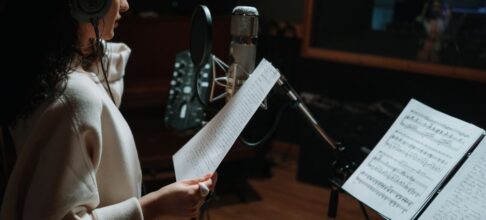
Step into Soho Studios on a Tuesday morning and you’ll see something rarely captured in demo reels: client-side creative directors huddled behind glass while voice artists run through scripts at three speeds and emotional registers each. It isn’t always glamorous; sometimes it’s two hours spent arguing whether “advert” should sound clipped or conversational.
In one workflow observed at Molinare—a post-production hub with roots going back to the late 1970s—the typical session involves:
- A roundtable script read-through with both director and local dialect coach present.
- Real-time script tweaks as words get tangled in regional intonation (“Howay man” hits different depending on which side of Newcastle you’re from).
- Several takes recorded across both Neumann U87 and Sennheiser MKH416 mics, since some campaign audio will be adapted for podcast ads (where warmth matters) versus broadcast TV (where clarity dominates).
- Sending dialogue assets directly from Warsaw HQ to London-based Just Voices studio,
- Casting not just one but several actors capable of shifting between Cockney streetwise grit and gentle Oxford diction,
- Real-time connection via Source Connect sessions where narrative leads could direct performance nuances from Poland while monitoring EQ levels locally in London,
- Ultimately recording three versions per major character: RP-neutral, Northern-inflected, and a more urban South London style—for flexibility depending on focus group feedback.
- For quick-and-dirty explainer videos or internal corporate training modules destined never to leave the company intranet, digital clones shave turnaround times by days and costs by up to 70% compared with unionized human talent.
- But when tested against live campaigns—a campaign run last autumn by Ogilvy found this out quickly—the lack of subtle inflection still betrays even the best bots during national radio spots or emotionally charged charity appeals.
It’s not rare for sessions booked as “one hour” voice overs to spill into four. Technical setups alone can eat up half that time; balancing levels between actor and background music is more art than science when every syllable must cut through regardless if streamed over Spotify or aired on BBC One.
Brand Consistency Versus Character Authenticity: An Ongoing Tug-of-War
The desire for recognizability collides head-on with authenticity demands. Take Sky Sports’ Premier League coverage: In 2019 they made headlines by replacing their traditional RP narrator with former footballer Alex Scott—her unmistakably East London cadence was hailed as fresh but drew mixed reactions among older viewers used to classic delivery.
This case became emblematic across media circles in London and Manchester alike; suddenly brands started rethinking whether posh equated to trustworthy. According to research released mid-2022 by Radiocentre UK, branded content engagement rose by approximately 18% when adverts used regionally authentic narration instead of generic RP.
Case Study: Localizing Games From Warsaw With a London Lilt
In the real world of game localization—a space dominated by Central European studios like CD Projekt Red (Warsaw)—the choice of British voice over isn’t trivial. When preparing "Cyberpunk 2077"’s UK release, their pipeline involved:
This multi-accent approach added nearly 20% more recording time compared to standard US-English dubs but resulted in noticeably higher player immersion metrics during regional beta testing rounds.
Voice Over Agencies Are Gatekeepers—and Taste-Makers
Unlike tech-driven fields where anyone can launch an app overnight, breaking into top-tier UK voice work remains relationship-driven. VOX Talent Management—a boutique agency based near Covent Garden—reports turning away up to 80% of new applicants each year due largely to insufficient demo material tailored for contemporary tastes (think understated storytelling rather than bombast).
Their process typically starts with coaching workshops focused on micro-nuances like “glottal stopping” or modulating vocal fry—not skills taught at drama school but demanded by current streaming platforms such as Apple TV+ UK Originals. Clients expect micro-emotions delivered in half-sentences; anything resembling old-school BBC grandiosity rarely makes the final edit anymore.
Tech Creep: AI Voices Stir Unease—But Can’t Replace Nuance Yet
It would be naïve not to mention synthetic voices here. Since mid-2021, several ad agencies—including Ogilvy's Digital Content Lab—have experimented with AI-generated British narrators using tools like Respeecher or Sonantic (now part of Spotify). In practice? Feedback is bluntly split:
So far no major broadcaster has risked prime-time air with a fully synthetic voiceover lead; audiences are quick to pick up artificial cadence. Regional intonation remains especially hard for machines trained primarily on standard RP samples—a point frequently discussed at industry events like VOX Conference UK held annually since 2017 in Birmingham.
The Numbers Game: Supply Meets Demand … Or Tries To Catch Up?
While there are estimated to be over 8,000 professional English-speaking voice actors registered across agencies from Edinburgh down through Brighton (per Equity UK membership rolls), only about 10–15% routinely land national-level campaigns involving high-profile brands such as Unilever or ITV dramas each quarter. The bottleneck is less about talent pool size than match-making between brand identity and audience expectation—a dance choreographed anew every season as fashion shifts from rural brogues back toward metropolitan polish or vice versa.
In Australia-based media buying shops working cross-market briefs—including those attached to SBS On Demand—the demand has grown sharply since Brexit-era marketing saw more global brands wanting "quintessentially British" flavor in audio ads piped into Asia-Pacific streams—but quickly discovered what plays well over Heart FM Sussex might flop entirely in downtown Sydney if tonality signals elitism rather than warmth.
This culture-clash dynamic keeps adaptation teams busy tweaking both accent intensity and local slang references right until upload deadlines hit.
What Comes Next? No Easy Answers
Is there such thing as a future-proof British Voice Over strategy? Ask five producers at Pinewood Studios—or two game localization managers at tiny indie outfits dotted along the Scottish Borders—and you'll get five competing answers plus one nervous shrug. If there's any certainty left after decades watching these cycles play out it's this:
one-size-fits-all never works here; context rules everything around tone choices; authenticity trumps perfectionism nine times out of ten when measured by actual audience response rates instead of awards show sizzle reels.