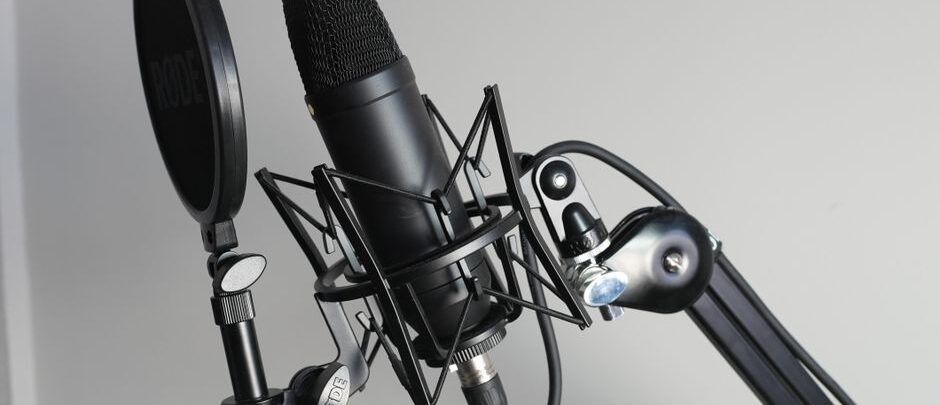
There’s a running joke among Zagreb audio engineers that if you want the perfect Croatian voice over, you’ll need three things: a grandmother for authenticity, a neighbor with a quiet apartment, and an uncanny talent for pronouncing “lj” without swallowing your tongue. Behind every dubbed Netflix series or regional radio ad, there’s this hidden reality—one where tradition meets technical limitations in sometimes hilariously imperfect ways.
The Curious Journey from Tape to Timeline
Ask anyone who worked at HRT (Croatian Radiotelevision) in the early 1990s about voice over and you’ll get a knowing smile. Back then, voice work meant reel-to-reel tape decks, cigarette smoke curling above mixing boards, and actors timing their lines to the clack of physical splicing. No Pro Tools, no endless undo. Editors recall how even minor mistakes could mean slicing tape with razors—and praying you didn’t cut an irreplaceable take.
A decade later, by the mid-2000s, things changed. Studios like Studio in Split swapped analog headaches for digital workflows. With DAWs like Cubase and Logic on battered PCs, post-production moved faster—but not always more smoothly. One engineer remembers losing hours of work to power cuts during tourist-season blackouts: “We’d do four takes of a car commercial, lights flicker, and suddenly we’re back to zero.”
When Local Means Hyperlocal: Real Voices in Real Places
Many outsiders assume Croatian voice over is just about translating English ads or movies into Croatian. But walk into any Osijek production house and you’ll see something messier—and more interesting. For projects targeting Istria or Dalmatia, clients want subtle dialect cues. A popular beer brand once insisted on casting two separate male voices for their radio spots: one with a faint Zagorje accent for inland stations; another with unmistakably coastal intonation for Adriatic listeners.
This is nothing like the mono-cultural approach favored by global brands elsewhere. Even streaming giants such as HBO Max routinely ask local studios—like Studio in Rijeka—to run test audiences before locking down final dubs for series premieres. In one case from late , feedback from teens in Varaždin led producers to swap out their original narrator after complaints he sounded "previše Beograđanin" (too Belgrade-ish).
Commercial Pressure Meets Creative Limits
There’s growing demand—but also growing contradiction—in how Croatian voice over is produced today. Large localization outfits such as VSI Group (headquartered in London but operating across Europe) report that since around they’ve handled up to % more projects requiring regional flavor versus generic standard Croatian.
But budgets rarely keep pace. In smaller Zagreb studios working on e-learning content or mobile games (think collaborations with Rovio or Outfit7), it’s routine for one actor to provide five voices—sometimes switching gender or age mid-session because "the client needed it yesterday." This isn’t just cost-saving; it’s survival.
AI Voices? Not So Fast in Croatia...
Globally, tools like ElevenLabs and Respeecher are making synthetic voices sound eerily lifelike—but Croatia lags behind in mass adoption. The main reason isn’t technical resistance; it’s cultural nuance.
Case in point: when an EU-funded language learning app piloted an AI-driven Croatian narrator last year using Google Cloud TTS APIs, user retention dropped nearly % compared to versions voiced by native speakers from Zadar and Dubrovnik areas. Feedback was blunt—the machine got grammar right but missed the subtleties users associate with warmth or humor.
In practice? Most agencies treat AI as backup rather than lead actor—especially where emotion or local idiom matters most (children’s cartoons; political ads; satire shows). Traditional casting remains king.
Case Study: A TV Campaign That Nearly Didn’t Happen
Winter saw Atlantic Grupa commissioning a multi-regional campaign for its Cedevita brand—a vitamin drink beloved from Vukovar to Pula. The brief called for both a standard Croatian version and micro-targeted variants: Kajkavian inflection for northern counties; Shtokavian smoothness for Dalmatia; urban slang sprinkled throughout Zagreb spots.
The project landed at SonicPoint studio near Slavonski Brod—a facility known regionally but hardly massive by European standards (staff of eight). Their workflow looked like this:
Result? Sales lifted measurably (+7% quarter-on-quarter). But ask anyone involved: Nobody wants that scramble as standard practice again soon.
The Future Isn’t Uniform—It’s Fragmented by Design
If there’s one pattern that unites the industry here, it’s deliberate fragmentation—not consolidation—of style and delivery:
- Game developers based in Ljubljana but targeting Croatian audiences will often record three different versions for cross-border releases—Croatian Standard plus two accent variants—to meet publisher expectations (especially evident with localized titles distributed by CD Media Balkans).
- YouTube creators based out of Split increasingly hire young actors willing to blend dialects per video segment—for fear that single-register speech feels "old-fashioned" or "state TV." Anecdotal reports suggest up to % growth in freelance gig postings tagged specifically “with Dalmatian accent” since early alone.
- And advertising agencies now routinely include budget lines labeled simply “extra dialect session”—something virtually unheard-of before outside major political campaigns.
- Croatia has fewer than four million residents yet dozens of linguistic fault lines below the surface;
- National broadcasters still favor Received Pronunciation-style neutrality on news…but private clients increasingly crave local color everywhere else;
- AI might promise efficiency but can feel coldly alien unless carefully directed by humans who know every valley-vs-coast difference instinctively;
- And unlike Germany or Spain where decades-old standards prevail post-EU accession boom (early/mid-2000s), Croatia’s industry still feels adolescent—a little wild west mixed with Balkan improvisation.
Why Simplicity Is Rarely Simple Enough Here
Try explaining this ecosystem to someone used to Parisian dubbing houses or LA animation pipelines—the answer is inevitably complicated by context:
So next time you hear what seems like straightforward narration on Nova TV—or listen closely during a Croteam game cutscene—remember there are layers upon layers beneath that “simple” voice over track…each decision shaped by people juggling legacy habits against new demands no algorithm can fully predict yet.