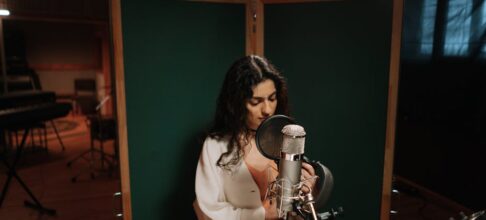
A booth in Tallinn. Two actors, one sound engineer, and a script with more idioms than action verbs. The director sighs—again—and asks for another take. “Can we make this less literal? It’s supposed to be funny.”
This is not a rare scene in Estonia’s voice over world; it’s almost a ritual. While the country produces only a fraction of the global media output, its approach to voice work is an intricate blend of cultural nuance and pragmatic compromise. For those outside the Baltic bubble, Estonian voice over might seem niche or even peripheral, but scratch the surface and there’s an unexpectedly rich ecosystem balancing tradition and technology.
When Small Markets Become Laboratories
The first thing any studio manager in Tallinn or Tartu will tell you: Estonia is not just small, it’s minuscule by European standards. There are about 1.3 million native speakers—roughly half the population of Berlin. This scarcity has shaped everything from casting to workflow.
Take MultiMediaMarkt, one of Estonia's established localization studios. Their managing producer, Maarja Toomingas, explains that they rarely have the luxury of typecasting like their German or French counterparts do. “Sometimes our actors will play three roles in the same project—often switching accents between lines,” she says. This demands not just technical skill but a kind of creative flexibility that feels almost theatrical.
Netflix Arrives: Dubbing Meets Local Reality
When Netflix officially launched in Estonia in 2016, industry insiders were skeptical about how much local content would require full dubbing versus subtitling—the latter being historically dominant since Soviet times. Yet within three years, several animation releases (including "Klaus" and later "Over the Moon") received full Estonian dubs.
In these projects, workflows look different from those in larger markets:
- Scripts often arrive pre-translated by external agencies—usually based elsewhere in Europe.
- Voice directors spend as much time adapting jokes as directing performances; American slapstick seldom lands without some tweaking for Estonian tastes.
- Casting can turn into a puzzle: for example, during the 2021 production of "Jurassic World Camp Cretaceous," two voice talents covered all six child characters across ten episodes due to budget constraints—a solution unthinkable at London-based facilities working with Polish or Spanish dubs.
- Talent pools remain shallow compared to Scandinavian neighbors; it’s common for top narrators to juggle radio gigs alongside animation roles in a single week.
- Budget cycles fluctuate wildly depending on foreign co-production deals or EU-supported cultural grants; no two quarters feel quite alike.
- With only three major recording studios serving broadcast-grade needs (MultiMediaMarkt, Helistuudio OÜ, and Duo Stuudio), scheduling bottlenecks are routine around festival seasons or major sporting events broadcasts.
- Rapid audition rounds conducted over Discord calls instead of formal casting sessions,
- On-the-fly direction tweaks mid-session due to last-minute translation fixes,
- Use of non-traditional talent drawn from poetry slams or underground theater circles when unionized actors were unavailable on budget day.
AI Voices: Promise and Peril on the Baltic Edge
Like everywhere else post-2019, synthetic voices have started slipping into commercial workflows—even if quietly. Several radio stations (notably Raadio Elmar) experimented with AI-generated weather forecasts during overnight shifts last winter. The results weren’t catastrophic—but nor did they wow anyone accustomed to Estonia’s famously warm regional dialects.
In real TV promo campaigns observed at production agency Filmivabrik, hybrid workflows have emerged: human-talent for prime-time ads; AI narration for late-night informational spots where budgets run thin. According to one producer there, roughly 15% of their short-form material used some level of synthetic enhancement by early 2024—a figure rising steadily each quarter.
But don’t expect mass displacement yet: most studios still treat AI as an augmentation tool rather than a replacement for nuanced storytelling—at least when targeting local audiences who spot awkward phrasing from miles away.
From ETV's Archives to Spotify Playlists—A Brief History Run-In
Estonia’s relationship with dubbed audio dates back further than streaming platforms suggest. In the early 1990s—fresh out of Soviet rule—ETV (Eesti Televisioon) made tentative attempts at localized cartoons using volunteer university students and single-channel mono recordings. Archival engineers recall splicing together takes using reel-to-reel tapes well into 1997 because digital workstations were prohibitively expensive.
Fast forward two decades: local podcast studio TaskuHääling uses high-fidelity Neumann microphones and cloud-based editing suites indistinguishable from setups in Amsterdam or Sydney. But cultural habits linger; even now, many adult-targeted shows opt for subtitles over full voice replacement unless required by licensing deals (as seen recently with Japanese anime distributed via Elisa Stage).
Market Constraints Breed Inventiveness (and Frustrations)
A persistent truth emerges across conversations with Estonian producers: necessity forces innovation—but also constant trade-offs:
Yet this pressure cooker often yields unexpected quality—in February 2023, an ad campaign voiced entirely by students from Tallinn University won silver at Balti Filmi-ja Meediaauhindade gala precisely because its unpolished delivery captured social reality better than any seasoned actor could have managed.
Gaming Localization: Microcosm of Baltic Resourcefulness
Ask any developer at ZA/UM Studio—the team behind "Disco Elysium"—about preparing multilingual audio assets for international release (their game shipped with partial Estonian narration as an Easter egg). They’ll describe piecemeal approaches typical of indie outfits:
It sounds chaotic—and it often is—but it fits Estonia’s scale and speed-driven mentality perfectly.
Audiobook Surge Meets Cultural Ambivalence
Spotify's entry into audiobook distribution across Northern Europe created ripples locally too: by mid-2023, Storytel reported double-digit growth rates among Estonian subscribers seeking native-language content—even though classic literature remains heavily underrepresented compared to Swedish or Finnish catalogs.
Still, quick-turnaround productions led by nimble houses like Helistuudio OÜ show what’s possible when entrepreneurialism trumps caution; their recent collaboration with Rahva Raamat bookstore saw four bestsellers adapted within six weeks using a mix of professional narrators and social-media personalities—a timeline considered aggressive even by London standards.