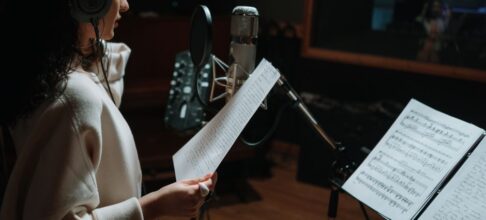
There’s a certain tension behind the glass of an Accra recording booth. The client, a South African e-commerce platform, is worried about regional inflections—will this Ewe narration feel authentic to shoppers in Ho and Lomé? The director reminds her team that last quarter’s campaign saw click-through rates jump nearly % after swapping generic English for a lively Wolof voice track. Still, no one’s quite sure if the energy will translate.
This is not the glamorous part of Africa’s creative economy that makes headlines. Yet, it’s precisely here—in these dense networks of studios, agencies, and translators from Nairobi to Lagos—that Afrikan voice over (AVO) has become an unlikely growth engine for brands and media alike.
Why the “Voice” in Afrikan Voice Over Matters More Than Ever
If you walk into any mid-sized marketing agency in Johannesburg today, you’re likely to find at least one soundproofed room alive with dialects: Igbo for an insurance explainer video; Swahili for a mobile gaming app; Xhosa for a pan-African digital banking spot. Five years ago, most international clients insisted on “neutral” English or French—a hangover from legacy ad norms. By , several agencies reported that up to % of their audio and video projects required native-language VO talent.
It wasn’t always like this. For much of the 2000s, big-name Nigerian ad firms such as Noah's Ark stuck to standard Yoruba or pidgin tracks if localization was requested at all. As recently as , Netflix’s first original African series (“Queen Sono”) still defaulted to English for voice work despite its pan-continental cast.
Something changed around : global platforms began pursuing hyper-local content strategies across sub-Saharan Africa. YouTube advertisers wanted campaigns tailored by city—not just country—while fintech apps demanded onboarding videos that sounded local enough to pass a friend on WhatsApp.
Case Study: A Ghanaian EdTech Startup Goes Multilingual
Take the workflow at Mavis Computel, a Ghana-based EdTech company specializing in primary school math apps. When rolling out its product in Cameroon last year, their team skipped the usual translation house route. Instead they contracted two Douala-based VO artists through Nairobi’s SoundWaves Collective platform.
Here’s how it played out:
- Scripts were localized by teachers fluent in Cameroonian French and Duala.
- Artists recorded three takes per script segment (one formal register; two colloquial).
- QA involved playback with parents from Yaoundé focus groups.
- Final selection: colloquial Duala delivered by a female artist—parents said it “felt like home.”
- Kinyarwanda VO requests processed by Kenya's VoiceBank tripled between late and early .
- South African localization firm Sounds Like Home reports Zulu voice over bookings now account for nearly half their annual revenue stream (up from under % five years ago).
- Pan-African podcast production at Pulse Nigeria routinely uses rotating casts drawn from five+ language pools per series—a move credited with audience growth spikes up to %, especially among diaspora listeners in London and Paris.
Within six months of launch, app engagement rates rose % among Cameroonian users compared to earlier launches relying solely on subtitled English versions.
What makes this scenario typical isn’t just language—it’s workflow flexibility and relentless testing against real community responses.
From Nollywood Dubbing Rooms to Berlin Agencies: Crossing Borders Without Borders
In Lagos’ Surulere district, some of Nigeria’s busiest post-production houses are booked weeks ahead—largely due to foreign streamers seeking Yoruba and Hausa dubs for Turkish dramas or Korean rom-coms now wildly popular across West Africa. "Since about ," says Tunde Bakare of Bridge Studios, "we’ve seen our international dubbing requests triple." Major players like Showmax have leaned into this model since expanding their African catalogues beyond South African soap operas.
Interestingly, European game localization teams have started looking outward rather than inward when hiring AVO talent too. In Berlin last year, indie game studio Frostbyte Interactive dubbed its adventure title into Somali using remote sessions with Nairobi-based actors via Voquent—a voice agency known for managing pan-African accents alongside more traditional European languages.
The result? According to Frostbyte's project manager Lena Herrmann: "Our player base in East Africa grew modestly but steadily—about % uptick post-launch—but more importantly we received far fewer complaints about 'fake' accents or clumsy translations.”
Numbers That Don’t Lie (But Sometimes Whisper)
Data on the AVO sector rarely hits global industry dashboards—but inside regional networks there are signals everywhere:
The numbers are rarely neat or uniform but point clearly: where authentic local voices lead production choices, engagement—and thus market share—follows closely behind.
When AI Meets Authenticity: Not Quite There Yet…
Industry rumor has it that several Cairo studios piloted AI-generated Arabic dialect VOs last summer using DeepDub and ElevenLabs plug-ins. Results were mixed at best—"good enough for internal demos," according to one Cairo producer who asked not to be named—but jarringly robotic when tested with urban Egyptian teens on TikTok shorts campaigns.
A common pattern emerging across Johannesburg tech startups is hybrid workflows: human actors record base tracks while AI tools generate quick alternates for rapid testing before final sessions are booked—a process that shaves days off timelines without sacrificing cultural nuance that bots still can’t replicate convincingly.
Unexpected Benefits Beyond Media Hubs
Outside big cities like Lagos or Cape Town lies another story entirely—a quieter revolution happening in places like Lusaka or Gaborone. Here rural health NGOs commission radio PSAs narrated in Tswana or Lozi; microfinance pilots target Chichewa-speaking farmers via WhatsApp audio explainers voiced locally instead of imported South African talent. These aren’t prestige projects but essential communications—projects where trust hinges on sounding familiar rather than polished.
One Zambian agricultural co-op reported loan uptake increased by almost % after switching outreach messages from generic English SMS blasts to short Nyanja-language audio notes recorded by local youth leaders via inexpensive smartphones—a tiny workflow tweak driving measurable results where margins matter most.
Shifting Power Dynamics—and Creative Ownership
in most European advertising circles until recently,
the default assumption was clear:
language adaptation flowed top-down—from Paris or London agencies into “the field.”
today,
especially within pan-African campaigns managed out of Nairobi or Dakar,
you’ll find bottom-up pipelines instead:
scripts drafted locally,
dialogue tweaked based on test listens,
talent sourced peer-to-peer via WhatsApp groups before ever reaching formal casting calls.
power is shifting toward those closest to end-users—not just linguistically but creatively too—a trend Hollywood once missed during its initial wave of global expansion in the early 2000s but increasingly mirrors as streamers chase authenticity above glossy perfectionism today.