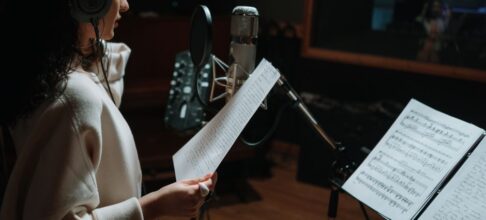
You’d think the small size of Estonia—barely more than a million people—would make Estonian voice over a niche pursuit. But, as anyone who’s spent a morning navigating Netflix menus or watched their child laugh at Peppa Pig in flawless Tallinn-accented Estonian can attest, the reach is quietly pervasive.
In Tallinn’s tramways, you hear it first: not just the conductor’s announcements but polished digital voices, clear and locally inflected. These are rarely afterthoughts. They’re products of tight studio sessions—often produced by outfits like B3 Sound Studios or Duo Media Networks—that agonize over tone to avoid sounding robotic or foreign. The result? A daily soundtrack that feels native even when the source was written on another continent.
When Dubbing Isn’t Just About Kids’ Cartoons
For years, most adults associated voice-over with Saturday morning cartoons and imported action films from the early 2000s dubbed at ETV. But fast-forward to today and the stakes are different. In , Elisa launched its streaming platform Elisa Huub, focused on localizing content for Estonian viewers. By late , nearly half (%) of new international children’s content added each month came with professionally produced Estonian audio tracks.
This isn’t just about entertainment value; it’s tied up in national identity and access. Local law has nudged major streamers toward more comprehensive localization, especially for youth programming. Now platforms ranging from Viaplay to Netflix routinely commission full Estonian dubs—not subtitles—for key titles.
A typical workflow looks something like this: A US-based animation studio finishes production, then sends master files to an agency like Mothership Productions in Tartu, where teams break down scripts into timed segments before casting seasoned local actors (think Jaagup Kreem or Evelin Võigemast) for roles big and small. Sessions run tight: one director per two actors per hour is standard practice.
By the time these productions hit screens in Pärnu or Viljandi homes, every joke lands as if it were homegrown—a subtle but effective shield against cultural dilution.
Real-World Ripples: From Smart Assistants to Driving Directions
Step outside media bubbles for a moment and consider Waze or Google Maps—the spoken navigation you hear while driving through rural Ida-Viru is often generated by voice talents contracted through Baltic audio agencies. Since , Google has ramped up its use of neural text-to-speech systems for minor European languages including Estonian; still, much of the core navigation script—street names particularly—is recorded by human professionals to avoid mispronunciation mishaps that could literally send drivers off course.
That attention to detail pays off in feedback loops: Bolt (originally Taxify), now an international mobility giant headquartered in Tallinn, regularly receives user reports highlighting both errors and delights in app-based voice directions. Their solution? Regular quarterly updates with new recordings—sometimes as many as 1, lines refreshed per cycle—to keep pace with changing infrastructure and local dialect nuances.
Gaming Studios: Where Accent Becomes World-Building
Estonia isn’t known for global game exports on par with Poland’s CD Projekt Red or Sweden’s Mojang—but within Baltic circles, indie developers like ZA/UM (creators of Disco Elysium) have set benchmarks for how games can sound local without losing international appeal.
During Disco Elysium's critical acclaim phase post- release, fans clamored for more robust language options. While a full Estonian dub never materialized due to budget constraints (estimates put such projects around €–250k), snippets leaked from internal tests show how nuanced character work can subtly shift narrative tone—making antiheroes less menacing or bureaucrats more relatable simply through vocal delivery tailored to local expectations.
Even mid-tier studios—like those producing mobile puzzle apps out of Tartu's Garage48 hub—have begun experimenting with AI-generated localized narration layered atop traditional VO tracks, aiming to cut costs while preserving authenticity.
Advertising Campaigns: The Fight Against Generic Scandinavian Voices
It might seem trivial whether a shampoo ad uses Swedish-accented English or proper Estonian narration. But ask any creative director at Age McCann Estonia: campaigns flounder without linguistic specificity.
In late , Telia Eesti ran parallel ad tests—one batch voiced by pan-Nordic actors using generic Northern European accents; another batch recorded by familiar radio personalities from Tallinn FM stations. The difference was measurable not just anecdotally but in hard metrics: engagement rates jumped nearly % among – year olds exposed to authentically voiced spots versus those hearing "imported" audio.
The lesson isn’t lost on agencies pitching pan-Baltic campaigns today—increasingly they budget extra days for authentic VO recording sessions rather than relying solely on AI tools like Veritone Voice or Respeecher which are popular elsewhere in Europe but still struggle with nuanced inflection required for convincing Estonian delivery.
Language Preservation Versus Progress?
There’s a tension here that industry insiders discuss off record: Does relentless localization shelter younger generations from wider linguistic exposure? Or does it anchor them firmly enough in their mother tongue that they’re better equipped when consuming global media later?
Anecdotes abound—in focus groups run by ERR during their early-2020s youth programming revamp, parents reported greater willingness among kids to try foreign-language books after first encountering stories via high-quality voice over adaptations at home. Yet some educators worry about subtitling becoming a dying art among teens who now expect everything dubbed perfectly into idiomatic Estonian.
Historical Flashpoints—and How Things Changed Post- Crash
Not all progress has been smooth sailing. In the wake of the global financial crisis circa –—which hit Baltic advertising budgets hard—a wave of cost-cutting led several national broadcasters to experiment with cheap automated dubbing solutions sourced from UK vendors promising “% savings.”
The results were disastrous: mispronunciations (“Pärnu” rendered unrecognizably), stilted pacing—even accidental profanities slipped past QA processes unfamiliar with local context. Viewer complaints spiked; brands pulled sponsorships until broadcasters returned control back to domestic studios staffed by humans attuned to cultural nuance rather than algorithmic guesswork.