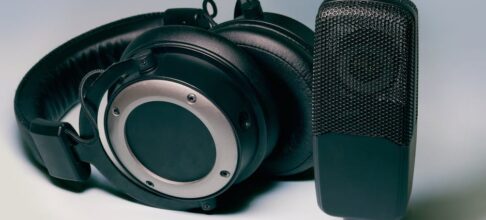
Budapest, 2017. A team of six sits in a soundproofed room—walls lined with blue foam, computer screens aglow with waveforms—listening to the same joke delivered, for the fifth time, in Hungarian. It’s not funny anymore. But that’s not the point.
Somewhere between Netflix expanding its local catalog and CD Projekt Red prepping its next Eastern European release, Hungarian voice over work has quietly become a high-stakes trade. Unlike the highly publicized English or Japanese dubs, this sector is almost invisible outside regional circles—even as its technical demands rival any global standard.
Why Does Hungarian Matter?
It’s tempting to assume only the big languages matter in film or gaming localization. Yet studios like SDI Media Hungary (now part of Iyuno-SDI Group) have handled hundreds of titles for global clients precisely because audiences care about authenticity. The demand for native nuance surged after streaming giants began chasing local markets seriously around 2015—a pivotal year when Netflix and HBO Go officially entered Hungary. Suddenly, "good enough" no longer cut it.
A post-2016 survey by local agency SpeakEasy Voices found that nearly 65% of Hungarian viewers preferred dubbed content over subtitles when given both options on streaming platforms. That number outpaced similar preferences in neighboring Slovakia and Croatia, hinting at a cultural attachment to well-crafted local audio.
Studio Realities: From Script to Waveform
In a typical week at VoiX Studios (one of Budapest’s mainstays), projects range from Hollywood blockbusters to Polish period dramas seeking cross-market reach. The core workflow isn’t all that different from Los Angeles or Berlin:
Contradictions on Screen: Authenticity vs Efficiency
Even as AI voices muscle into entry-level e-learning or voicemail projects (in Hungary, tools like Respeecher have seen pilot runs), most premium entertainment work refuses full automation. There’s an almost superstitious trust in human delivery among Hungarian supervisors—a reluctance cemented after early attempts at synthetic dubbing failed spectacularly on live-action shows in 2018 (viewers immediately noticed robotic inflections during primetime slots).
Yet efficiency pressures remain real: since 2020, some mid-sized agencies have adopted hybrid workflows where AI generates temporary tracks for client reviews before final sessions begin—cutting initial review rounds by up to 20%. In practice, though, final recordings still rely heavily on seasoned voice actors and directors who know how to navigate subtleties lost on machines.
Games Test Boundaries Further
Game localization pushes everything further out of comfort zones. Take the case of NeocoreGames (a Budapest-based developer): their "King Arthur" RPG series had multi-language launches across Europe each year since 2015. The Hungarian dub process there involves branching dialogue trees—not just straight scripts—which means voice actors record dozens of mood variations per line (“Attack now!", “Attack...now?", "Attack now?!")
In late-stage reviews observed at NeocoreGames’ studio (mid-2023), creative leads regularly flagged lines that read fine on paper but sounded awkward in context—forcing rewrites at double speed before retail deadlines approached.
The Business Undercurrent No One Talks About
Rates are tightly controlled by tradition as much as budget; unionized voice talent in Budapest command less than half what UK or German counterparts earn per finished minute—sometimes €15–€30/minute—but typically juggle several roles per project due to smaller market scale.
Major campaigns (such as those run by AKC Studios for telecom ads) frequently blend experienced talent with newcomers sourced via open casting calls held twice yearly in Debrecen—a practical way to refresh rosters without sacrificing quality control.
Historical Crossroads: When Dubbing Became Non-Negotiable
The early 2000s saw imported American TV dominate prime slots on RTL Klub and TV2; back then even soap operas got full-cast dubs regardless of cost. This was partly inertia from decades-old state broadcast policies under which every foreign show was dubbed into Hungarian by law—a legacy visible today whenever reruns air alongside new releases with markedly higher production values.
But as streaming platforms replaced terrestrial dominance post-2016—and competition soared—the bar kept rising. By 2022, Netflix Hungary alone commissioned over 50 original localizations annually across genres ranging from Korean thrillers to Spanish teen dramas—all requiring unique voice casting briefs tailored to shifting audience demographics (teenage viewers now expect slangy dialogue unattainable through old-school translation).
Quality Control Isn't Just About Pronunciation
A common misconception among outsiders is that good voice over boils down to accent accuracy or technical clarity—but anyone watching an ADR session at Mafilm Audio knows better. Here, directors nitpick rhythm (“the sentence lands too quickly”), emotional register (“make it more sarcastic”), even micro-pauses between words (“leave two extra frames there”).
One director privately recalled a situation where a single comedic punchline took twelve takes because none felt genuinely spontaneous—a testament to how much rides on performance rather than technology alone.
New Faces Versus Old Guard
While established stars like Szabolcs Széles remain industry fixtures (his credits span Pixar films and Ubisoft games alike), younger voices are emerging from online casting platforms such as Hangmester.hu—a trend accelerated during pandemic lockdowns when remote recording became unavoidable for nearly all studios nationwide.
iYuno-SDI recently reported that remote auditions accounted for nearly 40% of new talent onboarding in their Central European offices throughout late 2021–22—a figure unimaginable just five years prior when face-to-face callbacks were standard procedure.
Client Friction Still Happens
international ad agencies sometimes underestimate how much localization needs diverge within Hungary itself; rural accents can alienate urban audiences and vice versa—a lesson learned firsthand by a Warsaw-based media buyer whose campaign flopped after test audiences found the narrator too "provincial" sounding despite technically perfect delivery.
iThis led directly to reshoots costing roughly €12k extra according to internal estimates shared by their Budapest partners at LocalizeLab Kft., reinforcing why nuanced casting matters beyond surface fluency.