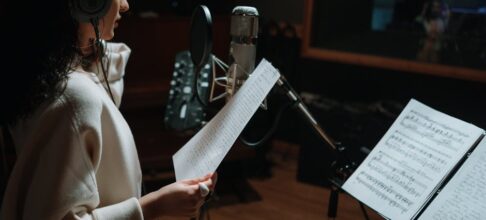
There’s an odd tension in the Esperanto voice over world. Despite being a language designed for universal communication, its audio presence remains oddly fragmented and—unless you’re inside one of the handful of European localization studios that occasionally field an Esperanto brief—largely invisible.
Yet, since , there’s been a trickle of requests surfacing across online casting platforms like Voice123 and Bodalgo, often from indie film producers or educational app developers chasing pan-European accessibility. The frequency? Still minor—less than 0.5% of total voice jobs on those platforms—but it’s enough to spark a ripple inside niche production circles.
A Berlin Studio’s Unlikely Experiment
Take for example the case of Klangbrücke Media, a mid-sized Berlin-based localization studio best known for its work with Polish and Czech dubs. Early in , they were approached by a documentary filmmaker adapting her short on environmental activism for an international festival circuit. Her request: a fully voiced Esperanto version to accompany screenings in Eastern Europe and Scandinavia.
The workflow was anything but typical. The project manager at Klangbrücke recounts how they had to scrape together talent via Discord forums frequented by Esperanto enthusiasts—a far cry from their usual pipeline where German or French talent can be found within hours through established rosters or agencies like InterVoiceOver. Recording sessions became logistical puzzles as the available Esperanto speakers hailed from six different time zones (from Brazil to Lithuania), with most working semi-professionally from home setups.
Still, the end result impressed both client and studio; the soundtrack felt authentic rather than artificial, precisely because it didn’t come from polished broadcast voices but actual language community members.
AI Dubbing vs Community Authenticity
Since late , several AI-powered dubbing tools (Papercup and Deepdub among them) have started offering basic support for minority languages—including Esperanto. In theory this should revolutionize workflows: quick turnaround, scalable pricing (often under € per finished hour), and instant revisions. But in practice?
Paris-based children’s publisher Les Petits Explorateurs ran two parallel pilots last year: one set of animated storybooks dubbed using Papercup’s synthesized Esperanto voices; another batch using live narrators sourced via community Facebook groups. According to their post-campaign survey with educators in Slovenia and Finland—their main target regions—the human-voiced versions scored noticeably higher on engagement (by %) compared to AI-dubbed editions. Teachers described the synthetic tracks as “unsettling” or “robotic,” especially when handling idiomatic phrasing unique to Esperanto wordplay.
Still, these publishers continue experimenting: at least three new pilot projects launched Q1 are blending both approaches, layering human narration atop machine-generated timing beds for cost control without sacrificing authenticity.
Platforms as Gatekeepers—and Occasional Bottlenecks
Netflix famously added limited Esperanto subtitle options back in late during its global expansion push. But as of June , native voice over tracks remain absent from mainstream streaming catalogs—even on otherwise inclusive platforms like Disney+ or Amazon Prime Video.
By contrast, smaller OTT services focused on educational content—like LinguaTV (Berlin) or Mondly Kids (Romania)—have quietly introduced experimental Esperanto audio tracks for select series since early . It’s not widespread: typically fewer than five titles per service include such options. Yet their internal data suggest incremental but steady monthly upticks in user opt-ins (averaging around +% YoY).
For these smaller players, technical implementation is rarely straightforward. In interviews at last year’s LocWorld conference in Malmö, Swedish vendor PixelFrame described persistent file format headaches when integrating custom-encoded multichannel audio tracks into legacy CMS frameworks not built with constructed languages—or unpredictable character sets—in mind.
Commercial Realities: Why Bother?
From Warsaw-based mobile dev shop Enigma Apps comes another revealing micro-case: their Duolingo-style learning game added professional-level Esperanto audio prompts last autumn after pressure from their growing Central Asian userbase (Kazakhstan being a surprising hot spot). Their reported outcome? While initial onboarding surged (+% registrations month-over-month), retention rates plateaued fast unless additional voice content was regularly refreshed—a costly proposition given the shallow pool of available narrators willing to record ongoing updates for modest pay rates (€–/hour typical).
In conversations with project managers there’s an open acknowledgment: much like Irish Gaelic or Basque before it gained state funding boosts in the late ‘90s/early ‘00s, true commercial viability depends less on raw tech adoption than on passionate communities driving continual demand outside corporate logic.
The Future: Micro-Niches With Macro Potential?
What does all this mean long-term? There’s little sign that mainstream media will suddenly adopt Esperanto voice overs en masse—even if AI lowers costs further by . Instead what emerges is a patchwork pattern:
- Indie producers using crowd-sourced workflows for festival runs;
- Ed-tech startups piloting hybrid machine/human pipelines;
- Niche OTT apps adding experimental language toggles based directly on small-but-vocal audience petitions.
One could argue it looks more like hobbyist tinkering than industry trendsetting—but then again,
in real-world campaigns observed anywhere from Vilnius to Melbourne,
such micro-niches often become testing grounds for wider innovation down the line.