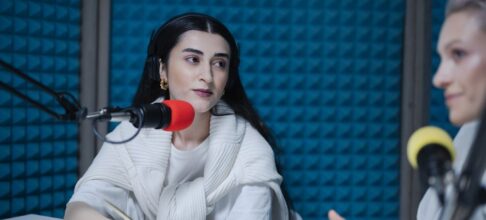
It’s a stubborn myth that only big languages matter in global marketing. Spend a week inside the wild mix of creative agencies on Rustaveli Avenue in Tbilisi, and you’ll notice something odd: more Western brands than ever are chasing authentic Georgian voice overs—not just for compliance or box-ticking, but for persuasion.
Consider how Netflix quietly added Georgian audio to its regional hit series “Fauda” back in 2022. For months, small studios like Audiogram and newcomer Tbilisi Sound Forge juggled overnight deadlines, blending native actors’ voices with localization teams from Berlin and Istanbul. Not because anyone expected massive viewership spikes—Georgia is home to just under four million people—but because real engagement data showed that locally voiced promos drove higher retention among urban Gen Z audiences. In several post-campaign surveys run by Kutaisi-based research firm NextMetrics, up to 17% more viewers watched through entire trailers when audio was localized versus subtitled English.
Why does this matter for marketers? Because Georgia—a market often skipped over by multinational campaign planners—is becoming a sort of stress-test zone for personalized messaging. The cost dynamics are unusual here: rates for voice talent hover between $60–$120 per finished minute (according to AudioPost Tbilisi), about one-third of equivalent rates in Paris or Munich. That makes it feasible for mid-tier digital agencies in Warsaw or Prague to experiment with multi-market variants without breaking the bank.
---
A Studio’s Reality Check: Localization Isn’t Plug-and-Play
If you ask Nino Tsertsvadze at RedDot Creative—a boutique production house tucked behind Freedom Square—about her typical workflow on pan-European campaigns, she’ll laugh first. “Nobody believes me until they see our group chats,” she says. “Client sends us an English script Monday morning; by Tuesday afternoon we’re recording two male voices and one child actor—one of whom is Skyping in from Batumi.”
What they don’t mention on agency webinars: even simple snack ads can spiral into complex dialect debates. West Georgian dialects differ enough from Tbilisi standard that some rural focus groups feel alienated by ‘city talkers’. This tension echoes what we saw back in 2018 when Coca-Cola ran a summer campaign here using only written slogans—the feedback was lukewarm, prompting them to test regionally flavored voice overs the next year via local studio Sonic Bridge.
Marketers now regularly request multiple accent versions within Georgia itself—unusual even compared to hyper-localized German or Polish campaigns. Agencies like Warsaw’s Translytic have started billing this as “micro-segmentation,” offering package deals where three accents are recorded for each video asset targeting different regions.
---
AI Tools Arrive (But Don’t Replace Actors Yet)
When startups like Deepdub launched their AI-powered dubbing tools across Eastern Europe in 2021, many predicted the end of traditional voice work—even for “minor markets” like Georgia. The reality has been messier.
In practice, most studios use AI-generated scratch tracks during early edits—a pattern also seen in game localization pipelines out of Stockholm and Tallinn—but replace them entirely before release due to nuance gaps. In recent campaigns observed at Adwise Digital (Tbilisi), producers reported saving up to 30% editing time with these synthetic placeholders but still hired human actors for final delivery after client review flagged subtle emotional mismatches.
One notable exception is e-learning modules produced by Czech-based EduReach Group—they’ve started shipping introductory Georgian lessons with partially AI-narrated prompts since late 2023, citing budget constraints and faster turnaround needs. Still, their user feedback surveys indicate mixed responses: learners found robotic intonation less engaging than fully human reads, especially during interactive exercises.
---
Where Scale Meets Artistry: International Brands Get Granular
It isn’t just media giants experimenting here. A Germany-headquartered FMCG conglomerate recently piloted a cross-border campaign involving four language markets (Bulgarian, Armenian, Georgian, Turkish) with micro-influencer testimonials dubbed natively in each tongue—including distinct Svanetian and Kakhetian accents within Georgia alone.
Their brief? "Don’t sound like an ad." To achieve this effect, casting directors sourced non-professional speakers from gig networks such as Locallife.ge rather than relying solely on trained voice actors—a move reminiscent of Nike’s “Nothing Beats a Londoner” approach transplanted eastward.
In post-campaign analysis shared with BrandMonitor Europe (Q1 2024), product recall among Georgian viewers rose by approximately 22% compared to last year’s stock-audio version aired nationwide via Imedi TV. It wasn’t scale alone but authenticity—something marketers rarely measure directly—that made the difference.
---
The Bilingual Edge—and Its Limits
There’s another wrinkle few outsiders consider: code-switching is rampant among urban Georgians aged 18–35 who toggle between Russian pop culture memes and Anglo-American streaming hits daily. Yet when it comes to persuasive content—from fintech explainers to deodorant spots—they consistently rate full-Georgian narration higher than hybrid or dubbed-over versions.
At Sound Forge Studio’s internal review sessions last autumn, clients previewed split-tested radio spots: one spliced mid-sentence with English taglines (“Feel fresh all day!”), another read straight through in rich Imeretian cadence. The latter won hands down—especially outside tourist-heavy districts—in both comprehension testing and call-to-action conversions measured over six weeks via SMS opt-ins (around 14% lift).
This doesn’t mean foreign agencies can simply hire any native speaker off Upwork or Fiverr; linguistic authenticity requires local directorial oversight plus cultural sensitivity checks—a step now built into most contracts handled by regional agencies like Medialogic Caucasus since mid-2022.
---
Budgets vs Reach: Why Small Markets Set New Standards
From Budapest to Brisbane there’s grumbling about shrinking creative budgets—but what surprises visitors is how far $500 stretches inside a compact market like Georgia once you drop expensive licensing fees common across Western Europe.
A Warsaw-based mobile games publisher shared recently that adapting promo videos into Georgian cost barely half their allocation compared to Czech or Slovak runs—despite similar studio hours logged at both ends. Their trick? Partnering directly with Tbilisi microstudios bypassing third-party localization aggregators that inflate prices elsewhere.