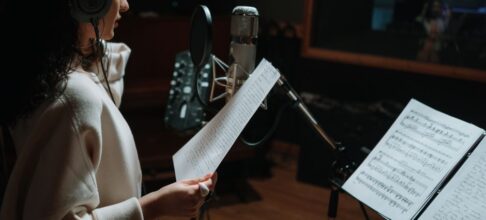
Shanghai, 2018. I’m standing in a glass-walled sound booth at a mid-sized localization studio, watching the engineer wince as the client replays line 7 for the third time. The voice artist is sweating. It’s a toothpaste ad, but you’d think we were dubbing a government speech. The tension isn’t about pronunciation or acting—it’s about whether to use 普通话 (Standard Mandarin) with a northern or southern lilt. Welcome to the invisible battleground of Chinese Voice Over.
Unseen Dialects: More Than Mandarin vs. Cantonese
Most non-Chinese clients arrive at studios—whether in Paris, Toronto, or Sydney—expecting there’s one flavor of “Chinese.” But walk into Smart Localization’s Beijing office and you’ll find a matrix: not just Mandarin and Cantonese, but Sichuanese-inflected Mandarin for local e-commerce ads, or Taiwanese-accented Mandarin for mobile games targeting Taipei teens. A project manager at LocStudio in Berlin once shared that nearly 20% of their revision cycles on China-targeted spots are spent debating dialect nuance rather than script translation.
AI Isn’t Magic Here (Yet)
Voice AI tools like Descript and Respeecher have made big promises globally—but anyone who’s tried to use them for Chinese content quickly hits walls that aren’t obvious from demo videos. In early 2023, an indie animation team in Melbourne tried ElevenLabs’ Mandarin model for short-form dialogue. On playback, half the lines came out with flat prosody—unintentionally robotic—and idioms mangled beyond recognition (think “horse horse tiger tiger” rendered as literal animal sounds). Human directors still need to intervene far more often than in Spanish or English workflows.
The Unwritten Rules of Casting
Here’s what nobody tells you: being a native speaker is never enough if your voice “sounds too radio.” In a real campaign localized by MediaMice (a Singapore-based agency) for Douyin ads in 2021, two experienced actors were dropped last-minute because they sounded “too official”—the brand wanted someone whose accent evoked livestream sellers from Hangzhou. This kind of micro-casting is both art and survival tactic: one wrong inflection can tank engagement rates by double digits.
Script Mayhem and Cultural Landmines
Ask any producer who has worked between Shanghai and New York—the script is rarely sacred. Local legal requirements force line edits on the fly; brand teams push back against even small word choices that might carry unwanted political undertones. In 2019, NetEase Games’ US office hired three rounds of script reviewers before approving narration for their flagship RPG launch in mainland China—each reviewer flagged different turns of phrase as potentially sensitive under new SARFT guidelines.
One Animation Studio’s Dubbing Gauntlet
Consider Inkpot Studio—a mid-tier outfit based near Guangzhou working on children’s educational shorts for distribution across southern China and Hong Kong SAR. Their workflow looks like this:
- Main scripts drafted in Standard Mandarin.
- Two rounds of casting: first to select mother-tongue northern speakers (for official mainland channels), then again for Cantonese dubs tailored to local broadcasters like TVB Pearl.
- Every session requires a linguist familiar with both Putonghua and regional slang—because child audiences will instantly clock anything that feels off-script or artificial.
- Final QC includes blind testing clips with actual students (ages 6–10), tracking which versions keep attention longest—a metric that sometimes swings up to 30% between dialects.
Why "Neutral" Is Nearly Impossible
In typical production workflows outside China, clients ask for "neutral," expecting it exists—like Received Pronunciation does in British English voice over work. In practice? A so-called neutral accent may alienate half your audience if it falls just north or south of cultural comfort zones. A Polish localization producer told me that when launching an edtech app into Guangdong province in late 2022, downloads dropped sharply until they swapped out the original “standard” Mandarin track for one voiced by an actor raised west of Shenzhen.
Celebrity Voices Don’t Always Travel Well
Hollywood loves famous voices; so do streaming platforms like iQIYI—but star power cuts both ways here. When Netflix commissioned Chinese dubs for their animated series "Dragon Prince" circa 2020, feedback from focus groups showed younger viewers preferred lesser-known TikTok personalities over established TV actors—they found influencers’ delivery less stilted and more relatable (even when technically less polished).
Hidden Costs Behind Seemingly Simple Projects
A European e-learning company planning its first major campaign on Bilibili recently learned this lesson: their initial budget covered four hours per finished hour of audio recording—the industry average elsewhere—but by the end needed nearly double that due to endless retakes related to regionalisms and tone adjustments after user feedback rolled in post-launch.
Don’t Forget Legal Roadblocks
and Government Red Tape
SARFT (China's National Radio and Television Administration) regulations can torpedo months-long projects overnight if one word slips through review considered politically problematic or culturally insensitive—even unintentionally so. Localization teams inside global gaming companies like Ubisoft started employing full-time compliance officers after multiple launches faced sudden takedowns around 2017–2018.
Project Management Headaches Multiply With Scale
At scale, managing dozens—or hundreds—of voice talents becomes an exercise in chaos theory rather than organization science. Tencent Video's internal documentation reportedly includes entire flowcharts dedicated solely to categorizing acceptable voice types by region and age segment—for youth dramas alone! An internal audit leaked online suggested some projects cycle through up to eight provisional tracks before final approval from marketing leads at headquarters in Shenzhen.
Niche Genres Demand Even More Nuance
in Sound Direction
Anime fans know this pain well: Japanese-to-Chinese dubs require not only technical fidelity but also cultural re-mapping so jokes land with young urbanites from Chengdu differently than those near Harbin. Realistically? Some studios simply budget extra weeks knowing certain punchlines may require multiple creative rewrites before VO sessions even begin—a pattern reported by several sub-teams within Bilibili's content division during their rapid expansion years post-2015.
Wrap-Up: No Silver Bullets—and No End In Sight Yet
If you’re hoping there’s an easy answer—a killer tool or plug-and-play workflow—you’ll be disappointed. Industry veterans quietly agree: every Chinese voice over project is a tug-of-war between linguistic accuracy, audience preference patterns that shift city by city, relentless regulatory oversight…and sheer brute-force iteration.
No amount of AI wizardry—or celebrity cachet—can substitute for boots-on-the-ground adaptation cycles spanning everything from script tweaks to live user tests across cities as different as Harbin and Guangzhou.