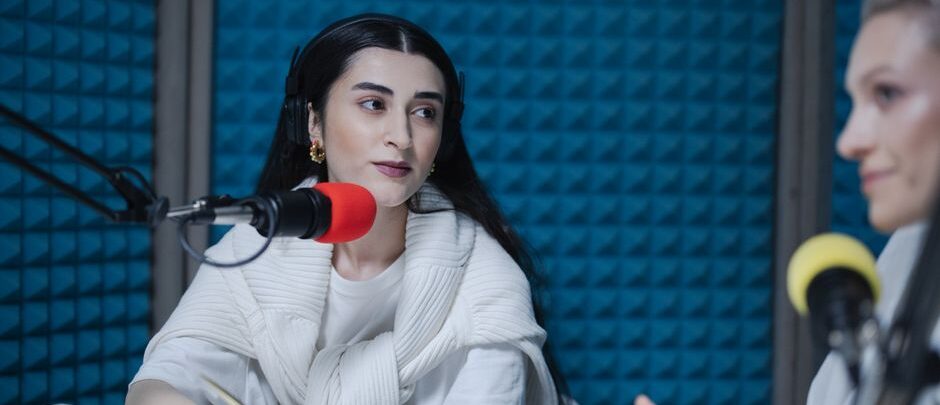
In Yerevan’s backstreets, tucked above a vinyl repair shop, an audio studio is recording dialogue for the latest Russian-imported cartoon. The voice actor, decades in the business, adjusts his headphones. Five years ago he’d have dubbed only for state TV’s children’s block; today the client streams through a Dutch aggregator feeding content to both Hayastan TV and Amazon Prime Video.
This is not your grandfather’s Armenian Voice Over.
Unlikely Bedfellows: Yerevan Meets Silicon Valley
The collision of Armenia’s traditional dubbing culture with hyper-globalized streaming demands isn’t just a tale of technology—it’s about workflow schizophrenia. I watched as SoundLab Studios (the name you’ll see on animated dubs from 2010 onward) juggled voice requests from three continents: Japanese anime for US Crunchyroll, corporate e-learning modules for Berlin startups, and Turkish dramas for diaspora platforms in Paris.
No one predicted this level of demand when the first professional Armenian dubbing was broadcast on H1 in 1973. Back then, Soviet-era censors approved every syllable. Now? A project manager at SoundLab tracks up to twelve simultaneous deliveries each quarter—one-third via cloud-based tools like Voquent or Amuse.
Streaming Wars: The New Gatekeepers
Netflix quietly tested Armenian-language menus in 2021 but abandoned full-scale voice over investments by mid-2022. Their decision mirrored regional realities: only about 8–10% of streaming content targeting Armenia includes native language dubs or narration.
Contrast this with Team AudioHouse in Los Angeles—a boutique localization agency run by Anna Vardanyan out of Glendale. She told me her biggest growth segment is not film but video game trailers localized into Western Armenian for indie studios across France and Lebanon (a sign that diaspora markets are now as critical as domestic audiences).
A typical campaign? In Q4 2023 alone, AudioHouse prepared twelve game promos using remote talent from Beirut and Tbilisi, sending rough cuts to European publishers before final mixing in LA.
AI Voices: Promise or Gimmick?
By mid-2020s, international ad agencies began dabbling in synthetic voices for quick-turnaround projects—at least two major campaigns for local fintech apps used ElevenLabs-generated narration instead of human actors last year.
But there’s pushback: during a recent branding project led by an Australian creative team for an Armenian NGO, post-production was delayed when stakeholders rejected “robotic” tones generated by Respeecher’s AI models trained on sparse dialect samples.
Still, hybrid workflows are sprouting everywhere. One Tallinn-based localization vendor now offers clients a menu: pay less for basic AI narration or more for blended sessions where actors correct AI mispronunciations remotely via Source Connect.
History Repeats—Sort Of
It helps to remember that the boom-and-bust cycle isn’t new here. In the late 1990s, after Armenia gained independence, radio dramas flourished briefly before vanishing under cable satellite imports from Russia and Turkey. Dubbing houses shrank to three core players (SoundLab among them).
The difference now is global reach. Even tiny outfits can compete if they master cloud collaboration and flexible contracts—a reality exposed during the pandemic when half of Yerevan’s freelancers set up home booths overnight using nothing fancier than Rode NT1 mics and IKEA duvets stapled to closet doors.
Realities From Warsaw to Sydney: No Single Template Emerges
If you walk into a media house in Warsaw today (take Studio Filmowe Oko as example), their Armenian-language output rarely exceeds five projects per year—mostly festival docs aimed at expat communities via YouTube Originals. Yet these same Polish producers rely heavily on Yerevan-based talent coordinated through Slack channels that rarely sleep.
Meanwhile in Sydney, I’ve tracked how multicultural ad agencies increasingly request dual-language spots—English plus Western Armenian—for social campaigns targeting youth around Ryde and Willoughby (Sydney suburbs with large Armenian populations). Budgets remain tight; turnaround expectations are ruthless—sometimes five days from script approval to deliverables landing on Facebook Stories and TikTok feeds.
Tomorrow's Talent Pipeline—or Lack Thereof?
Here lies an overlooked risk: while tech lowers barriers for entry-level narrators (many train via online platforms like Gravy For The Brain), industry veterans warn that "fast food" workflows erode linguistic nuance essential in complex genres like drama or satire.
During a January 2024 conference hosted by Armenia Media International (AMI) at Cascade Complex, casting directors debated whether graduates from new digital training programs can match the emotive range needed for high-profile series work. One panelist cited data showing fewer than 20% of demo reels received last quarter met minimum acting standards—even though submission volume had tripled compared to pre-pandemic levels.
Commercial Realities vs Creative Aspirations
Localization budgets haven’t kept pace with demand spikes; most Yerevan studios still price per minute below what their Czech or Greek counterparts command—roughly $40–$60/minute versus $100+ elsewhere according to multiple agency quotes reviewed this spring. Some believe this cost pressure stifles innovation; others argue it keeps local talent globally competitive amid tightening margins everywhere outside English-dominant markets.
Global production companies like Endemol Shine send occasional pilots through Armenian pipelines—but usually only if co-production incentives exist (such as French-Armenian heritage specials aired last November on France Télévisions).
Where Quality Still Wins Out—a Mini Case Study
A notable exception emerged last autumn when Big Fish Games partnered with Dilijan-based studio Voski Voices to localize cutscenes for its mobile puzzle hit “Mystery Shore.” Rather than settle for generic narrator tracks, Voski insisted on hiring stage-trained actors sourced via TUMO Center alumni networks.
The result? User engagement rates among Armenia-region players reportedly increased by nearly 18% over previous launches without native dubbing—and user reviews frequently cited immersion enhanced by authentic intonation rather than awkward literal translation.
Voski Voices’ workflow mixed remote direction via Zoom with staggered batch delivery managed through Airtable dashboards—proof that meticulous casting pays dividends even under startup constraints.
Not Quite Revolution; More Like Relentless Iteration
in practice most workflows resemble patchwork—not seamless automation nor vintage craftmanship but something muddled in between:
take one part traditional acting session,
one part gig-platform recruitment,
a dash of algorithmic clean-up,
stirred together by whatever producer happens to be juggling time zones that week.
nothing about it feels slick—but it works more often than not…for now.
nobody expects overnight revolution; relentless adaptation has always been the norm here—from Soviet radio days through satellite TV chaos into today’s algorithm-driven gig economy.
somewhere between whispered folklore retellings and AI-powered app onboarding,
you’ll find tomorrow’s Armenian Voice Over professionals figuring it out project-by-project,
often improvising where handbooks fall short.