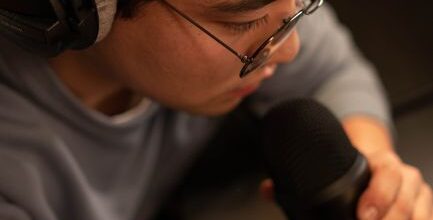
It’s 9:00 PM in Yerevan, and the main audio post-production studio at Triada Studio is still humming. Audio director Anahit Hakobyan is frowning at her screen, replaying a single line—again. "We can’t let it sound like a Russian overdub," she mutters. The phrase echoes through the room for the twentieth time. This isn’t just about lip sync or clarity; it’s about identity—and, increasingly, survival.
When Standard Isn’t Standard
Armenian voice over doesn’t fit neatly into the frameworks that have standardized much of Europe’s media localization industry since the early 2000s. While Warsaw and Prague studios churn out dubbed content at scale for Netflix or PlayStation (using streamlined workflows and vast banks of union actors), even large Armenian productions can feel more like artisanal workshops than assembly lines.
Why? Because there is no universal Armenian accent—there are dialects, diasporic inflections, Soviet-era habits, and new-westernized pronunciations flooding in from Los Angeles to Paris to Moscow. A typical workflow at Triple S Media in Yerevan involves not only casting but extensive consultations with linguistic experts—sometimes two or three per project—to decide if the target audience wants Eastern Armenian (used officially in Armenia), Western Armenian (more common among diaspora communities), or some plausible hybrid.
In contrast, an Estonian studio localizing for German clients rarely holds week-long debates over whether to use Tallinn or Tartu pronunciation.
One Market, Two Languages (Sometimes Three)
The 1990s broke the audio supply chains across former Soviet states. By the mid-2010s, Armenia was seeing an influx of international content—a jump marked by streaming platforms like MEGOGO entering the region—and suddenly faced with choices few others had to make. In real workflows at studios like ArmDreams Production today, scripts often arrive as generic English source files. The team must then decide: Do they translate directly into literary Eastern Armenian? Or adapt for a diaspora audience that thinks in French-Armenian hybrids?
I’ve sat through pre-record sessions where two versions are produced simultaneously—one aimed at domestic TV stations in Armenia proper and another tailored for distribution on LA-based HayFanat streaming app, which reports roughly 60% of its users prefer Western Armenian audio tracks.
Heritage Meets Technology: The AI Dilemma
There’s tension here too. While game studios in Berlin might run their entire voice casting process through automated platforms like Voicemod or Respeecher to save costs (with up to 40% faster turnaround reported by EU studios using synthetic voices since 2022), most Armenian projects still demand human nuance.
Triada Studio tried synthetic voices during pandemic lockdowns—a necessity when Yerevan’s curfews kept actors home—but dropped them after complaints from diaspora communities that "it sounded cold" or "not truly ours." Contrast this with Polish mobile game developer Ten Square Games, which rolled out localized AI-powered narration across six languages—including Hungarian and Romanian—with barely a whisper of complaint from players.
The Diaspora Effect: From Glendale to Marseille
No other country is quite so affected by its own global spread. Roughly three times as many Armenians live outside Armenia as inside it—a fact reflected in every casting call handled by local agencies like SoundLab Armenia. It’s not uncommon for producers working on animated series for kids—like those distributed via France's Gulli platform—to request auditions from both Yerevan-based talent and voice artists living in Glendale, California.
A recent ad campaign for Viva-MTS telecommunications saw its core TV spot recorded twice: once with native Eastern Armenian speakers for local broadcast (targeting rural regions especially) and once with subtle Western Armenian intonation for social ads placed internationally—which accounted for nearly 30% of total impressions according to agency estimates shared last year.
More Than Translation: Performance as Preservation
In European studios—say Copenhagen or Vienna—the challenge is often technical: deliver pristine audio within budgeted hours using established protocols. For many Armenian teams I’ve observed (and occasionally worked alongside), there’s a palpable sense that every project is also a form of cultural preservation. Every consonant softened too much toward Russian models—or clipped too sharply toward Americanized patterns—is debated as if national history were at stake.
One illustrative case comes from Sayat Nova Studios’ collaboration with Tumo Center for Creative Technologies on dubbing educational science videos into Western Armenian. The final product wasn’t just assessed on clarity or synchronicity; feedback sessions included diaspora educators critiquing whether specific idioms resonated authentically with children raised outside Armenia—a level of scrutiny rare even among Catalan or Basque voice-over projects elsewhere in Europe.
Money Doesn’t Move Mountains Here… Yet
Budgets tell their own story. Even now, rates paid to professional voice actors working on major campaigns—think Coca-Cola-sponsored promo spots during Erevan Jazz Fest—hover around $50–$100 per finished minute according to local producer circles, significantly below what similar campaigns would command in Poland or Greece (where $150–$250 per minute has become standard since around 2018). This means fewer full-time VO careers inside Armenia itself—but plenty of cross-border remote work arrangements facilitated via ProZ.com or Voices123 platforms catering specifically to niche language needs.
But this gap hasn’t prevented growth entirely: ArmDreams Production reports doubling their annual output between 2017 and 2022 simply by targeting overseas e-learning modules and YouTube explainer videos commissioned by North American non-profits seeking authentic heritage accents rather than generic Eastern European reads.
Unseen but Heard: New Genres Take Root
Gaming localization remains uneven but promising territory here. Two years ago I watched a mixed team based between Gyumri and Toronto revoice all NPC dialogue lines for an indie RPG released via Steam—in both dialects—with noticeable impact on sales data from Canada’s Ontario region (+15% engagement among self-identified ethnic Armenians). Meanwhile animation dubs produced locally still lag behind Georgian counterparts when it comes to volume but have started catching up thanks partly to freelance networks connecting scriptwriters in Marseille with directors back home via Slack workspaces set up during COVID-era travel restrictions.
What Success Looks Like Now
Perhaps the greatest difference is invisible until you listen closely: Modern Armenian voice over isn’t chasing homogenization—it thrives on contradiction and conversation between past and present geographies. A session might begin with three people disputing one verb tense choice before finally agreeing—for now—to record two alternate takes…because somewhere between Yerevan and Beirut there will always be more than one right answer.