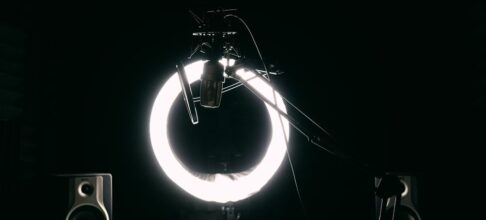
It’s a Tuesday afternoon in a small post-production suite on the outskirts of Budapest. The sound engineer, Anita, is adjusting her headphones for the fifth time in an hour. She sighs, not out of boredom, but from wrestling with a recurring paradox that many in the Hungarian voice over industry know all too well: why does it always take three rounds to get a single line right for German clients, while a domestic e-learning gig wraps up after just one?
In Hungary, voice over isn’t just about reading lines into a microphone—it’s about navigating layers of expectation, technical standards that shift depending on whether your end client is Netflix Poland or RTL Klub, and an ecosystem where linguistic precision meets practical budget realities.
The Shifting Bar for Quality
In , when Netflix first expanded its Hungarian localization output—driven by their promise to deliver native-language experiences everywhere—Budapest studios saw an overnight spike in demand. Dubbing houses like SDI Media (now Iyuno-SDI Group) started outsourcing more session work to freelancers. Suddenly, what passed as acceptable audio quality for local radio ads was nowhere near enough. Directors began referencing scenes from HBO Europe productions as benchmarks instead of legacy TV commercials.
The expectation gap between international streaming clients and domestic broadcasters became glaring. One veteran studio manager told me last year, “For Disney+, you need five takes per line; for a regional bank ad, two is already luxury.”
Case in Point: A Streaming Workflow Breakdown
Consider how this plays out on real projects. When working on the Hungarian dub for Ubisoft’s "Assassin’s Creed Valhalla" promotional spots in , Budapest-based agency MASZK Studio coordinated with Paris HQ via shared Google Drive folders and nightly Zoom approvals. Lines would be tracked locally using Pro Tools rigs—sometimes at -bit/96kHz spec if required by the publisher—and then sent off to France for review by Ubisoft’s localization lead.
If even one syllable sounded slightly Anglicized or artificial (“not enough rural inflection”), it triggered another round of pickups. This kind of workflow means that even mid-budget video game campaigns can span several weeks and involve up to eight different voice talents for less than ten minutes of final runtime.
Contrasts With Other European Markets
Compare this to workflows observed in Warsaw or Prague studios: Polish dubbing teams often have larger pools of unionized actors and sometimes use automated dialogue replacement (ADR) tools like VoiceQ or Nuendo’s ADR taker module for quick turnarounds. Meanwhile, most Hungarian studios are still running on relatively lean crews—a result of both market size and tradition dating back to the early 2000s RTL soap opera boom.
AI Voice: Promise Meets Pushback
AI-powered voice synthesis has entered the conversation here too—but not without resistance. In late , when US-based ElevenLabs demoed their multilingual AI voice tools to several Central European localization companies—including Hungary’s Masterfilm Digital—the feedback was mixed.
A project manager at Masterfilm described one pilot run for an audiobook platform as “nearly indistinguishable from human” at first listen—but native speakers caught subtle errors in vowel length and rhythm that gave away its synthetic origin. As one linguist put it during a closed-door panel at Budapest Media Week: “Hungarian listeners pick up on mistakes foreigners don’t even hear.”
E-Learning Surges—and Its Unique Demands
Since COVID- hit in , there’s been a dramatic uptick—by some accounts over % year-on-year—in e-learning content requiring localized narration across Hungary’s corporate sector. Here the priorities are speed and clarity rather than cinematic immersion.
A typical workflow at Mozaik Education (the Szeged-based edtech firm) involves recording up to twenty short training modules per week with three core narrators rotating shifts in their compact booth setup. They rarely require more than two takes per segment unless complex medical terminology is involved.
“Timing is everything,” says Zoltán Horváth, senior editor at Mozaik Education. "If we’re late delivering files—even by half a day—the whole online course rollout gets delayed." Contrast this just-in-time pipeline with months-long drama dubs and you see why flexibility trumps perfectionism outside entertainment circles.
Historical Footnotes That Still Shape Today’s Workflows
Those who’ve been around since before digital workflows remember how state-run MTVA handled all major dubbing until liberalization took hold post-. Studios were clustered along Budapest’s Róna utca; every actor knew every director personally; scripts arrived printed on dot-matrix paper.
Today some remnants remain—such as persistent preferences among older directors for certain classic mic setups or room acoustics—even though most sessions now happen entirely inside DAWs like Cubase or Logic Pro X.
Subtlety Over Showmanship: The Ongoing Challenge
Hungarian voice work rarely calls attention to itself—a deliberate contrast with more expressive Italian or Spanish dubbing styles favored by Southern European markets. There’s an unspoken rule among casting directors: voices should serve the script first, personality second.
Yet this creates another contradiction when global brands request "energetic" reads modeled after U.S.-style commercials but want "local authenticity." One voice artist recently joked off-mic during an IKEA spot session: “So you want American enthusiasm but pronounced with Érd intonation?” Everyone laughed—but no one really had an answer.
Looking Forward Without Easy Answers
With new tech arriving faster than budgets can keep pace—and a growing crop of young talent coming out of ELTE University’s media program—the only certainty seems to be continued tension between artistry and efficiency.