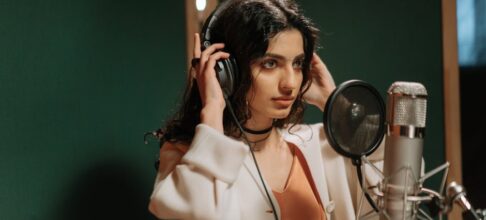
Silence rarely lasts long in a Berlin audio post suite. Even in the early hours—before the talent files in—there’s always a producer, somewhere, arguing over whether an AI-generated line needs another human pass. That tension cuts to the heart of German voice over as it stands now: part tradition, part bold experiment.
A Dubbing Legacy Meets Machine Learning
For decades, Germany has been fiercely protective of its dubbing industry. By , almost % of foreign films and nearly every major TV series aired with full German localization—more than any other European market outside France or Italy. The expectations for lip-sync fidelity and regional accent authenticity have always run high.
But fast forward to late : At Studio Hamburg Synchron, known for handling high-profile Netflix titles like "Dark" and localizing Hollywood blockbusters, workflows look unmistakably different. Engineers bounce between Pro Tools sessions and browser tabs running Deepdub—a generative speech platform that’s become as common as ADR booths once were. The studio reports that by Q3 last year, more than % of their mid-budget projects at least trialed synthetic voices for scratch tracks or minor roles.
Inside a Real Workflow: Munich Animation & New Pipelines
Munich-based Red Parrot Studios offers a glimpse into the new normal. In spring , they’re working on a pan-European animated series aimed at children aged seven to ten. Historically, this would mean casting eight to twelve native speakers for recurring roles—often from Berlin or Cologne—and shuttling WAVs across FTP servers for weeks.
Now? Red Parrot’s technical director walks me through their current workflow:
- All principal characters are cast traditionally—recorded in-person with established voice actors.
- For secondary characters (background villagers, episodic guests), they generate preliminary tracks using Respeecher’s German engine.
- Producers send these AI dubs out to focus groups in Leipzig and Vienna before final recordings are scheduled; about one-third are retained as-is if audience response is positive enough.
- One Hamburg-based comedy podcast saw listener backlash after switching its intro narration from a beloved local actor to an eerily similar synthetic version; social media sentiment plummeted overnight until the original voice returned within days.
- Small studios in Stuttgart report hesitancy among older talents wary of training data clauses when signing new contracts with overseas game publishers who request raw vocal samples “for future-proofing.”
- Meanwhile, e-learning production houses targeting Swiss-German markets struggle with accent accuracy; most neural TTS engines can’t yet handle Schwyzerdütsch nuances convincingly enough for educational compliance standards set by Zurich authorities.
- Major broadcasters continue hedging bets—testing AI solutions but refusing full automation for flagship shows (think ARD Tatort).
- Boutique studios differentiate themselves precisely *because* they promise zero machine involvement on prestige projects aimed at festivals or public funding boards worried about artistic dilution.
- Mid-sized ad agencies across Frankfurt increasingly offer clients sliding scales: “pure human,” “hybrid,” or “full synthetic”—each priced accordingly based on turnaround time and creative oversight required.
The result? Turnaround times drop by nearly half compared to their pre- projects. But not everyone is happy about it: several freelancers complain that “mid-tier” gigs are drying up while top-shelf character work remains sacrosanct—for now.
Global Clients, Local Pressure
Disney+ Germany has leaned heavily into this hybrid model since their localization ramp-up during the pandemic years. Their pipeline now routinely blends remote human talent with machine-assisted post-processing for everything from Marvel shorts to lesser-known documentary content. According to internal sources at SDI Media (acquired by Iyuno-SDI Group), approximately % of episodic content delivered for Disney+ Germany in early used some form of AI-enhanced dialogue replacement—not as main leads but filling out atmospheres or enhancing crowd scenes.
This isn’t just happening on streaming platforms either. Ubisoft Düsseldorf recently piloted a multi-language game trailer where all initial German passes were created via ElevenLabs’ custom-trained models before being refined by traditional voice artists who re-recorded only select hero lines.
The Numbers They Don’t Advertise
Industry bodies like the Verband Deutscher Sprecher*innen (VDS) estimate that overall demand for "pure" human-only session hours dropped by roughly % between late and mid- in metropolitan hubs such as Berlin and Munich—but project volume actually increased due to faster cycles enabled by hybridization.
Voice agencies scramble to adapt; there’s more coaching around digital rights management than ever before. Veteran agent Svenja Riedel described it best: “We still negotiate usage fees per territory—but now we’re fielding questions like ‘Will my performance be algorithmically altered?’ more often than ‘Will my dialect play well outside Bavaria?’”
Friction Isn’t Going Away Soon
Not everything is seamless—or well received—in these new workflows:
Beyond Technology: Cultural Investment Matters More Than Ever
Ironically, some of the most successful productions doubling down on hybrid pipelines also invest heavily in dialect coaching and cultural adaptation upfront—a lesson learned from Netflix’s infamous missteps localizing British comedies for German audiences back in – (with awkward literal translations still circulating as memes).
In fact, Berlin-based indie film collective KinoKlang quietly reported that when they released a limited-series sci-fi drama last fall using both classic ADR and AI augmentation, viewership spiked in North Rhine-Westphalia after promotional materials highlighted meticulous attention paid to Ruhrpott-specific idioms—even though half those lines originated from generative systems later retouched by locals.
What Will Actually Matter?
There’s no straight path forward here. In practice:
Who owns what becomes thornier each quarter; union lawyers joke that contract templates age faster than the software itself these days.
Glimpses Ahead—But No Easy Answers
By late , it feels like everyone is talking about the technology—but few want it defining their brand outright. The presence of tools like Descript Overdub or Microsoft Custom Neural Voice is undeniable across German studios now—yet every major campaign announcement brags first about talent choices, not algorithms behind them.