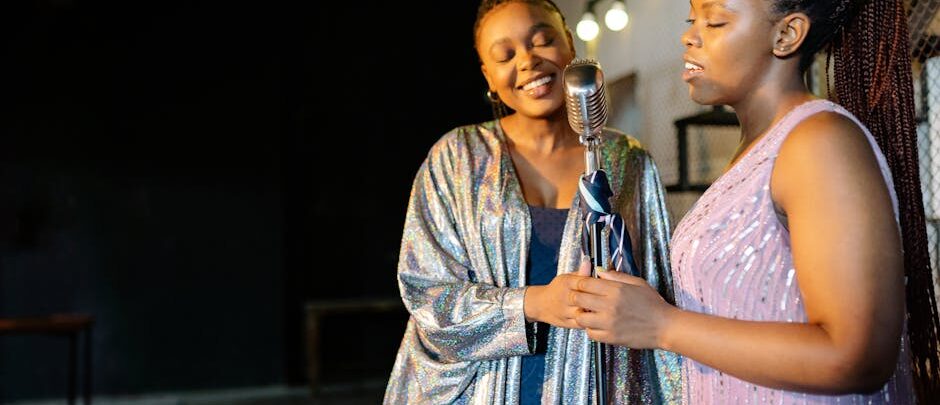
You can hear it before you see it. A certain warmth, a cadence that doesn’t just fill the space but reshapes it—sometimes smooth as velvet, sometimes bracing, always deliberate. There’s no mistaking the power in an authentic African American voice over track. For some brands and studios, this is a revelation; for others, it’s a calculation. Either way, something fundamental has shifted in how audiences respond to media when they hear that voice.
The Ear Knows: Unmistakable Texture in Commercial Campaigns
Back in , when Nike launched its “Equality” campaign across US markets, insiders at Wieden+Kennedy (the legendary Portland agency) debated whether to keep their usual narrator or try something riskier: bringing in Keith David. The result? Views on YouTube doubled expectations within three days. Nike’s internal analytics showed a measurable spike in engagement among Black audiences—a % lift compared to similar campaigns with generic narration. But even more interestingly, focus groups of all backgrounds reported stronger emotional resonance and message retention.
It’s not about simply inserting a different accent or timbre for diversity points. In real-life production pipelines at places like Los Angeles-based audio house Formosa Group, casting directors spend hours sifting through reels specifically hunting for unique qualities that hit both authenticity and universality. As one senior producer told me last year, “When we need trust and gravitas for insurance ads or warmth for family brands like Procter & Gamble, we almost always shortlist African American male and female talent early—because there’s just an extra layer audiences don’t tune out.”
From Saturday Morning Cartoons to AAA Games: A Stealth Revolution
Anyone who grew up hearing Cree Summer on cartoons during the ‘90s remembers her—she was everywhere: Penny from Inspector Gadget, Susie Carmichael from Rugrats, Elmyra Duff from Tiny Toon Adventures. Summer’s vocal versatility set off a trend; by the mid-2000s, animation casting teams at Warner Bros. were actively seeking out Black voice actors for leading roles—not just sidekicks or comic relief.
Fast-forward to : In AAA gaming studios from Montreal to Austin, titles like Marvel's Spider-Man 2 feature Nadji Jeter giving life (and heart) to Miles Morales—a momentous shift from the era when most main characters sounded cut-and-paste generic American Midwest.
Notably, European game localization companies such as Altagram (Berlin/Paris) have begun prioritizing authentic dialect matching after feedback loops showed that German players reported higher immersion when Miles Morales’ German-language dub retained Afro-German linguistic nuances rather than using standard neutral voices. That’s not theory; that’s direct pipeline adjustment based on end-user response.
When Authenticity Sells More Than Image Ever Could
Brands are learning fast—sometimes painfully—that faking it is worse than not trying at all. In , a major US bank ran an ad campaign attempting what they called “urban relatability,” using AI-processed synthetic voices intended to sound African American. Social media backlash was swift and merciless; engagement metrics dropped below baseline averages by nearly %. The lesson? Audiences spot disingenuousness instantly—and they punish it.
Contrast this with Levi Strauss & Co.’s spring collection launch video featuring Kimberly Brooks narrating with subtle Southern inflections: Suddenly the campaign trended upward across New York and Atlanta social feeds for weeks longer than previous launches.
Workflow Realities: Who Gets Hired—and Why?
Inside many US audio agencies today—think SoundLounge NYC or West Coast VoiceBank—the casting call process now looks very different from even five years ago. Where once only 5–% of submitted reels featured Black voices (as estimated by veteran agents), now upwards of % do during open auditions for national spots.
A typical workflow at VoiceBank involves:
- Initial script review with client brand managers (often remote across LA/NYC)
- Agency suggestions including explicit requests for "non-traditional" reads or "regionally authentic" sound profiles
- Internal panel selects top five candidates per role; at least two are usually African American talents if script context supports broader cultural connection
- Chemistry testing against visual creatives (TV spots/social clips)
- Final approval via brand-side focus group playback sessions
This isn’t tokenism—it’s a calibrated response to audience data showing higher recall rates (+–%) when diverse voices narrate emotionally charged copy lines.
Not Just About Race: Layered Identities Get Their Moment
If you think these shifts are limited to big-budget commercials or games sold worldwide—think again. Indie audiobooks produced out of Chicago or Atlanta (homegrown platforms like Findaway Voices have seen a double-digit growth in demand since late ) increasingly seek narrators who bring lived experience into stories about race AND class AND gender identity—all overlapping.
A recent example comes from Berlin-based podcast studio Chora Media: For their English-language true crime series set in Detroit neighborhoods (“Streets Remember”), producers insisted on finding a host with roots in both Motown culture and spoken word poetry circles—a combination traditional agencies would’ve once overlooked entirely.
More Than Representation: The Emotional Economy of Voice Over Work
There is skepticism inside the industry too—a healthy one. A few London-based ad executives still argue privately that focusing on vocal ethnicity courts accusations of stereotyping or box-ticking compliance culture. But then someone cues up Morgan Freeman reading Rudyard Kipling aloud (a recording shared countless times since its viral moment in ), and no one argues with goosebumps—the experience transcends.
In post-pandemic LA studios where hybrid work means more remote sessions than ever, another pattern emerges: Talents dialing in from Atlanta apartments often outshine those working on-site because their ability to channel church sermon rhythms or hip hop cadences isn’t something you can teach over Zoom.
And yes—rates reflect this scarcity-driven value bump too; according to agents I spoke with recently at DPN Talent (Hollywood), top-tier Black narrators can command session fees up to % above median union scale during peak campaign cycles if their signature style aligns tightly enough with client goals.
A Backstage Look: Polish Studios Experimenting With Cultural Nuance
Surprisingly perhaps, some of the sharpest experiments come not from New York but Warsaw and Krakow where Polish advertising firms localize Western campaigns for regional TV runs. At Studio PRL Krakow last spring, dubbing directors brought in Nigerian-Polish actors specifically for automotive spots targeting urban youth segments—a first for mainstream car ads there—which led to unexpected ratings spikes among Gen Z viewers as measured by Nielsen Poland analytics (approximate +% lift versus previous year same-period airings).
Europeans aren’t content mimicking Hollywood; they want nuance relevant to their own multicultural city streets—and clients follow wherever attention metrics go next.
Data Trails and Unwritten Rules: Why This Matters Now More Than Ever
We’re living through what could easily be called the "Era of Audible Identity." If you tracked casting calls posted weekly on platforms like Voices.com between late and early , you’d see steady month-over-month increases—in some quarters as much as +% year-on-year—for searches specifying "African American accent," "Black female storyteller," or related tags. These aren’t fads—they’re adjustments reflecting what people actually choose when given options beyond default settings.
But here’s another tension worth noting: Some industry veterans fear all this talk about authenticity risks commoditizing identity itself—that soon algorithms will scrape thousands of samples until they spit out passable imitations without paying actual artists fairly anymore. Already there are AI startups pitching “Black-sounding” neural voices trained on public domain archives—a fact that makes many working talents uneasy about future job security unless legal frameworks evolve quickly enough to keep pace with tech leaps.
The Uncomfortable Truth Behind Familiar Voices
What does all this mean if you’re just trying to make sense of why certain ads stick longer—or why some game characters suddenly feel less flat? It means your ear is picking up clues far deeper than surface-level diversity politics suggest:
you recognize truthfulness because real experience leaves fingerprints every time someone steps behind a mic.