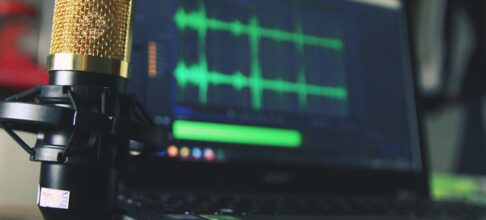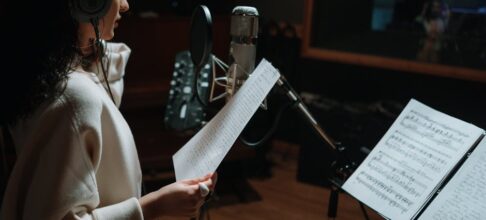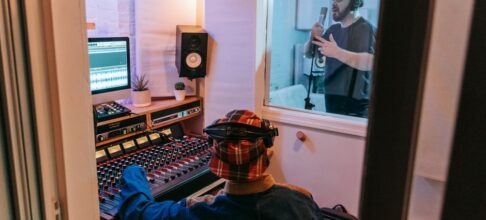
The first thing you notice walking into Rio de Janeiro’s newer post-production houses isn’t the décor or the view of Sugarloaf. It’s how astonishingly quiet they’ve become. Five years ago, a typical Wednesday would echo with talent rehearsals, directors barking notes, and engineers wrestling with last-minute script tweaks for streaming giants like Globoplay or Netflix. In 2026, there’s less shouting—and more screens.
A Quiet Studio Is Not Always a Good Sign
At Estúdio Carioca, one of Brazil's most sought-after audio post houses, veteran director Márcio Alves leans over his screen—his voice barely above a whisper as he reviews synthetic voice test tracks for a new telenovela localization. “In 2019, we’d never have trusted AI to handle this much emotional nuance,” he confides. “But deadlines are shorter now. Budgets haven’t grown in step with demand.”
This shift didn’t happen overnight. The pandemic years of the early 2020s forced even conservative studios to experiment with remote workflows and synthetic voices when travel bans made it impossible to get São Paulo-based actors into Rio’s booths. What started as crisis improvisation has calcified into standard practice.
Case in Point: The Globo-Lumen Partnership
By late 2024, TV Globo signed a deal with US-based LumenVox to integrate their neural TTS (Text-to-Speech) system directly into dubbing pipelines for children’s animation content. Initially deployed as a backup for last-minute ADR work, the tool quickly proved its worth in pre-visualization and placeholder recording—cutting production timelines by up to 20%. By mid-2025, at least two major global streaming services operating in Brazil were leveraging similar hybrid pipelines for non-premium titles.
Where Human Talent Still Wins Out
Yet not everything is synthetic. High-profile productions—think Netflix Originals aimed at international awards circuits—still insist on top-tier human voices from São Paulo or Recife. There’s an unspoken hierarchy: AI handles educational apps and micro-learning modules; humans lead prestige drama and AAA video games.
For instance, Ubisoft’s localization team in Montreal routinely sends their Brazil-focused game scripts to both local Brazilian studios and AI providers for side-by-side testing. In their 2025 release workflow for "Assassin's Creed: Novas Fronteiras," roughly 70% of NPC dialogue used advanced TTS prototypes trained on native Brazilian speech patterns—but every main storyline character was voiced by established actors contracted through São Paulo agencies like Som de Cinema.
Workflow Fragmentation Becomes the Norm
What does this mean day-to-day? At smaller localization outfits like Porto Alegre’s ÁudioSul, project managers juggle three parallel tracks on any given job:
1) Synthetic voice pass (first draft)
2) Human-directed corrections (either via remote talent or hybrid editing)
3) Final polish—a mix of manual tweaks and automated pronunciation alignment tools like Descript or Papercup.
It’s less about replacing humans than strategically deploying them where value is highest—and letting automation chip away at volume tasks once considered sacred territory.
Numbers Behind the Voices: Measuring Shifts That Matter
Based on informal surveys among mid-sized Brazilian studios compiled during ABRALIN's industry panel in August 2025, nearly half (approx. 45%) now use some form of neural TTS engine weekly—not just for scratch tracks but final delivery audio on lower-budget projects.
Contrast that with early adoption rates back in 2021—where fewer than one in ten would admit to using anything beyond basic text prompts or robotic placeholders outside internal review cycles.
The growth hasn’t followed a straight line; there are spikes tied to specific platform launches (Disney+’s aggressive expansion in Brazil in late 2022 being one catalyst) and lulls during regulatory debates around copyright attribution for synthesized performances.
Game Localization: The Real Test Bed
If you want a glimpse into where all this tech is headed, look no further than mobile game publishers targeting Brazil’s massive Gen Z market. In Helsinki-based Rovio's Latin America push in 2025–26, nearly all tutorial VO was generated via deep learning models trained specifically on regional dialect samples collected from users across Salvador and Belo Horizonte during beta rollouts.
Feedback loops matter here: after complaints about stilted delivery from Minas Gerais players on launch week, the studio rapidly spun up custom retraining sprints—working hand-in-hand with local linguists brought in through São Paulo agency Locutores Associados—to ensure both vocabulary choices and intonation matched what kids actually say on WhatsApp groups.
There is no single "Brazilian Portuguese" accent; workflows that ignore regional color risk alienating entire swaths of users who grew up hearing different speech rhythms from their grandparents' states.
Cost Pressures vs. Creative Integrity: Old Debate Gets New Teeth
For ad agencies running pan-Latin American campaigns out of Buenos Aires or Mexico City, price wins out more often than heritage arguments about authenticity. A typical fast-turnaround e-learning campaign targeting Brazilian HR professionals can be delivered at roughly half traditional cost using hybrid AI-human mixes—even factoring two rounds of human QA passes after initial synth output.
But creative directors overseeing prestige projects still balk at fully automated reads—especially when scripts call for subtlety or humor native speakers instantly recognize as off-key if mishandled by algorithms trained mostly on newsreader datasets rather than actual soap opera banter.
Dubbing Houses Fight Back… With Quality Assurance Layers
In reaction to encroaching synthetics, legacy dubbing companies like Dubrasil Audiovisual have repositioned themselves as curators rather than simple facilitators of raw recording sessions. Their competitive edge comes from multi-stage quality checks:
a) Initial AI pass (draft)
b) Director-supervised revision session (remote if needed)
c) Native speaker focus group feedback before final sign-off.
This triple-check model means clients pay slightly higher rates—but gain measurable improvements in Net Promoter Scores within key demographics according to confidential client feedback shared during SET Expo São Paulo last year.
and Then There Are the Startups…
and Then There Are the Startups…
and Then There Are the Startups…
and Then There Are the Startups…
and Then There Are the Startups…
and Then There Are the Startups…
and Then There Are the Startups…
and Then There Are the Startups…
and Then There Are the Startups…
and Then There Are the Startups…
and Then There Are the Startups…
and Then There Are the Startups…
and Then There Are the Startups…