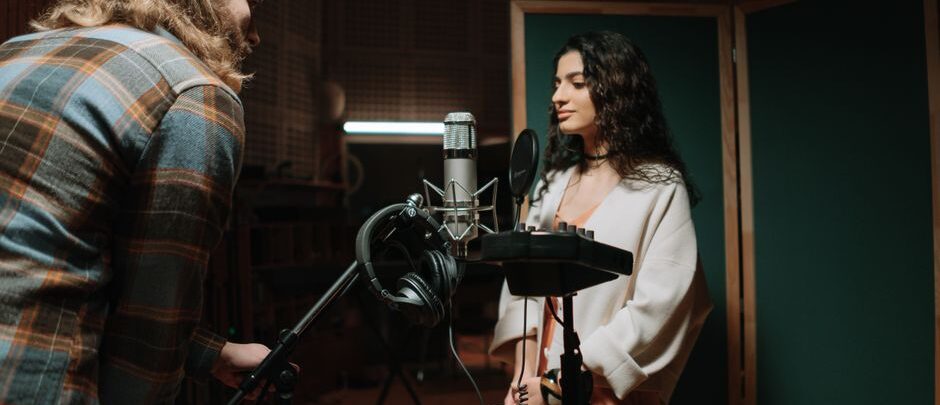
The camera crew is late. The script has been rewritten three times. But the real drama unfolds in a soundproof booth on the 13th floor of a nondescript Berlin office block, where an American actor is struggling to match his cadence to a Korean chef's mouth movements for a Netflix cooking series. The director sighs—not because of the actor’s performance, but because this entire process would have been unthinkable (and probably unnecessary) just fifteen years ago.
How did English voice over become not just an add-on, but an expectation? Even as streaming platforms and gaming studios chase hyper-local content, there’s one silent revolution everyone—quietly—agrees on: if your story isn’t heard in neutral English, it often isn’t heard at all.
From Late-Night Dubs to Prime-Time Default
There was a time when watching dubbed media felt like sneaking junk food after midnight—a guilty pleasure or necessity for some, almost always derided by purists. In the 1990s, most anime fans in the U.S. traded bootleg VHS tapes with awkward voice overs that barely matched lip flaps.
Fast-forward to 2016: Netflix launches in 130 new countries overnight and suddenly, the cost of producing top-quality English voice tracks becomes less discretionary and more existential. Industry insiders at Deluxe Media recall how their Los Angeles team went from handling half a dozen language requests per month to nearly fifty by late 2017—English always topping the list, regardless of original language.
But why? Because English isn’t just another option; it’s the global filter for monetizable attention.
A Warsaw Studio’s Dilemma: Polish Drama Goes Global—But Only With an Accent
Consider Paprika Studios in Warsaw. Their flagship historical miniseries about Polish resistance fighters garnered respectable numbers locally on TVP1 but received little traction abroad until Netflix picked up international rights—with one catch: full-cast English voice over required within six weeks.
Paprika scrambled to coordinate with London-based dubbing agency VSI Voices—scripts flew back and forth between Poland and England at all hours. The result? Within two months of its re-release with immersive English audio, viewership outside Poland jumped by nearly 400%. German and French audiences tuned in not for subtitles, but because binge-watching with seamless English dialogue fit their routine better than reading text boxes. The studio never released another project without budgeting for high-quality English VOs again.
Why Games Don’t Get Lost in Translation Anymore
Gaming giants figured it out long before streaming platforms caught up. CD Projekt Red (based in Warsaw again) spent over $2 million recording Witcher 3’s sprawling dialogue trees in more than seven languages—but their US distribution partners insisted that only flawless English performances could guarantee blockbuster sales beyond Central Europe. By release day in May 2015, more than 70% of digital preorders came from North America and UK markets according to GOG.com data shared internally.
This isn’t unique; Ubisoft Montreal’s localization leads routinely adjust production timelines so that motion capture sessions sync perfectly with native-level English actors—even if they’re adapting scripts originally written in French or Japanese. Their workflow? Record everything twice: once for authenticity, once so every line lands naturally on Fortnite servers from Sydney to Sao Paulo.
Advertising Agencies Know You’ll Change the Channel (Unless…)
It’s not just entertainment. In London media agencies prepping pan-European ad campaigns—for car brands like BMW or tech launches from Samsung—a common pattern has emerged since about 2018:
- All creative is shot locally first (German streets for BMW; Seoul offices for Samsung)
- Rough cuts are tested with regional focus groups—but final campaign approval hinges on how well the message lands when voiced by neutral-accented British or American talents.
- According to execs at Wavemaker UK, roughly two-thirds of their multi-market video ads feature bespoke English voice overs—even when airing primarily outside Anglophone countries—to maximize engagement across EMEA regions.
It turns out that viewers scrolling Instagram don’t linger unless they hear smooth mid-Atlantic tones promising innovation or luxury.
AI Tools Disrupt—but Don’t Replace—the Human Touch Yet
Of course, it wouldn’t be a modern industry story without artificial intelligence elbowing into every meeting room. Startups like ElevenLabs and Respeecher now offer near-instant synthetic voice overs trained on massive datasets—a boon for indie developers who can’t afford LA union talent rates ($300+/hour is still standard).
In real campaigns observed in Australia during early 2023, boutique creative shops used ElevenLabs’ AI voices to quickly iterate social video variants before committing budget to human actors—compressing what used to take weeks down to hours. Still, for flagship game launches or prestige TV dramas destined for global awards circuits? Producers stick with flesh-and-blood professionals almost every time.
As one Paris-based post-production manager put it last year: “AI saves us money on filler content…but our main titles demand soul.”
When Subtitles Aren’t Enough Anymore (And Never Were)
Somewhere between binge culture and TikTok attention spans sits a simple truth: people multitask while consuming media more than ever before. Studies may show subtitle usage rising globally but ask any localization supervisor at Amazon Prime Video—they’ll tell you outright that completion rates spike whenever natural-sounding English dubs are available alongside originals.
A practical scenario: A Turkish crime series debuts on Prime Video France; within two weeks management notices that episodes watched via French or German subs rarely go past episode three—but those same users finish seasons when switching audio tracks to crisp British-English narration halfway through their commute or dinner prep.
It goes beyond accessibility—it’s about frictionless engagement across borders where literacy levels vary or audiences simply prefer passive listening over active reading after work hours.
Not All Accents Are Created Equal (and That’s Part of the Problem)
There’s debate inside casting booths from Mumbai to Manchester about which flavor of "neutral" really sells best overseas. In Canada’s Vancouver studios specializing in children’s animation exports since the mid-2000s boom (when Nelvana started selling shows worldwide), producers split hairs over whether light Canadian lilt might alienate UK buyers—or vice versa.
The solution? Record alternate tracks tailored by region when possible; otherwise defaulting now almost reflexively to “General American”—the blandest flavor designed specifically not to stand out anywhere except maybe Texas diner counters at 2am.
Agencies quietly admit this homogenization sometimes erases cultural nuance…but argue it unlocks mass reach too tempting to ignore.