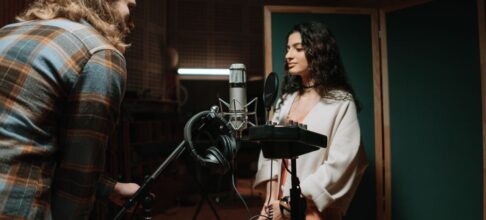
If you walk into a Copenhagen post house in 2024, don’t be surprised to find two engineers arguing over whether an AI voice can truly capture the subtlety of Jutland dialects. For those who’ve watched Danish Voice Over shift from radio dramas in the 1970s to Netflix’s Scandi noir boom and today’s algorithm-driven pipelines, the landscape feels both familiar and upended.
Authenticity on Demand—and Its Discontents
It wasn’t that long ago—2016, perhaps—that a typical workflow at SDI Media Denmark (now part of Iyuno-SDI Group) would see human voice artists shuttling between sound booths to dub children’s shows for DR or TV2. Each project required nuance: a cartoon fox needed humor without losing regional cadence; a documentary narrator had to sound trustworthy but never theatrical. Today, most mid-sized Danish studios still rely on these principles—but with digital augmentation creeping into nearly every step.
In production offices along Gammel Kongevej, casting directors now keep two lists: one for their trusted stable of native speakers, another for synthetic voices generated by AI tools like Respeecher or ElevenLabs. It’s not uncommon for producers to A/B test a human recording against its machine-generated twin before sending samples to clients in Stockholm or Berlin.
The Streaming Surge: Quantity Versus Quality Dilemma
The pandemic-era streaming surge created a paradox: more demand for Danish-language content than ever, but tighter deadlines and budgets. Netflix alone commissioned upwards of 100 hours of local dubbing each quarter in 2021–22 according to industry insiders—a volume that forced localization houses such as BTI Studios (acquired by Iyuno in 2019) into hybrid workflows.
Here’s what that looks like in practice:
- First pass: AI-generated scratch tracks are produced within hours using text-to-speech models trained on Danish corpora.
- Second pass: Experienced voice actors review and selectively re-record key lines—often only 40–60% of dialogue—for emotional fidelity.
- QC round: Final edits are checked by linguists for lip sync mismatches, intonation errors, or regionalisms missed by the software.
- Major localization hubs such as Iyuno-SDI now run parallel pipelines—AI first drafts quickly filtered by junior editors before seasoned VO professionals record final takes if budgets allow.
- Smaller agencies may offer tiered pricing models: "Express" packages powered entirely by synthetic narration versus premium versions guaranteeing fully human reads plus studio-grade mixing.
- Educational publishers working across Denmark and Sweden often compromise; they’ll use machine voices for internal e-learning modules while reserving high-profile course launches for top-tier narrators known locally (think Lise Baastrup).
Producers at Adaptor.dk—a smaller player specializing in Scandinavian commercial VO—report this approach has shaved typical turnaround times from six days down to three for fast-moving ad campaigns. But there’s growing tension around authenticity; some clients request “no-AI” badges on projects meant for broadcast television, especially when targeting older demographics sensitive to robotic undertones.
Case Study: Gaming Industry Pushback (and Embrace)
Zynga’s Copenhagen-based game studio recently faced a peculiar challenge while localizing an interactive narrative title for the Nordic market. The script required nuanced performances—not just crisp pronunciation but genuine exasperation, joy, sarcasm. Initial tests with Speechki’s synthetic voices yielded clean audio files but noticeably flat emotional delivery during beta testing sessions.
The team reverted to live-recorded sessions at SoundTree Studios downtown. According to their lead audio producer, it added about 15% more time and cost compared to the AI-only pipeline—but playtesters responded with higher engagement scores (an average jump from 7/10 up to 8.5/10). Ironically, many background NPCs were left as AI voices; players rarely noticed unless directly addressed by main characters.
A Historical Echo: From Radio Theatre Roots to Digital Frontier
Older practitioners sometimes recall Danmarks Radio’s classic Hörspiel productions of the early 1980s—a period when everything was analog tape, and mastery meant weeks spent chasing just the right tone on a detective drama or fairy tale serial. That same obsession with vocal color persists today even as tech stacks modernize; veteran actor Stig Hoffmeyer once quipped that "you can't fake warmth with zeros and ones." Yet young producers increasingly see synthetic options as not just cheap labor but necessary creative tools—particularly for quick-turnaround projects such as mobile learning apps or micro-dramas for Instagram Reels.
Market Realities: Regional Flavors versus Standardization Pressure
One persistent friction point is regionalism. Companies like IKEA Denmark have experimented with hyper-localized ads featuring distinct accents from Aalborg or Odense—aiming for relatability among provincial consumers—but found existing TTS engines struggle outside standard Københavnsk diction. Most current AI datasets underrepresent minority accents; thus native talents remain essential where authenticity could drive brand loyalty.
At least one large advertising agency based in Aarhus reported that roughly half its national campaigns still rely primarily on live talent sourced via platforms like Voices.com and Bodalgo—not out of nostalgia but due to client feedback about "coldness" in automated reads.
Hybrid Workflows Becoming Normative (But Not Uncontested)
In practical terms:
This creates an odd bifurcation visible even within single organizations—the same textbook might exist in two editions depending on whether it goes direct-to-schools or mass-market retail channels.
Tech Giants Setting Pace… But Local Nuance Still Matters
Google Cloud's launch of improved Nordic language support in late 2023 led several SaaS vendors—including Norwegian LMS platform Kahoot!—to expand automated Danish voice features almost overnight. Adoption was swift among startups aiming for pan-Nordic reach without ballooning costs; yet established media houses remained wary after encountering problems with homonyms or cultural phrasing during pilot runs last year.