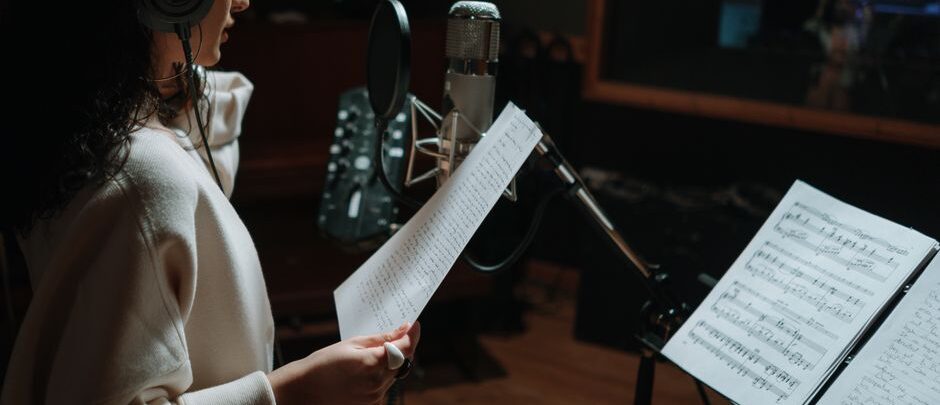
In 2012, a post-production house in Manchester found themselves with a problem that simply wouldn’t translate. A popular Polish crime drama was destined for BBC iPlayer’s international launch, but the old-school “one narrator, monotone throughout” English voice over made the gritty series feel more like a tax seminar than television. The team tried three different voice talents, scoured local actors’ unions, and even considered live re-recording with the original cast—none of it worked. In their frustration, they did what many European studios were quietly doing at the time: they called in an LA-based agency specializing in lip-synch dubbing and remote voice talent casting. The result wasn’t perfect—but it was something new.
This is how English voice over has actually changed: not through a sudden tech revolution or one magical product launch, but as a slow-burning reaction to global streaming wars, shifting audience tastes, and—more recently—the disruptive ambitions of AI-powered tools. Each wave has left behind workflows littered with contradictions and half-adopted best practices.
---
Why “Voice Over” Never Meant Just One Thing
Ask anyone working with content localization: there is no singular "English voice over." The phrase might conjure David Attenborough narrating wildlife documentaries—or maybe the energetic voices in Saturday morning cartoons. But for people like Maya Z., who heads up language adaptation at a leading Berlin-based game studio (their localization team handles titles for both Steam and console), “voice over” means something closer to project management chaos.
A typical AAA title from their studio ships with nine supported languages. For English versions alone, workflow choices range from full-cast dubbing to minimal narration overlays (especially for indie games aiming for quick turnaround). Maya describes days spent juggling requests from publishers: “Some US partners want American-accented performances only; others want neutral British tones for ‘global’ appeal.”
When Netflix entered German markets in 2014, demand suddenly spiked for native-sounding English dubs on prestige projects—no more generic London RP or West Coast delivery. By 2019, Maya’s studio reported that roughly 35% of their annual localization budget was earmarked just for varied English VO needs—a number echoed by several mid-tier Polish production houses she collaborates with.
---
From Tape Decks to Neural Networks: Historical Markers No One Remembers Fondly
It wasn’t always this complicated—or expensive. In the late ‘90s and early 2000s, most European TV stations serving expat audiences treated English voice work as an afterthought. Low-budget docuseries got single-take voice tracks laid down over music beds; anime imports were shipped out to specialty shops in Vancouver or Dallas with little creative oversight beyond basic timing.
But as digital distribution matured (think Netflix’s expansion circa 2015-16), streaming giants turned their eye toward global scale—not just subtitles but premium-quality dubbed audio launched day-and-date worldwide. Suddenly, big-name platforms demanded everything be polished: multiple accent options; accent coaching; gender-balanced casts; sometimes even region-specific idioms inserted into scripts.
A real turning point came when Amazon Prime Video greenlit simultaneous multi-language releases across Western Europe in 2018. That year saw several London boutique studios double their staff—and still struggle to meet timelines as foreign originals needed tailored English versions that wouldn’t alienate regional viewers.
---
Case Study: An Australian Media Agency Learns To Adapt (and Fail)
Let’s zoom out of Europe for a moment. In Sydney’s inner west sits Audionest Studios—a mid-sized agency whose bread-and-butter used to be local radio ads and corporate explainers. By early 2021, they were fielding weekly inquiries about adapting Asian e-learning modules into “authentic” Australian-accented English voice overs—requests driven by pandemic-fueled digital learning platforms scaling up across Southeast Asia.
Audionest quickly learned how fraught these projects could be: Thai-produced children’s animations didn’t always sync cleanly when adapted by classic Aussie talent; clients wanted colloquial phrases swapped in (“arvo” instead of “afternoon,” etc.), but also insisted on clarity for international learners.
Workflow-wise? Scripts arrived via Google Docs riddled with technical errors; sessions happened remotely using Source-Connect or Cleanfeed since lockdowns prevented travel; delivery deadlines shrank from three weeks pre-2020 to under five days per episode now. As managing director Chris Hutton put it last year: “We’ve had to build custom glossaries—and retrain our own regular voices—just so we don’t sound like robots reading out Wikipedia entries.”
---
Enter Artificial Intelligence: Boon or Blunder?
By mid-2022, everyone from Madrid-based ad agencies to Canadian audiobook producers seemed obsessed with AI-driven text-to-speech solutions like ElevenLabs and Respeecher. On paper, these tools promised faster output at lower cost—and some niche uses have indeed found success (think YouTube explainer channels churning out daily content).
However, conversations I’ve had with engineers at two large US game publishers suggest enthusiasm is tempered by real-world limitations:
* AI-generated voices often miss emotional nuance crucial for narrative-heavy games;
* editing synthetic dialogue is labor-intensive if you care about performance quality;
* legal headaches abound around rights usage when recreating celebrity timbres or unionized actors’ voices.
One major publisher revealed that only about 10% of their total VO pipeline now leverages synthetic voices—and almost exclusively for non-player characters or placeholder dialogue during pre-launch builds.
Yet smaller agencies serving mobile app developers in Estonia report using AI tools extensively since late 2022—for interactive training modules where cost trumps subtlety and speed wins contracts every time.
So while generative models are reshaping expectations on turnaround times (sometimes cutting hours-long edits down to minutes), few professionals believe they’ll replace skilled VO artists anytime soon—at least not on premium entertainment projects destined for Disney+ or HBO Max.