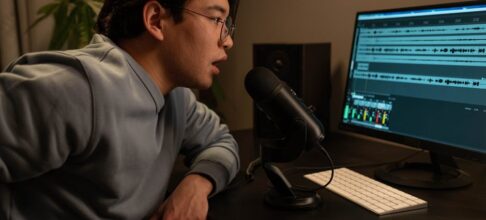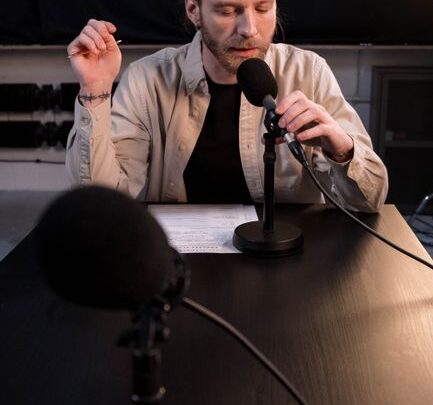
Nobody tells you the real headaches behind English voice over until you’re already knee-deep in a project. Everyone likes to imagine it’s a matter of hiring a few talented voices, giving them scripts, and letting magic happen in the booth. That’s how it goes in glossy behind-the-scenes promo reels for studios like Pinewood or at LA-based localization agencies. But off-camera, the process is tangled with technicalities, regional quirks, budget squeezes, and—more often than anyone admits—a fight against audience expectations built by decades of inconsistent standards.
A Typical Day: Not Quite Hollywood
Walk into an independent studio in Manchester that handles English dubs for streaming series—let’s call them SoundPath UK—and you won’t find glamorous celebrities lounging on velvet couches. Instead, there’s a spreadsheet open on three monitors tracking every minute of studio time. In one room, a director is explaining to an American actor why “lorry” can’t be swapped for “truck” this time; the client wants authenticity because their analytics show 40% of their viewers are actually from Ireland and Australia.
Here’s what almost no one outside industry circles talks about: even within "English," voice over is rarely about finding “the right accent.” It’s more about negotiating which version of authenticity matters most—for the brand, for global reach, or for local credibility.
The 1990s: When Dubbing Meant Scrambled Saturday Mornings
Anyone who grew up watching imported anime dubbed into English in the late 1990s remembers hearing half-American, half-unplaceable accents. The reason? Studios like 4Kids Entertainment were racing to meet weekly deadlines for U.S. TV syndication using whatever talent was available locally (often New York or L.A.), regardless of whether their voices matched character backgrounds—or each other.
Fast forward to today: platforms like Netflix and Amazon Prime Video have forced the bar higher. Now there are spreadsheets comparing viewer retention between different dubbing teams and even A/B testing entire episodes with British vs. American castings. In Germany, major localization companies such as VSI Berlin reported doubling their roster of native English speakers after seeing that 15–20% of their clients request region-specific English variants—not just generic North American.
Where AI Actually Fits (and Where It Doesn’t)
AI voice synthesis tools—think Respeecher or ElevenLabs—are hyped across industry panels from Sydney to Toronto. But here’s what gets left out: no serious game developer uses AI voices alone when launching narrative-driven titles on platforms like Steam or PlayStation Store.
In Poland, mid-sized games studio Bloober Team relies on synthetic previews during pre-production for horror games (cheaper than booking actors during script iteration), but switches to professional unionized talent before release. Why? Because focus groups consistently rate human-cast dialogue as more emotionally engaging—by margins upwards of 30%, according to post-launch surveys shared at Warsaw GameDev Meetups last year.
Micro-Budgets vs Macro-Expectations
There’s also a chasm between what indie creators want and what they can afford. In Australia, animated web series produced by small outfits in Melbourne often use remote-recorded English voice overs from freelancers found via sites like Voices.com or Bodalgo—not because it sounds best, but because it means hitting a $5K episode budget instead of tripling costs with full-studio sessions.
Yet these projects face harsh YouTube comment sections calling out “robotic delivery” or “accent drift”—a reminder that audience expectations have quietly ballooned alongside streaming giants’ production values.
You Can’t Please Everyone (But You Have To Try)
Take Ubisoft Montreal's approach to English voiceover in global releases: they routinely produce four distinct tracks per title—standard American, British RP (Received Pronunciation), Australian-accented International English, and sometimes even South African variations—for different markets. Localization leads admit privately that each comes with its own set of headaches: idioms lost in translation, jokes that don’t land outside London pubs or LA diners.
Case Study: When Local Means Global—and Vice Versa
One overlooked challenge is balancing clarity versus local color. For example, during production on "Love & Lies," an Estonian drama repackaged for Western audiences by Allfilm Tallinn and distributed via Nordic streamer Viaplay around 2021–22, producers rejected dozens of voice samples before settling on a hybrid cast capable of neutral yet expressive delivery—something palatable both to rural Brits and urban Canadians alike. Their rationale? Feedback from Viaplay data showed spikes in drop-off rates when heavy regionalisms crept into dialogue—even if they were technically accurate.
What Actually Happens Behind Closed Doors?
Real-life workflows depend less on artistic vision than many imagine:
- Text passes through multiple rounds of adaptation—sometimes rewritten entirely—to fit lip flaps or animation timing (especially common at French studios working with Japanese anime).
- Talent casting is dictated by availability windows narrower than most realize; top-tier voices are often booked out six months ahead thanks to overlapping commitments with ad campaigns or video games.
- Directors spend hours referencing existing media just to achieve consistency between different seasons—a constant issue flagged at meetings within Germany's Studio Hamburg Synchron when working across long-running franchises like Pokémon or Naruto dubbed into English for pan-European cable networks.
- Final mixes get tested on test audiences sourced from three continents before sign-off—a practice adopted by US-based Funimation since early 2018 after international criticism over stilted pacing in earlier dubs went viral online.
The Real Cost Nobody Talks About
Every producer fears running out of money before recording wraps up—but many underestimate how much time gets chewed up by retakes due not to performance errors but legal reviews (“Can we say ‘bloody’ here if our Canadian rating is PG?”) and ongoing script tweaks prompted by social sensitivity reads increasingly common post-2020s.
If there’s one thing consistent across all these scenarios—from Warsaw horror games to Sydney cartoons—it’s that quality control usually comes down not only to skill but stamina (and patience). And as budgets stretch further while demand climbs—driven partly by more shows dropping simultaneously worldwide—the pressure builds beneath the surface far past what end-users ever hear.