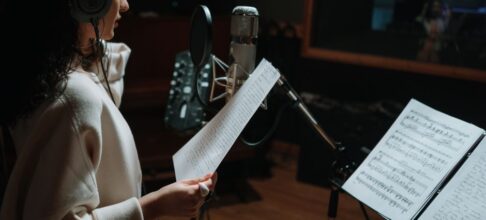
The first time I heard an AI-generated neutral English voice narrate a trailer for a Turkish period drama, it didn’t sound like anyone I knew. It wasn’t British, not quite American, and certainly not from anywhere specific—the accent hovered in a placeless zone. The effect was jarring and oddly fascinating. At that moment, I wondered: who are we really making these voices for? And how did we get here?
A Brief History of Accents and Aspirations
Back in the late 1990s, the big US localization houses—think Deluxe Media or SDI Media (now Iyuno)—were still largely casting American-sounding talent for global releases. Studios in London would sometimes insist on RP (“Received Pronunciation”) for "international neutrality," but by the early 2010s, streaming platforms like Netflix began pushing for something different. They wanted voices that sounded globally accessible—not identifiably American or British.
The term “English Neutral Voice Over” started showing up in briefs and client calls around 2013–2014. Clients didn’t want local flavor; they wanted the linguistic equivalent of bottled water: clear, unbranded, and safe to export everywhere from Mumbai to Munich.
No One’s Native Neutral
Today, walk into any mid-sized post studio in Berlin or Warsaw—like SDI Poland’s old Mokotów offices—and you’ll likely see a spreadsheet mapping out voice talent demographics by region. There’s usually a column labeled “neutral,” but ask producers what that means and you’ll get shrugs or contradictory answers. Is it just not-American? Not-British? "Not recognizably from anywhere" is about as close as you’ll get.
In real projects—say, an e-learning package commissioned by a Swiss pharma company for Asia-Pacific rollout—the brief will specify “neutral” but the actual casting process typically involves multiple rounds of feedback from stakeholders scattered across continents. I’ve seen scripts re-recorded three times because the initial read sounded “too Australian” to Korean reviewers, then “not international enough” to Singapore-based clients.
Case Study: A Streaming Giant’s Global Experiment
Netflix’s move into multilingual originals around 2017 marked a turning point. For shows like "Sacred Games" or "Dark," Netflix started producing global trailers with English neutral VOs designed to travel seamlessly across markets—instead of using multiple regional versions.
Producers at Iyuno-SDI describe a typical workflow: after shortlisting several voice talents (often non-native English speakers), they run test reels through focus groups spanning Berlin, Los Angeles, and Seoul. Feedback is compiled into endless Slack threads debating whether someone’s vowel sounds are “too South African” or if an intonation betrays Canadian roots.
In practice, true neutrality is almost never achieved—there’s always a hint of somewhere—but large-scale productions now err towards blending subtle influences rather than aiming for sterile perfection.
Australian Agencies Take a Different Route
In Sydney-based creative agencies working on pan-APAC campaigns (think M&C Saatchi Australia), there’s growing resistance to strict neutrality. According to project leads at Big Sync Music (Sydney), requests have shifted toward “lightly international” reads—a sort of gentle globalism where traces of origin are permissible so long as clarity reigns supreme.
Typical briefings now reference “softened local,” asking VO artists to dial down their native inflections without erasing personality completely. It's less about being nowhere and more about being everywhere-enough.
AI Voices Push Boundaries (and Buttons)
By late 2022, synthetic voice tools like ElevenLabs and Respeecher had entered serious production pipelines at localization companies across Europe and Southeast Asia. In one example observed at TransPerfect's Barcelona office, AI-generated English neutral voices were deployed to quickly localize internal training modules destined for multinational teams across Hungary and Thailand.
These AI voices can be tweaked endlessly—from timbre to pacing—but even advanced models often betray subtle bias toward their original training datasets (usually North American). In practice, project managers spend hours fine-tuning output parameters based on real-time feedback from end-users in Dubai or Jakarta (“the T sounds too sharp,” or “it feels too cold”).
Despite rapid progress—TransPerfect claims nearly 20% of its quick-turnaround content now uses synthetic VOs—the uncanny valley remains real when total neutrality is attempted. Audiences instinctively sense when something has been flattened too much.
Real-World Numbers: Scale Meets Friction
According to estimates shared informally by directors at ZOO Digital Group plc (a major UK localization vendor), demand for English neutral VO has grown roughly fourfold since 2016 within their media localization division alone—driven mainly by global OTT rollouts and corporate training work in EMEA/APAC regions. Yet turnaround times haven’t dropped proportionally: multi-market sign-off cycles introduce new delays as every stakeholder weighs in on what counts as "neutral enough." The friction rarely shows up in sales decks but shapes everyday studio operations behind closed doors.
An Ongoing Identity Crisis
There’s no ISO standard for English Neutral Voice Over—and maybe there shouldn’t be. As more countries stake their claim on international content creation (see Istanbul-based studios producing dramas targeting Latin America), the definition gets messier each year.
For instance, localization teams at Ubisoft Singapore report regularly fielding requests from European HQs demanding "neutral" game narration while simultaneously insisting it remain relatable for emerging Southeast Asian markets—a balancing act that results in hybridized accents unintentionally unique yet distinctly unplaceable.
Where We’re Really Headed: Embracing Ambiguity
What does this mean for talent? Professional VOs now train specifically to adopt—or mask—certain phonetic markers depending on market demand. Workshops teaching "mid-Atlantic" diction have popped up online; some actors keep demo reels tailored per territory (“US-neutral,” “UK-light,” etc.). But no approach guarantees universal acceptance any more than switching fonts guarantees legibility everywhere.
And clients are wising up—many now accept deliberate trace elements over generic sameness if comprehension isn’t compromised. As one Dutch agency head put it during an Amsterdam mixer last autumn: “We’ve stopped chasing ghosts.”
The Takeaway From Real Campaigns
Watch credits roll after any major product launch video these days—from fintech explainers produced by Singaporean agencies like Click2View to pan-European ad spots cut together in Prague—and you’ll increasingly find VOs whose origins defy easy pinning-down yet feel oddly familiar anyway. There’s an art to blending just enough specificity with broad accessibility—a dance only human ears seem able to judge well so far.
If anything defines where English Neutral Voice Over is heading next, it might just be this willingness to tolerate ambiguity—to allow some edges and quirks back into the mix instead of sanding everything perfectly smooth.