Early Days: Imported Cartoons and the Quiet Start (1990s)
Before Tencent Video and Bilibili were household names among young audiences, voice over in China meant Saturday morning anime dubbed by small teams at state-run broadcasters like CCTV or regional branches in Shanghai. In the late 1990s, a typical workflow would involve just a handful of local actors reading scripts translated on paper, often rushed or improvised. Audio would be recorded with minimal takes; time pressure trumped nuance.
Studios like Shanghai Film Dubbing Studio (上海电影译制厂)—established as early as the 1950s—set most of the standards for what “Chinese voice” sounded like. Their legacy is still heard today in classic animations and international films brought into China. But scale was always limited: perhaps only 100–150 major projects per year across the country at that point.
The Streaming Wars Turbocharge Demand
Fast-forward to 2016—a watershed moment when Netflix-style platforms such as iQIYI and Youku started buying rights to thousands of foreign dramas and films annually. Suddenly, entire seasons needed to be voiced quickly for Mandarin-speaking audiences.
One mid-tier studio based in Shenzhen recounts how their annual project volume jumped from roughly 40 in 2015 to nearly 200 by 2018—an explosion driven almost entirely by streaming acquisitions. That scale forced process changes: more remote recording sessions, distributed project management tools like Evernote (yes, really), and cloud-based audio sharing.
Localization vendors like Iyuno-SDI Media began establishing joint ventures or hiring local talent pools exclusively for Chinese versions of Western hits such as “Stranger Things” and “The Crown.” By mid-2020s estimates, around 60% of all new imported series received full Mandarin voice adaptation—double the rate from five years prior.
Not Just Dubbing: Gaming Voices Go Mainstream
If you ask production coordinators at miHoYo—the Shanghai-based creators behind “Genshin Impact”—about their casting headaches, they’ll likely mention one thing: fan expectations are relentless.
Unlike film or TV dubbing where fidelity is king, gaming localization in China revolves around personality. Every major AAA game now expects a unique character identity for Chinese players—even if it means dozens of voice actors per release cycle. In real-world cases observed between Beijing and Taipei studios, large multiplayer titles can require up to 80 different Mandarin voices (main plus incidentals) within six months before launch.
Tencent’s own localization division has even begun recruiting influencers with distinct regional accents—bridging national tastes with hyper-local flavor.
The AI Intrusion Nobody Talks About Publicly… Yet Everyone Feels It
By late 2022, whispers about AI-powered dubbing crept into conversations at industry events like CICAF (China International Cartoon & Animation Festival). Mid-sized agencies from Guangzhou reported quietly piloting text-to-speech tools such as Sogou Voice Cloud for low-budget webtoons or training data for minor game characters.
But here’s the kicker: while these experiments can shave weeks off timelines—up to a reported 30% reduction on basic dialogue scenes—they rarely pass muster with discerning fans or TV censors. A localization manager at a Chengdu-based studio described how human QA reviewers routinely reject up to half of all synthetic tracks due to emotional flatness or odd inflections common with current-gen AI models.
It’s become an open secret that AI is best reserved for background roles or temp tracks during project crunches—not main characters… yet.
Workflow Realities Inside a Tier-2 Studio (Hangzhou Case)
On an average week at Lotus Soundworks—a composite example inspired by Hangzhou's busy production corridor—a typical job might arrive via encrypted file transfer from a US anime distributor:
- Source script arrives Monday morning,
- Translation team works overnight,
- Casting auditions run Tuesday afternoon via WeChat calls,
- Recording booths booked back-to-back Wednesday through Friday,
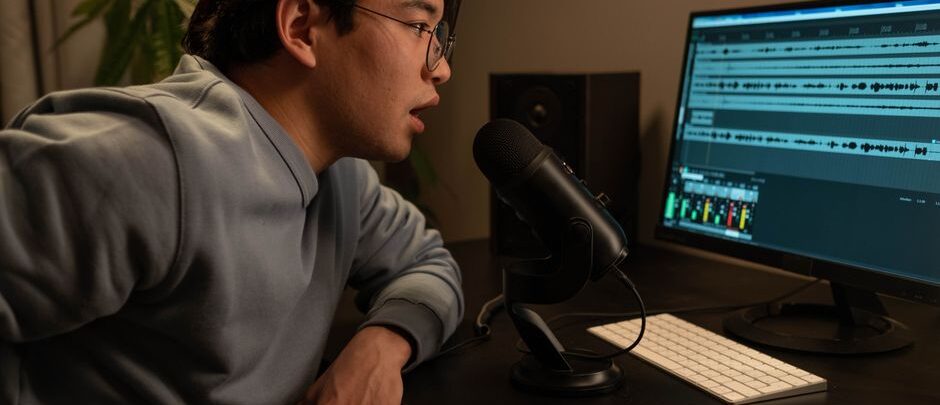
- Post-processing handled remotely by freelancers from Tianjin using Adobe Audition presets tailored to platform specs,
- First cut delivered Saturday noon; client notes expected within hours…
- Per episode rates have stagnated since around 2019;
- Freelance actor fees hover between RMB ¥800–2000 per session depending on role size;
- Competition from university-trained newcomers keeps pressure high on established talent;
It’s frantic but efficient. Two years ago this would have taken twice as long due to manual QC checks alone.
Money Moves—and Shrinking Margins?
The financial side isn’t glamorous. While big-name studios occasionally report windfall contracts (a prime-time animation dub may command upwards of RMB ¥500k), most routine jobs pay out at much lower rates than comparable work in Tokyo or Los Angeles.
Based on anecdotes from several mid-level managers around Beijing’s Haidian district:
is it any wonder many artists diversify into audiobook narration just to round out their income?
Still—the sheer volume keeps everyone busy: estimates suggest over 1,000 active professionals working full-time across top ten cities alone as of last year.
Cross-Border Oddities: Berlin Meets Beijing Via Remote Voice Sessions
In recent years there’s been an uptick in demand for Chinese-language versions produced outside mainland China altogether. Companies such as SDI Media Poland have coordinated remote recording sessions linking Berlin-based directors with Mandarin-speaking actors dialed in from Suzhou studios—all managed via collaborative DAW setups like Pro Tools Cloud Collaboration.
This kind of cross-border workflow became especially prominent during COVID lockdowns when travel bans made physical attendance impossible but deadlines kept mounting anyway. One Polish producer noted that turnaround times actually improved under this hybrid model—with time zone differences allowing near-continuous progress around the clock.
These projects mostly feed OTT platforms hungry for quick content turnover; quality control remains patchy but improving each quarter based on direct feedback loops shared between EU and PRC partners.
The Gender Question—and Fan Culture Pressure Cooker
Here’s something underdiscussed outside insider circles: vocal performance trends are shifting thanks largely to online fandoms who know exactly what they want—and aren’t shy about saying so. Since around 2021 there’s been increased scrutiny over gender representation in dubbed voices (especially non-binary-coded characters common in Japanese imports).
A mini-scandal erupted last year when fans discovered an iconic female character had been recast with a male actor for budget reasons; outrage spread rapidly across Weibo threads until producers issued an apology and re-recorded her lines within days—a testament both to fan power and evolving social norms inside Chinese pop culture spaces.
In response, larger studios now maintain flexible rosters capable of adapting quickly based on audience sentiment measured directly via live polling apps embedded inside streaming platforms themselves—a uniquely digital-era feedback loop seldom seen elsewhere globally.
What Does Success Actually Look Like?
Ask anyone running post-production pipelines—from Nanjing indie collectives to multinational giants headquartered in Singapore—and you’ll get different answers about what makes for "success" in this sector:
a) For streaming platforms: rapid turnaround times matter more than perfection so long as subtitles sync properly;
b) Game publishers want distinctive personalities that stand out against competition;
c) Traditional broadcasters still value classic diction above stylistic experiment;
d) Meanwhile freelance actors hope simply for enough consistency week-to-week so they don’t need side gigs teaching English online after hours…
in practice? Most projects land somewhere between pragmatic compromise and fleeting brilliance—rarely both together.