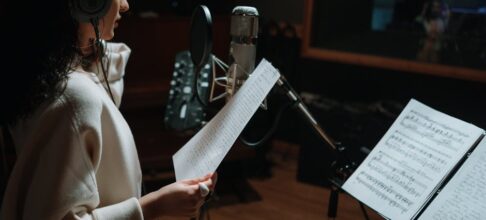
There’s a common myth in media circles: that English voice over is a straightforward, even glamorous process. Step inside any modest-sized recording studio in London’s Soho district—or the glass-and-steel headquarters of localization giant Keywords Studios in Dublin—and you’ll quickly feel the friction between fantasy and reality. In the past five years, this space has been shaken by AI, remote workflows, streaming platform demands, and relentless cost pressure. Yet at its core, it remains a human business—if only barely.
---
A Day in the Life (or Night) of an English Voice Director
Picture this: a Tuesday in late 2023, dusk already falling outside Warsaw’s central business district. At SDI Media’s Polish outpost—a hub that once handled much of Netflix’s English dubbing for Eastern Europe—the workflow looks nothing like it did ten years ago. The director sits with half an eye on Zoom feeds from LA-based actors who record their lines remotely while local engineers patch together fragmented sessions into coherent scenes. Schedules collide across continents; files ping back and forth via cloud platforms like ZOO Digital or Iyuno-SDI’s proprietary systems.
The session stutters as an actor’s internet drops out; meanwhile, reference clips stream in from Los Angeles, timestamped to match animation locked months prior. This isn’t just about reading lines—it’s about maintaining emotional continuity through digital mediation and time zone math.
---
On-the-Ground Realities: Numbers Behind the Curtain
Few realize how much scale matters here. According to industry insiders at German localization firm VSI Berlin, major streaming clients now expect up to 50 hours of finished English voice work per month—for just one language adaptation of a mid-tier series. That output would have seemed unthinkable before 2017 when Netflix began its push for same-day multi-language releases.
But quantity hasn’t meant uniformity. One project manager at VSI describes juggling three separate styles for one crime thriller: neutral American for global release; UK-accented tracks for BBC syndication; and a “soft international” variant with flattened idioms aimed at Southeast Asian distribution partners.
---
Casting: Between Star Power and Data Science
Here’s another contradiction: everyone wants recognizable voices… until they see the invoice. High-profile talent drives engagement (see Audible Originals’ recent surge in using Hollywood names), but most large-scale projects rely on seasoned journeymen who can deliver 100 lines per hour without dropping energy or clarity.
Recent years have seen AI-based casting tools—like Voquent’s matching engine or DeepZen’s emotion-tagging algorithms—creep into daily practice. A Paris-based game studio working on narrative-heavy RPGs admitted during GDC Europe 2022 that it used synthetic pre-reads to choose real actors more efficiently: "It shaved days off our schedule," their audio lead admitted—but added that no client has yet signed off on pure machine-generated leads for AAA titles.
---
Remote Recording Isn’t Optional Anymore (and It Shows)
During pandemic lockdowns in Sydney and Melbourne, Australia saw some of the world’s fastest pivots to home-based voice over production. By early 2021, according to local agency Big Mouth Media, more than 70% of their English VO sessions took place via Source-Connect or similar remote bridging tools.
This shift democratized access—talent from Perth or Tasmania could book sessions previously reserved for inner-city studios—but introduced new headaches around consistency, background noise filtering (a constant complaint among post-producers), and data security compliance under Australian privacy law.
A side effect? Agencies now maintain sprawling databases mapping microphone models and acoustic treatments used by freelancers nationwide—an invisible backbone behind what sounds seamless onscreen.
---
From Anime Dubs to Game Trailers: Niche Workflows Rule the Day
Anime English dubbing remains one of the most arcane subfields—partially because fan culture polices authenticity so fiercely. Funimation (now folded into Crunchyroll) once ran weekly marathon sessions near Dallas where actors would tackle up to four episodes per day during peak release windows around 2019–2020.
Contrast that with triple-A gaming productions led by Montreal powerhouses like Ubisoft or Eidos Interactive: here, motion capture often precedes final dialogue recording by months. Teams use placeholder VO (“scratch tracks”), then loop in unionized performers from both sides of the Atlantic after script lock—in some cases splitting main roles between US/UK actors to satisfy regional rating boards or marketing departments.
One Ubisoft production manager described fielding requests from Japanese HQ for “mid-Atlantic” accents no native speaker actually uses—a running joke among localization teams since at least the PS3 era.
---
Cost Pressures Versus Quality Spikes: Nobody Gets Both
In theory, automating part of the workflow should cut costs—but real-world results are mixed. A mid-sized London ad agency told us bluntly last year: “You can automate first passes for e-learning narration all you want, but anything with comedy timing still needs a human.”
AI-powered editing suites like Descript have made rough cut assembly faster by about 20%, based on numbers shared by two freelance editors operating between Berlin and Prague. But those same editors note that review cycles often balloon as clients nitpick every syllable remotely—offsetting efficiency gains with new rounds of feedback loops pushed through Slack threads spanning six time zones.
---
Cultural Localization Is Messier Than You Think
Americanisms slip through everywhere—even after three rounds of review. Case in point: an Estonian startup adapting explainer videos for Middle Eastern banks found themselves re-recording nearly half their scripts when Saudi partners flagged phrases deemed culturally awkward despite being technically correct English.
"We learned not to trust literal translation," said their project lead ruefully after hiring UK-based consultants familiar with Gulf region sensitivities—a practice increasingly common among boutique agencies from Helsinki to Athens post-2021 as cross-border projects exploded.
---
Historical Detour: How We Got So Fragmented
in early 2000s London—the heyday of analog tape reels—sessions ran almost exclusively out of big-name studios like Soho Square Studios or Goldcrest Post Production. Projects were centralized; creative control sat tightly with directors present in-room alongside talent and client reps popping in with notes scribbled on paper scripts.
in contrast,
the proliferation of digital DAWs post-2010 let smaller shops proliferate across Eastern Europe and Australia,
driven first by DVD boom localization then supercharged by streaming giants’ voracious hunger since mid-2010s onward."Netflix Effect" became shorthand among vendors scrambling to meet overnight demand spikes without tripling budgets or burning out staff entirely—a phenomenon observed firsthand during peak COVID disruptions when emergency remote workflows became permanent fixtures almost overnight worldwide.