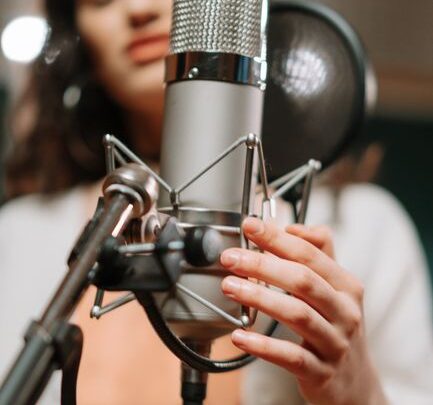
The script arrived at 8 p.m. on a Tuesday—another late-night email for Eleni, one of Athens’ busiest voice artists. She’d just wrapped a marathon session dubbing South Korean K-dramas for Cosmote TV, but the next gig was already looming: a mobile game localization for a Berlin-based studio racing toward its Q3 launch. In the world of Greek voice over, there’s rarely such thing as downtime.
Dubbing Odysseys and Streaming Surges
Greek voice work has always been shaped by outside influences. In the early 2000s, when Disney Channel first began distributing dubbed content in Greece, local studios like Studio Sixty Four in Thessaloniki scrambled to find child actors with neutral regional accents—a tall order in a country where even Athenian and Cretan dialects can sound worlds apart.
A decade later, Netflix’s arrival changed the landscape again. By , nearly every major international streaming release—animated or live-action—required Greek audio tracks. Small teams in Piraeus found themselves working double shifts to keep up with platforms’ non-negotiable deadlines (often less than two weeks per season).
Not All Heroes Wear Capes: The Hidden Workflows
It’s tempting to imagine voice actors reading lines into high-end microphones while sipping frappés in chic studios. But walk into Modern Times Studios near Marousi on deadline day, and you’ll witness something else entirely: project managers pacing between three sound booths, engineers re-syncing dialogue after last-minute script changes from Paris HQ, and actors joking nervously about how many times they’ve had to say “παίξε ξανά” (“play again”) for a children’s app.
In practice, most Greek-language projects follow an accelerated pipeline compared to English or German dubs. Budgets are smaller; sessions run longer. For popular telenovelas licensed by Alpha TV in , up to % of lines were recorded ‘wild’ (without visuals), relying on experienced directors to match emotion and timing post-recording. It’s not glamorous—but it works.
AI Voices: Hype or Headache?
Some buzzed about DeepDub’s expansion into Southern European languages last year—the promise was faster delivery and lower costs via synthetic voices trained on native speakers’ data sets. Yet practical adoption lags behind headlines.
Take the case of Logomedia Studios in Crete: they piloted an AI-generated narrator for an educational e-learning module aimed at Greek public schools during spring . Teachers reported that students disengaged within minutes—the synthetic intonation simply failed to convey warmth or irony so characteristic in spoken Greek. As of this year, less than % of their output leverages any form of machine-assisted voicing.
Beyond Athens: Regional Studios Carving Space
Contrary to assumptions that all talent is Athenian, several strongholds exist outside the capital. Thessaloniki-based Sound & Vision saw a surge in corporate narration projects after launching remote recording capabilities during the pandemic—roughly doubling their annual turnover between and according to internal estimates shared at last autumn's Thessaloniki Documentary Festival.
Meanwhile, Cyprus serves as both client and competitor; Limassol agencies frequently subcontract voice talent from mainland Greece for pan-Hellenic ad campaigns while simultaneously vying for EU-funded animation work.
Case Study: Gaming Goes Greek—For Real This Time
Consider Gamelia Interactive—a mid-sized Polish game developer whose puzzle title “Mythos Quest” needed authentic Greek flavor for its characters ahead of its Steam release last November. Their localization partner (based out of Berlin) coordinated casting calls across four cities including Patras and Heraklion via Source-Connect sessions.
What emerged wasn’t just translation but true adaptation: idioms replaced literal translations (“it’s all Greek to me” doesn’t mean much if you’re actually Greek), regional slang was kept subtle, and battle cries were re-recorded until testers agreed they sounded believably ancient yet accessible for Gen Z players. Final result? Over % increase in positive Steam reviews from Greek users compared with previous releases using only subtitled text.
Rates Rarely Rise—But Expectations Do
Despite surging demand (especially since COVID), rates have barely moved since according to managers from Athens’ AudioLab Productions—hovering around €–€ per finished hour for standard narration projects (lower still for bulk educational content). Meanwhile clients expect Netflix-level quality on shoestring budgets—a tension familiar across Europe but especially acute where margins are tightest.
To cope, producers rely more heavily on home studios built during lockdowns—increasing output by as much as % without expanding physical facilities but adding new headaches around audio consistency and tech support.
The Human Element Remains Central
Whether adapting Shakespearean sonnets for ERT radio drama or voicing explainer videos for startups like Beat (the ride-hailing app), the true differentiator remains cultural fluency—not just accent accuracy or microphone technique. One seasoned director at Studio Sixty Four puts it bluntly:
“Even the best AI doesn’t know when it’s time to whisper instead of shout.”