The Old Days Weren’t Always Golden
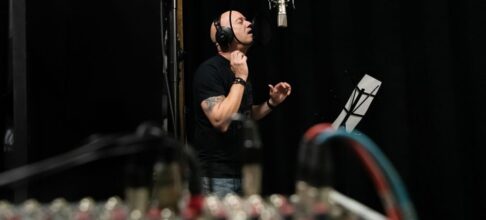
Let’s be honest about history. For decades, German dubbing was seen as functional—an afterthought in global releases. Back in the 1980s, UFA Studios in Babelsberg were churning out overdubs at speed, with little space for creative input. Producers wanted clean sync, not artistry. By the mid-2000s, dubbed content still suffered from wooden delivery and stereotypes about Teutonic directness.
But look at what happened by 2015: international streaming giants like Netflix began investing directly in local studios such as VSI Berlin and Splendid Synchron Köln. Instead of shipping scripts offshore for lowest-bidder translation and quick voice casting, these platforms realized that a nuanced performance could drive user retention—and subscriber growth—in Germany’s famously demanding media market.
From Functional to Aspirational: A Case Inside Ubisoft Blue Byte
One turning point came during production on "Anno 1800" at Ubisoft Blue Byte's Düsseldorf studio. Internal data showed that more than 40% of their European audience preferred playing with German audio—even outside Germany and Austria. This led project leads to rethink their approach: they brought senior game writers into casting sessions alongside native linguists, choosing actors who could improvise within narrative boundaries rather than just hit line reads.
I sat in on a review session where director Silke Müller paused a pivotal cutscene. She explained (only half-joking) that “flat delivery kills immersion faster than any bug.” They re-recorded several key lines with new emphasis—one take shifted a character’s arc entirely based on inflection alone. That session became a template for other Ubisoft teams across Europe; now it’s common for French or Polish branches to request “the German workflow” when fine-tuning voice performances for export markets.
Not Just Dubbing: Commercial Campaigns Go Local (and Emotional)
It isn’t limited to games or cinema either. In Hamburg-based agency Jung von Matt's campaigns for automotive clients like BMW, German voice over is being used early in campaign development—not tacked on last minute. In one memorable 2023 rollout, they cast stage-trained actors familiar with improvisation techniques rather than standard commercial narrators.
The result? Copywriters rewrote dialogue based on how voices carried emotion and subtle regional dialects (“Hamburgisch” vs “Berliner Schnauze”). According to account managers there, ad recall surveys showed up to 18% higher brand recognition compared with flatly dubbed versions from earlier campaigns targeting Switzerland and Austria.
AI Dubbing Tools Meet Human Craftsmanship—A Messy Marriage
Of course, there’s pressure from automation too. Since late 2021 I’ve watched smaller studios experiment with AI-driven voice synthesis tools like LOVO.ai and Respeecher for e-learning modules or fast-turnaround product explainers—especially when budgets can’t justify full-scale casting.
But here comes the contradiction: while AI voices can deliver passable narration at scale (particularly in standardized corporate settings), music supervisors at BMG Rights Management Berlin say clients still request human-led recording for emotionally charged content—or anything where comedic timing matters.
In one case last year, an insurance explainer video using synthetic narration was rejected by focus groups who found it "cold" and "robotic." The agency then re-recorded using a veteran radio actor from Stuttgart; engagement metrics jumped by nearly 30%. It’s clear that for all its efficiency, algorithmic voice work often stumbles where authenticity is non-negotiable.
Cultural Layering: Why Nuance Matters More Than Ever
Talk to linguists working inside Cologne-based localization firm SDI Media (now Iyuno-SDI Group), and you’ll hear stories about how regional flavor makes or breaks reception across Europe’s fragmented markets. One senior editor recounted a children’s animation pilot originally voiced generically; test audiences in Bavaria found it "inauthentic" until lines were adapted with Southern intonations—a strategy now baked into every new project launch since early 2022.
What does this mean globally? US-based streaming services releasing pan-European originals increasingly insist on bespoke German tracks that capture local idioms—even if only small adjustments are made per region. This wasn’t industry practice five years ago; now it’s routine enough that sound engineers refer to it as "micro-localization," charging premium rates accordingly.
Numbers With Bite: Growth Patterns Underneath the Hype
Industry analysts estimate that between 2019–2023 demand for high-end German-language dubbing rose by roughly 25%, driven largely by original series commissions from Amazon Prime Video DE and Disney+ Deutschland launching locally produced shows like “Parlament” and “Sam – Ein Sachse.”
Meanwhile, traditional advertising budgets are shifting accordingly: media buyers at GroupM's Frankfurt office told me last autumn that up to one-third of all pan-German TV spots now receive fresh voiceover treatment tailored specifically for North Rhine-Westphalia versus Bavaria—a granular approach unseen prior to 2020.
A Day Inside Studio Funk Berlin: The Real Workflow Shift
If you walk into Studio Funk near Alexanderplatz around midday you might hear three projects running simultaneously:
- an animated short getting urgent ADR fixes,
- an industrial film layering technical jargon,
- plus an influencer-driven TikTok spot trying out two different regional dialects before client sign-off.
What stands out isn’t just scale—it’s how much more collaborative these sessions have become since pre-pandemic days. Audio editors swap notes directly with scriptwriters using cloud-collaboration tools like SessionLinkPRO; directors sometimes patch in remotely from Zurich or Vienna via Source-Connect Now, giving instant feedback on vocal tone or pacing changes before final mixdown.
Producers say this hybrid workflow has cut turnaround times by up to 20% while raising overall satisfaction scores among both brands and end-listeners—a rare win-win cited repeatedly during annual post-mortems at Berlin production forums since mid-2022.
Contradictions Remain—And That’s Healthy
Despite all this progress there are unresolved tensions:
high-volume workflows risk reverting back toward formulaic output if oversight lapses,
and some legacy broadcasters cling stubbornly to old-school practices (“just read it straight!”).
But if you follow the money—the spike in client requests for custom accent work,
the rise in cross-border campaign extensions,
the internal memos circulating through creative agencies—you see which way things are moving.