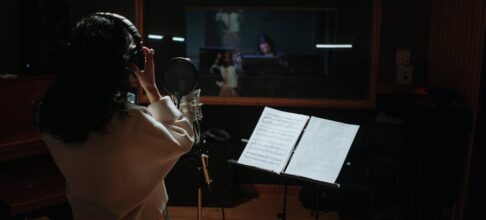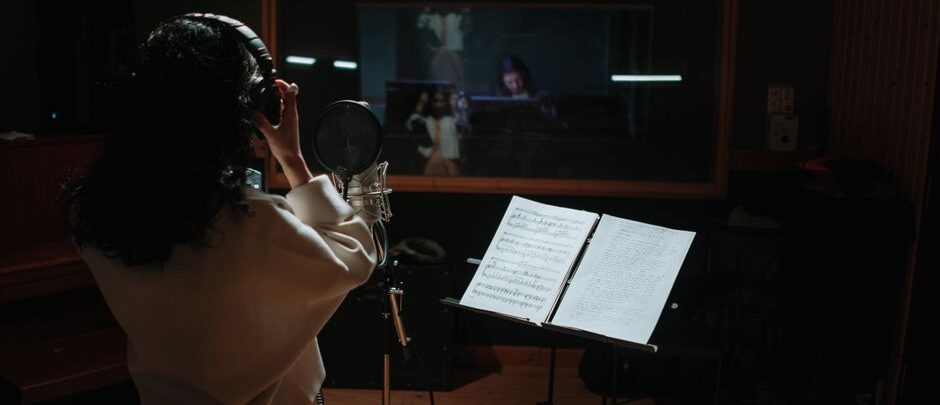
There’s a story circulating among Athens’ older sound engineers. In the late 1990s, a major advertising client demanded all their TV spots be voiced “like American commercials—fast, punchy, no singing.” The session devolved into laughter when the veteran voice actor insisted, “But Greeks don’t talk like that!”
The tension between foreign formats and local flavor hasn’t disappeared. In fact, as Greek voice over finds itself thrust onto global platforms—Netflix, PlayStation Network, even TikTok—the industry is grappling with something more complex than mere translation. It’s an existential tug-of-war: authenticity versus scalability.
When Did Greek Voice Over Stop Sounding Like Greek TV?
Older viewers remember the era before 2005, when local cartoons and imported soap operas were dubbed with a charming awkwardness. Studios like Studio ATA in Marousi routinely employed just two or three actors for an entire series. Dubbing was minimalistic; voices blurred together from show to show. There was comfort in these quirks—a kind of sonic shorthand for what counted as "Greek TV."
Fast forward to 2024: The Netflix adaptation of “La Casa de Papel” has a Greek dub cast three times larger than any local broadcaster would have dared twenty years ago. Casting directors now run remote auditions through portals like Voices.com or direct via WhatsApp voice notes—an unheard-of workflow as recently as 2016.
Some argue this diversity has diluted that instantly recognizable “Greek dub” sound. But others, especially those working at localization agencies such as Translated.net (whose Athens branch handles hundreds of streaming projects annually), claim it’s what allows Greece to compete globally.
Case Study: A Studio Workflow Caught Between Eras
Take the case of Verba Voice Studios in Thessaloniki. Their bread-and-butter used to be radio jingles and public service announcements—think municipal bus ads or OTE phone hold messages. By 2019, over half their revenue came from international gaming publishers needing authentic Greek performance capture for RPGs and mobile games.
How did they adapt? Instead of clinging to their old roster of five regular male baritone talents (the ones who’d voiced every supermarket chain since the early 2000s), they built out remote recording booths using Source Connect Standard—the same software favored by studios in Berlin and Warsaw.
Now, a typical job might involve:
- An initial English reference track sent from a Polish game studio.
- Auditions sourced both locally and from diaspora Greeks living in London or Melbourne.
- Sessions scheduled around time zone differences (a real headache during daylight saving switches).
- Delivery deadlines shortened from weeks to days—Verba’s project manager claims most clients expect full delivery within 72 hours now for mid-sized titles.
This shift isn’t isolated: at least four other medium-sized studios in Greece report similar patterns. The pandemic only accelerated adoption of remote workflows across Europe, with some sources estimating up to 80% of mid-tier dubbing work is now recorded outside traditional brick-and-mortar studios.
AI Voices Are Here—and They Sound Like Your Uncle Yiannis… Sort Of
Here comes the uncomfortable bit: synthetic voices are infiltrating the market much faster than anyone predicted back in 2021. Major e-learning providers operating out of Munich and Sofia increasingly request AI-generated Greek narration for training videos—a trend quietly confirmed by localization managers at TransPerfect’s regional office (though few will say so on record).
The quality? Mixed at best. Two years ago, you could spot an AI voice by its robotic cadence alone; today, tools like ElevenLabs can produce surprisingly colloquial phrasing when seeded with enough local data (“Έλα μωρέ…”). Yet there are subtleties—pauses after rhetorical questions or dropped syllables during rapid-fire dialogue—that still escape digital replication.
Curiously, many small agencies have begun offering hybrid packages: human main characters paired with synthesized background chatter or minor roles—a practice common in German audiobook production since at least 2018 but relatively new to Athens-based teams.
How Streaming Changed Everything (and Not Just For Blockbusters)
Before platforms like Netflix entered the region circa 2017–2018, only about 10–15% of foreign content broadcast in Greece was dubbed rather than subtitled (mainly children’s programming). Now that figure is climbing towards parity for high-profile series and family content; one recent estimate put dubbed versions at nearly 40% on mainstream streaming libraries targeting Greek subscribers.
Crucially, streaming originals are setting new benchmarks for performance quality—and budgets. A lead role on a hit animated series might command €1,200 per season now compared to €300–400 just ten years ago according to price lists circulated among Athens-based agents.
But not everyone welcomes this change: older actors complain about relentless audition cycles (“I’ve read more lines into my phone app this month than I did behind a mic last year,” one grumbled) while smaller studios struggle with platform-imposed technical standards previously unknown outside Los Angeles or London workflows (e.g., mandatory -23 LUFS normalization).
Lost In Localization? Not If You Know Where To Listen
A side effect of globalization has been the rise of hyper-specific localization requests—not just generic “Greek” but Cypriot dialects or Pontic inflections for historical dramas and games set along the Black Sea coastlines. Ubisoft’s European audio team reportedly requested three distinct regional accents for NPCs in an unreleased Assassin’s Creed expansion—a level of detail unimaginable during Mega Channel’s heyday circa early 2000s.
Some Athens-based linguists have even launched micro-consultancies advising on everything from slang authenticity (“μπαίνει το φρέντο στα Starbucks;”) to legal compliance around political satire—issues which barely registered before global distribution forced greater scrutiny on every vocal nuance that leaves Greece’s borders via cloud servers.
Small Market Syndrome Meets Big Tech Disruption
Despite these leaps forward—or perhaps because of them—the industry remains small relative to giants like Germany or Spain. According to rough estimates shared by GVL licensing agents in Berlin, total annual spend on professional Greek language dubbing still hovers below €15 million (less than one-tenth Germany's annual budget).
This forces tough choices: premium voice talent often migrates towards more lucrative podcast hosting gigs or social influencer campaigns rather than traditional ADR sessions—a dynamic also visible among young talents emerging from drama schools in Thessaloniki or Patras since COVID lockdowns made online self-promotion easier than ever before.
The Enduring Power of Local Eccentricities
Yet some things refuse to change entirely. During Greece’s election coverage last year on ANT1+, a viral segment featured a classic deep-voiced narrator intoning results with near-parodic gravitas—the kind heard for decades during Sunday night movies on free-to-air channels.
Social media lit up with nostalgia and mockery alike; younger viewers called it cringe while their parents argued it felt reassuringly authoritative amid algorithm-driven news feeds. It proved that—even as workflows modernize and synthetic voices proliferate—there remains space for idiosyncratic styles unique to each generation’s sonic memory bank.
Is this evolution or just fragmentation? Hard to say definitively. What is clear is that today’s Greek voice over world is no longer monolithic—or provincial—in its ambitions or execution. It speaks many tongues (sometimes literally), adapts relentlessly under pressure from both East and West…and still occasionally sounds exactly like your uncle narrating Saturday football highlights over souvlaki fumes.