Let’s get something out of the way: Greek voice over isn’t just a quirky add-on for global brands or an afterthought in major media campaigns. Yet, too often, you’ll hear Athens-based actors joke that if they want to earn a living, they need to play both Zeus and a talking cat in the same afternoon — sometimes for the same project. This contradiction sits at the heart of Greek voice work: a vibrant but under-acknowledged sector wrestling with scale, technology, and cultural idiosyncrasies.
The Localization Paradox
Ask anyone who’s worked on a Netflix localization rollout in Southern Europe about Greek audio dubs, and you’ll get stories—some hilarious, others exasperating. In 2018, when Netflix dramatically expanded its European language catalogues, their Athens partner studios faced a sudden spike in demand. But while Spanish or French dubs could rely on large talent pools and streamlined workflows honed by decades of animated series adaptation (think France’s late-90s Disney syndications), Greece had neither the scale nor historical volume.
What resulted? Tight deadlines squeezed into small studios near Kallithea Square; voice actors bouncing between commercials and children’s shows; engineers patching together dialogue from three different sessions when talent availability clashed with production calendars.
Athenian Studios vs. Global Giants
In daily reality, this means that companies like Jingle Studio—a mid-sized player based in Thessaloniki—must punch above their weight to meet expectations set by LA or Paris-based content giants. Their typical pipeline for a dubbed TV drama involves:
- Translating scripts via local linguists familiar with idiomatic nuances (Greek is notorious for layered humor and regional slang).
- Casting from a tight pool—often fewer than 30 regular talents for broad-audience material.
- Recording sessions scheduled around everyone’s second job (because most voice artists double as radio presenters or theater actors).
- Patchwork engineering: editors have become adept at blending takes recorded days apart.
In one notable case last year, Jingle Studio managed to turn around an entire ten-episode crime show dub for COSMOTE TV within three weeks—thanks only to marathon weekend recording marathons fueled by freddo espressos and takeout souvlaki.
Gaming Voices: A Breach in Tradition
If broadcast dubbing feels old-school, gaming localization has been where disruption—and some chaos—entered the scene. When Ubisoft released "Assassin's Creed Odyssey" (2018), set largely in ancient Greece, players expected immersive native-language options. But here’s what really happened: Ubisoft Montreal handled primary English voice work; then outsourced Greek language versions to third-party studios across Athens and Sofia. At least two studios reported frantic timelines trying to match lip-sync standards set by AAA titles while negotiating local union rules (or lack thereof).
A studio manager told me candidly during Gamescom 2019 that many lines went through rapid-fire translation checks on Slack between scriptwriters in Montreal and Athens-based freelancers—not exactly textbook process management. Yet despite these hurdles, sales data showed roughly 12–14% of Greek PS4 users switched to native audio at launch—a sign there’s real appetite when it’s done right.
AI Voices Enter the Agora
Fast-forward to 2023: Now AI-powered tools like ElevenLabs and Respeecher are making cautious entries into Mediterranean markets. Some Athenian agencies have begun experimenting with synthetic voices for explainer videos or e-learning modules targeting diaspora Greeks abroad—in Australia especially, where budgets rarely justify full-cast recordings.
But here comes another twist: established clients remain wary of losing the authenticity that comes from familiar human voices—the kind recognized from years of Saturday morning cartoons or iconic ad jingles (“Γεύση που μένει”—if you know you know). In agency meetings observed last autumn, marketing managers routinely pushed back against pure-AI solutions unless paired with post-production human tweaking.
As of early 2024 estimates from two leading Athens post houses suggest AI-generated reads make up perhaps 10–15% of total commercial output—significant but far from dominant.
Children’s Content: The Melina Factor
There’s another wrinkle unique to Greece—the "Melina effect." Named half-jokingly after Melina Merkouri (the famed actress/politician who championed Hellenic culture in the '80s), it refers to how children’s programming is guarded almost religiously by parents demanding warm, relatable voices over automated efficiency. When Disney+ launched its platform locally in June 2022, it invested heavily in casting beloved stage actors for animated films—even recruiting some who hadn’t touched a microphone since before streaming platforms existed.
These efforts paid off; several agencies report that children aged 5–11 are twice as likely to stick with dubbed content if voiced by names they recognize from national theater circuits—a trend confirmed both anecdotally and via informal viewer retention stats shared during industry panels at Thessaloniki Documentary Festival this March.
Regional Nuances Still Matter
Talk to sound directors working between Crete and Patras—they’ll tell you there is no single “standard” Greek accent considered neutral enough for all markets. One director recounted an instance where pan-European ad copy had to be re-recorded twice because initial reads were deemed too “Athenian urban” for northern mainland audiences accustomed to softer consonants.
This linguistic puzzle isn’t just theoretical—it drives up costs and lengthens turnaround times whenever national campaigns try for broad reach without alienating subregions accustomed to hearing their own dialect patterns represented authentically.
In practice? Media buyers targeting retail chains across Greece now routinely budget extra time (upwards of two additional business days per project) just for regional accent approvals—a micro-trend that barely registers outside local circles but shapes campaign calendars all year round.
Diaspora Dynamics: Melbourne Calls Home
It would be shortsighted not to mention how much work flows outwards rather than inward. In cities like Melbourne—which hosts one of the world’s largest expatriate Greek communities—independent Australian production shops frequently source voice talent directly from Athens via remote sessions using Source Connect or similar platforms.
One such workflow was evident during a recent campaign promoting bilingual educational apps aimed at first-generation Greek-Australian kids. Producers arranged overnight recording slots aligning with Athens’ daytime hours; files zipped back through cloud storage platforms like WeTransfer were edited locally before being packaged into hybrid-language learning modules distributed across Victoria schools within six weeks start-to-finish—all orchestrated without anyone ever setting foot outside their respective continents.
This cross-ocean cooperation may account for as much as 20% of revenue among smaller boutique agencies surveyed informally at MIPCOM Cannes last October—a number rising steadily since pandemic-era remote practices normalized international collaboration even further.
Why Scale Remains Tricky—and Why That Might Not Be Bad
global consolidation has never quite fit Greek realities. Unlike Spain or Germany—where four or five massive post houses dominate domestic dubbing—Greece remains stubbornly fragmented: dozens of small shops handle everything from videogames to safety announcements on ferries plying the Aegean islands.
Some see this as inefficiency; others call it resilience. After all, every freelancer knows someone who can recommend “the best voice for food commercials” or “that guy who always nails tourist guide narration.” It keeps things personal—even idiosyncratic—but ensures continuity when big-name actors move onto different careers or overseas gigs dry up unexpectedly (a scenario that played out repeatedly during COVID-induced travel bans).
And so projects big and small pass through hands that care about every syllable spoken—from audiobooks narrating ancient myths straight through splashy automotive campaigns debuting new models along Syngrou Avenue each springtime car season (yes—that's still very much a thing).
Final Thoughts (with Reservations)
greek voice-over won’t dethrone English-language media any time soon—but nor will it disappear quietly behind algorithms or faceless outsourcing firms. Its evolution lies somewhere between tradition and innovation: rooted firmly in community but increasingly shaped by cross-border demand and digital convenience.
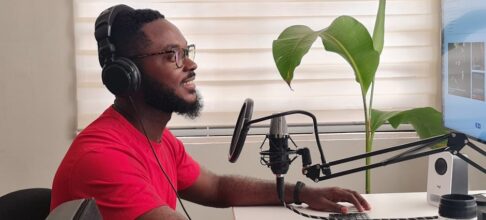
in other words? It sounds less like Zeus declaiming atop Olympus—and more like your neighbor down the hall stepping into his closet studio after dinner…just before logging onto a Zoom session with producers halfway around the globe.