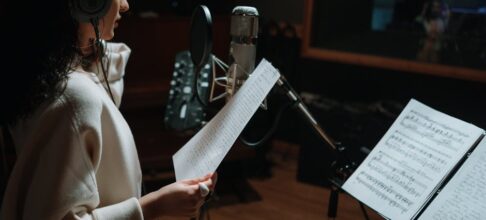
There’s a strange kind of silence in Budapest’s District IX around 9:30 on a Monday morning. It’s the sort of hush that you only notice if you’re listening for it—broken, every half hour or so, by a burst of laughter from an otherwise nondescript brownstone. Inside, the team at UBM Studio is already deep into their latest project: adapting an American crime docuseries for a major streaming platform with distribution across Central Europe.
A decade ago, the idea of Hungary becoming an unexpected hot spot for voice over work would have drawn skepticism—even among those working within its handful of legacy radio studios. Budapest was never Warsaw or Berlin; localization jobs tended to migrate eastward only when budgets dried up elsewhere. But now, as more international platforms chase niche audiences and regional originals, Hungarian voice over work is enjoying both visibility and demand that feel unprecedented—even if they’re built atop decades of unglamorous technical grind.
The Legacy Dubbing Houses Knew First
Ask anyone at Mafilm Audio who remembers the early 2000s: dubbing was mostly about churning through American soap operas and children’s animation on tight deadlines. “We’d get VHS tapes couriered in from Vienna,” recalls Eszter Kovács, who has been directing voice actors since 1998. “Everything happened last minute; there was no time for nuance.”
The workflow back then? Linear and punishing. A single hour-long episode might require three full days in studio—two for recording, one just to synch everything frame by frame onto tape. Most local actors doubled as stage performers; few saw voice work as anything but filler between rehearsals at Vígszínház or Katona József Theatre.
But that changed as foreign channels started taking Hungary’s audience seriously—not just treating them as afterthoughts in pan-European rollouts. When HBO Europe launched original drama in Budapest in 2010, it sent ripples through post-production circles: suddenly dubbing wasn’t just about fast turnaround, but also performance quality and creative adaptation.
Streaming Platforms Upset Old Habits
Netflix quietly entered Hungary in late 2016. At first, their catalogue offered little in the way of native audio tracks—but by 2019, nearly every new release came with professionally produced Hungarian options (not just subtitles). This forced legacy studios like Mafilm Audio and newcomers such as SDI Media Hungary to rethink scale almost overnight.
One producer described how Netflix required not only precision but also data-driven workflows—their internal tools tracked actor utilization rates per season and flagged inconsistencies faster than human QC teams ever could. “It pushed us to build talent pools we hadn’t needed before,” he says. By mid-2021, according to industry insiders, at least six mid-sized studios across Budapest were handling regular contracts from Amazon Prime Video or Disney+, compared to only two such outfits five years prior.
Local Originals Bring Cultural Nuance—and New Challenges
The real pivot came when regional streamers like RTL+ began commissioning local programming specifically designed to compete with global hits—think reality shows filmed on Lake Balaton or gritty crime dramas set in Debrecen. Suddenly Hungarian voice actors weren’t just translating dialogue; they were reinterpreting humor and idiom for homegrown viewers used to subtleties lost on foreign ears.
In practice? This led teams like UBM Studio to develop what they call "adaptive scripts"—dialogue rewritten line-by-line with input from writers who grew up speaking dialects from Győr or Miskolc. “If we’re voicing something meant for Szeged locals,” says script supervisor Bálint Szalay, “our joke timing changes completely.”
AI Tools: Friend or Foe?
No conversation about modern voice over escapes the topic of AI synthesis tools. Studios are experimenting—with caution—with services like Respeecher or ElevenLabs Voice AI to handle basic ADR tasks (automated dialogue replacement) where budget is tight or deadlines are brutal.
In typical production workflows observed at smaller agencies outside Budapest (for example, Debrecen-based StartDub), these AI voices occasionally replace minor characters in background scenes—saving both money and time—but main roles are still fiercely guarded by unionized human talent. One senior engineer estimated that about 15–20% of non-principal lines in certain low-budget projects now use synthesized voices as of late 2023.
A Case From Gaming: Localization Gets Interactive
While film and TV get most headlines, Hungarian voice work is quietly expanding into gaming localization—a field once dominated by Prague- or Warsaw-based vendors.
Consider NeocoreGames, a Budapest developer known internationally for titles like "King Arthur: Knight's Tale." For their 2022 console launch targeting Western Europe and Central Asia alike, Neocore partnered with KordaStudios’ new audio division specifically to cast authentic-sounding regional talent—for both NPC chatter and key story sequences—in four languages including Hungarian.
Their process looked nothing like classic dubbing: lines were recorded non-sequentially over several weeks via remote sessions (necessitated by COVID restrictions), using proprietary asset management software designed for iterative game development pipelines rather than linear TV schedules. Here too hybrid workflows appeared: placeholder lines generated via Google Cloud Text-to-Speech stood in during prototype builds until final performances could be laid down by professional actors based everywhere from Pécs to Sopron.
Adapting Voices Beyond Borders – A European Pattern Emerges
Hungary isn’t alone here—the rise echoes broader European trends observed since roughly 2017 when platforms like SkyShowtime began pushing simultaneous releases across CEE markets (Poland, Czechia) with localized assets ready day-one. What sets Hungary apart now is its reputation among producers for delivering not only reliable turnarounds but also a particular warmth—some say nostalgia—that resonates with older generations raised on public broadcaster MTVA’s golden-era dubs circa late ‘80s.
International agencies cite this intangible "Hungarian sound" as reason enough to keep investing locally even amidst rising automation elsewhere; there’s still appetite among German co-producers (especially those working out of Munich) to preserve regional color rather than flatten everything into international English mediocrity.
Talent Pipeline Problems—and Solutions?
Yet some contradictions persist beneath the surface boom:
- Established actors remain protective of their turf while younger talent often lack access to training programs tailored specifically for VO rather than theatre/film performance.
- Studio capacity lags behind growing demand each Q4 as seasonal campaigns ramp up (one agency estimated peak periods can run three times normal volume).
- Rights negotiations occasionally bog down due to cross-border licensing quirks unique to the EU audiovisual sector—a headache familiar anywhere between Bratislava and Ljubljana.
Industry insiders point out that government-backed initiatives launched since 2021—such as NMHH’s post-pandemic grants aimed at upgrading rural recording facilities—are beginning to bear fruit: one small-town studio near Szombathely reported doubling their client roster within eighteen months after adding state-of-the-art isolation booths funded under such schemes.
What Comes Next Isn’t Obvious…
and maybe that’s the point. Despite all the tech talk—from cloud-based session management tools adopted by big shops like SDI Media Hungary to experimental AI deployments—the future doesn’t look entirely automated yet. Too many clients still want that subtle inflection you can only get after hours spent discussing whether "szia" reads friendlier than "helló" depending on which county your target market hails from.
in sum? Hungarian voice over isn’t riding some sudden tidal wave so much as it’s capitalizing on two decades’ worth of incremental change finally breaking above waterline—with new opportunities cropping up not because someone imposed them top-down but because local practitioners kept fiddling around long enough until outsiders took notice.