Not Just Another Language Track
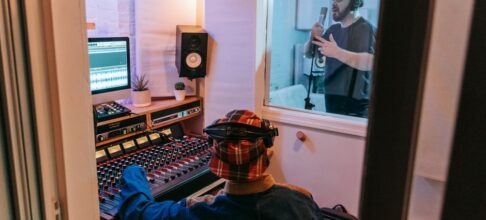
The standard narrative goes like this: You need Greek? Call up a studio, book a day with some actors, record and deliver. But real studios—places like Rabbeats Posthouse or smaller outfits like Sonora Sound in Thessaloniki—know there’s rarely such simplicity. In Greece, even commercial voice overs carry deep cultural subtext. The tone for an e-shop ad aimed at Thessaly is nothing like what works for Crete or diaspora audiences in Melbourne.
A campaign manager at a UK-based game publisher once described how a single phrase (“Level Up!”) needed three separate takes to suit streaming platforms used by Greek teens versus middle-aged gamers. “We learned quickly that direct translation misses the mark,” she said. It’s not just about vocabulary; it’s cadence and register—a kind of subtle code-switching that doesn’t exist in most English-language workflows.
The Platforms That Shape Everything
Netflix entered the Greek market heavily around , but it wasn’t until mid- that full-scale voice over localization became common practice for their originals targeting local audiences. Suddenly, studios accustomed to short-form ads were asked to deliver entire series’ worth of dubbed dialogue under international QA guidelines. This shift forced workflows closer to those seen in Madrid or Paris—but with one-tenth the resources and far less institutional infrastructure.
In practice? A typical Netflix project handled by Studio ATA might involve:
- Translating scripts using memoQ (not always optimized for idiomatic Greek)
- Recasting familiar voices to avoid overexposure—at least three actors per main character if union budgets allow
- Managing remote recordings from Corfu or Patras because Athens talent can be booked months ahead during peak TV cycles (especially September-November)
- Meeting foreign QC standards that don’t account for native quirks—like when an actor uses a deeply regional inflection because “that’s how my mother would say it”
None of this fits into neat theoretical frameworks about global media localization.
When Technology Outpaces Tradition—and Vice Versa
There’s been plenty of noise about AI-driven dubbing tools lately—deepfake voices and TTS engines promising perfect neutrality across languages. But drop these systems into actual Greek campaigns and you’ll see awkwardness pile up fast: synthetic speech misses irony; generative pronunciation mangles place names from Lesvos to Larissa.
Take Voiseed’s recent pilot collaboration with an Athens creative agency (late ): They tried automating explainer video narration using English-trained models re-skinned with Hellenic phonemes. “It took almost as long as manual recording just to fix vowel stress errors,” admitted one sound engineer involved in QA passes.
Meanwhile, established workflow platforms like Voicebooking have only partial coverage for Greek talent compared to German or Polish rosters—the pool is smaller and more fragmented than outsiders realize.
A Microcosm: Localized Gaming Voices Break the Mold
Look at the mobile game sector: During –, several European publishers ran test localizations for titles launching simultaneously in Italy, Portugal, and Greece. In theory these should have followed parallel pipelines—a translation team here, remote VO there—but results diverged wildly.
In one case shared by localization lead Marios Papadopoulos (formerly at Translated.net), efforts to match comedic timing between Italian and Greek dubs led to extra sessions for all comic relief characters because “Greek humor plays off awkward pauses more than wordplay.” One actor recorded % more pickup lines than his Portuguese counterpart just so editors could craft gags that landed naturally on Hellenic ears.
Such process-level differences are rarely acknowledged publicly; they’re buried inside budget revisions and Slack threads between exhausted project managers.
Numbers Nobody Publishes—but Everyone Knows Intuitively
Ask any voice casting agent based in Athens what percentage of their work involves true national campaigns versus hyper-local ones—they’ll estimate maybe % go truly nationwide. The rest are city-specific retail ads or micro-regional PSAs targeting northern suburbs versus central districts. Unlike Spain or France where major agencies handle bulk contracts for government messaging, Greece splits its ad spend among dozens of boutique firms—and each expects custom flavor even on short turnarounds.
Similarly: While global streaming catalogs grew by roughly % year-over-year after according to Parrot Analytics data (not region-specific), actual demand for new Greek-dubbed content lagged behind peer markets like Czechia or Hungary until late —when Disney+ started pushing dubbed classics into schools via educational tie-ins.
Voices Without Recognition (or Rights)
Another reality nobody talks about: Voice artists themselves rarely get public credit outside major animated features. Union rules remain patchy; residuals are minimal except on certain international co-productions where SAG-AFTRA terms get adopted locally through side agreements brokered by companies such as AudioVisual Enterprises SA.
I spoke with Sofia D., whose work appears on dozens of branded TikTok shorts but who remains contractually anonymous: “I can walk down Ermou Street hearing myself sell shoes all afternoon—no one ever knows it’s me.”
This lack of visibility has led some younger talents into side hustles as Instagram influencers just so they can claim ownership over their own output—a pattern noted repeatedly since mid- among newly graduated performers from drama schools in both Athens and Heraklion.
What Actually Gets Lost When No One Notices?
Somewhere between the multi-room studios near Marousi Station and remote freelancers Skyping from Ioannina sits an industry rich with idiosyncrasies… yet largely absent from media analysis outside trade conferences every February.
If you want to understand why certain insurance commercials feel comfortingly familiar while others jar against expectations, look no further than who’s voicing them—and how many hands have shaped their delivery before release. Some agencies still run old-school group auditions reminiscent of radio theater days pre-; others rely entirely on digital reels emailed overnight because “in-person sessions cost too much now.”
This hybrid workflow persists not out of nostalgia but necessity—the domestic market simply cannot support fully specialized teams at every step like London or Munich can afford for German-language projects.
And so much remains hidden unless you spend time inside these rooms watching takes pile up past midnight as deadlines loom—not glamorous but intensely human work nonetheless.