A Tanzanian creative director once told me that “Africa’s real voice is still waiting for its close-up.” Not because the talent isn’t there, but because—until recently—most global studios barely knew where to look. If you search for the term "Afrikan Voice Over" on most international casting directories, you’ll find a handful of profiles, often clustered in Johannesburg or Nairobi. But the real story is what happens outside those listings: a network of WhatsApp groups, overnight studio sessions, and a relentless push against technical and cultural barriers.
Under the Radar: How Productions Actually Find African Voices
Let’s start with a reality check. When Netflix began localizing its African Originals slate around 2018, it didn’t just put out a call to international agencies. Instead, the streamer relied heavily on South African partners like MultiChoice Studios and smaller localization houses in Lagos and Accra. The challenge? For Swahili dubs of series like "Queen Sono," nearly half the voices were sourced through informal referral networks rather than traditional agency rosters.
In practice, this means voice directors might spend days phoning radio producers in Dar es Salaam or asking advertising creatives in Lusaka for recommendations. A recent campaign for an international fast-food chain (which I observed at an audio house in Cape Town) needed twelve Zulu-speaking talents—with authentic rural accents—for their new regional spots. The production manager ended up calling her cousin in Pietermaritzburg to help source two of them; another three came from a WhatsApp group known locally as "Voices East & KZN." This is not atypical.
Micro-Studios and Living Room Booths: The Backbone of Production
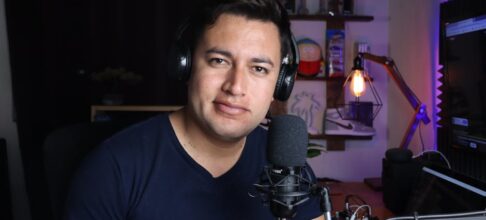
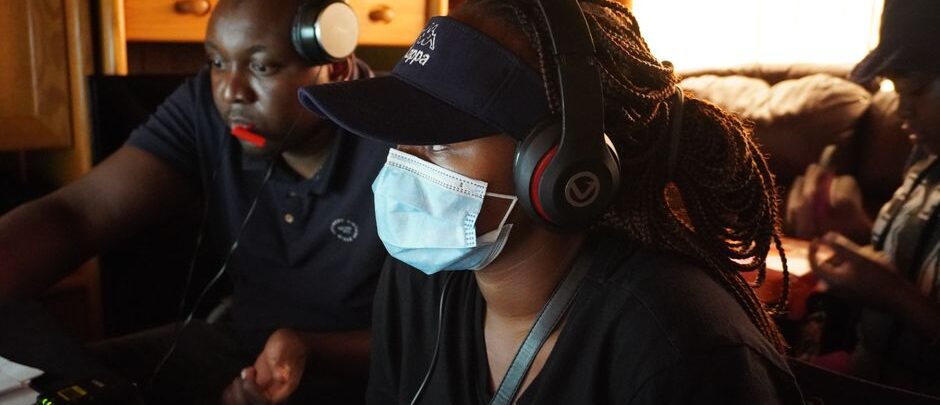
Unlike the slick studio complexes you’ll find in Munich or Sydney, much of Africa’s real voice work happens far from glass sound booths. In Accra, Ghana, mid-sized agency Ehalakasa Media runs weekly recording sessions using portable Zoom H6 recorders set up in apartments—often under thick duvets for sound dampening.
One project manager at Ehalakasa described how they delivered over 200 minutes of Akan-language narration for a UNICEF e-learning module last year without ever stepping foot into a conventional studio space. Roughly 80% of their freelancers have home setups—sometimes cobbled together with borrowed gear—that wouldn’t pass muster by Los Angeles standards but are more than adequate for non-broadcast briefs common across NGO projects.
Why Global Brands Still Struggle With Authenticity
There’s a recurring tension here: Global companies want to scale quickly into African markets but rarely understand how nuanced accentual differences can be. Back in 2021, Ubisoft attempted to localize menu dialogue for one of its flagship games into Yoruba and Hausa. They subcontracted part of the workflow to an established Paris-based localization firm—but that company had exactly zero native Hausa speakers on file.
In desperation, they ended up working with Niger-based independent linguist Halima Lawan Musa via LinkedIn DMs—a workaround that delayed delivery by nearly four weeks beyond schedule. In many European studios I’ve visited since 2019, this sort of scramble is common whenever African language requests come up: frantic outsourcing chains chasing after authenticity that can’t be easily bought.
Market Data: Growth From the Margins Inward
While hard numbers are scarce (no surprise given how decentralized this ecosystem is), several industry insiders estimate that demand for pan-African voiceover has grown roughly 20–25% annually since 2020—driven largely by streaming platforms' expansion and UN/NGO digital learning programs post-pandemic.
A Lagos-based audio engineer I interviewed estimated his freelance bookings doubled between late 2020 and early 2023, largely due to app developers seeking Pidgin English narrations for mobile launches targeting Nigeria’s urban youth market (estimated at over 70 million potential users).
The Role—and Limits—of Technology
AI voice cloning tools like Respeecher have made some waves among cost-conscious agencies in Johannesburg, but adoption remains patchy elsewhere due to concerns over data privacy and linguistic nuance. In February 2024, during a panel at Nairobi's Creatives Garage Hub, several producers shared candidly about failed attempts to use AI-generated Kiswahili voices:
“Every time we tried it,” said one studio head from Buni Media Kenya, “the results sounded flat—like Google Translate on loudspeaker.”
So while AI might offer quick fixes for Western European languages with large datasets, most serious producers working across Africa still prefer live talent—even if it means longer turnaround times or messy logistics.
Case Study: How One Podcast Found Its Soundscape Across Borders
In mid-2022,
the pan-African podcast "Voices on the Map" launched its pilot season spanning five languages—including Xhosa and Wolof—in collaboration with diaspora-owned recording hubs in Berlin and Dakar.
Their workflow was anything but linear: scripts written collaboratively over Slack; raw takes sent back-and-forth via WeTransfer; retakes coordinated between late-night Berlin sessions (to accommodate Senegal time zones) and midday calls from Port Elizabeth.
According to producer Nia Okeke,
of fifty-four episode segments produced that year,
at least twenty-five featured guest narrators located outside traditional studio infrastructure—ranging from music teachers in Soweto recording on smartphones
to retired broadcasters reading scripts from their kitchens near Saint-Louis.
Despite frequent tech hiccups,
the result was something both textured and hyper-local—which listeners praised as “realer than radio.”
This isn’t an isolated case; it reflects how many cross-border productions now operate when seeking genuine Afrikan inflection and storytelling tone.
Currency Fluctuations & Payment Headaches
Ask any seasoned project manager coordinating voiceover work between Nairobi, ural Uganda,
and Johannesburg:
payment delays are almost inevitable—not just because budgets are tight,but because foreign currency restrictions wreak havoc on cross-border workflows.In Ethiopia,in particular,a recent ban on certain types of overseas remittances forced one Addis Ababa-based studio owner I spoke with to accept partial payment via mobile airtime credits instead of dollars or euros.For smaller operations juggling dozens of micro-contracts per month,this level of financial improvisation is par for the course.A typical pan-regional campaign might involve four currencies,five payment platforms,and three separate rounds of follow-up emails before everyone gets paid.Efficiency?Not exactly.But it keeps projects moving where more rigid systems would grind to a halt.
Training Pipelines—Or Lack Thereof
In Europe,a young actor interested in dubbing can usually enroll at established drama schools or workshops.(For instance,the Bavarian Voice Academy runs intensive courses every quarter.)But across much of Sub-Saharan Africa,the pathway into professional VO remains informal.Most Nigerian voice artists start out mimicking radio DJs they grew up listening to;in Kenya,newcomers typically get their first gigs through campus theater troupes or YouTube channels.Several Nigerian agencies have started piloting online masterclasses since late 2022,some attracting cohorts as large as thirty per session.Yet overall,the absence of standardized training pipelines continues to fragment supply—and ensures that most Afrikan Voice Over talent learns by doing,rather than studying.
The Unseen Power Brokers: Community Producers & Local Fixers
One underappreciated driver behind many successful campaigns?Community fixers—the unsung coordinators who know precisely whom to call when Nike needs Fulani-speaking teens for an influencer spot filmed near Kano.Or when BBC World Service wants authentic Amharic narration within forty-eight hours.Often these brokers operate below-the-radar,pulling talent from church choirs,dance troupes,and even taxi drivers moonlighting as storytellers.The reliance on such fixers makes scaling difficult—but also ensures each project has deep roots wherever it's voiced.German content agency Polyglot Studios recently partnered with Lusaka-based CultureXchange Collective specifically because,“they always know someone who knows someone”—a sentiment echoed repeatedly across industry interviews conducted throughout southern Africa last year.
Looking Forward Without Illusions
It’s tempting—to both outsiders and some local entrepreneurs—to imagine rapid professionalization will soon bring order (and higher margins)to Afrikan Voice Over.But after watching hundreds of hours lost chasing down lost files,pending invoices,and elusive dialect experts,I’m convinced chaos isn’t going anywhere soon.Instead,the sector’s greatest strength lies precisely in its improvisational muscle:a willingness among both clients and creators to rewire production pipelines overnight if that's what authenticity demands.If anything,the next few years will see greater blending between grassroots sourcing models(e.g.,WhatsApp casting calls)and formalized agency structures emerging around major urban centers.Whether or not global brands fully grasp this dynamic yet—the best stories will continue surfacing where polished workflows end,and resourceful communities begin.