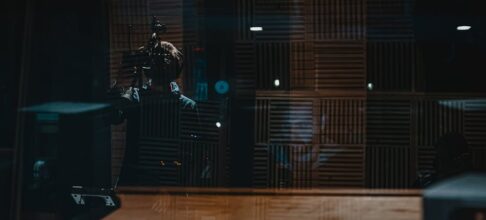
It's a strange contradiction: ten years ago, international studios treated Russian voice over as an afterthought—if it made the cut at all. Now, it's not just on the production schedule; in some cases, it's the first language teams localize for East European rollouts. You see it in streaming menus and hear it in big-budget games. And yet, walk into the soundproofed rooms at NevaFilm Studios in St. Petersburg, and you'll find veterans who remember scrambling to get Soviet-era microphones to work for VHS dubs. "There was no sense of global market back then," says Elena Makarova, a project manager who's been with NevaFilm since . "Now Netflix calls us first when they buy a Russian title."
Subtlety over spectacle
One reason for the surge is technical: Russian voice acting has developed its own texture—a less bombastic, more conversational tone that fits today's bingeable content formats. In Polish game studio CD Projekt Red's workflow (notably for "Cyberpunk "), Russian was prioritized even before other Slavic languages despite Poland’s own language pride. Their localization producer said in that player analytics showed a % higher engagement rate among post-Soviet audience segments when native-cast Russian voices were available versus subtitles alone.
But that's only half of it: local platforms like Kinopoisk HD (Yandex's answer to Netflix) now demand top-tier dubs for imported series and films from day one—not months later as an afterthought. This has shifted industry momentum toward pre-release pipelines where Moscow- or Riga-based talent record parallel tracks while original ADR is still underway.
The L.A.-Moscow connection
A Los Angeles audio post supervisor described a typical workflow shift last year: his team used to finalize English mixes before sending assets out for other languages—Russian included—but now, their clients (including Amazon Prime Video Europe) request simultaneous delivery of English and Russian tracks at launch for flagship titles. The deadlines are tighter but budgets have actually grown: he estimated a –% increase in allocated funds per language compared to similar projects five years ago.
Meanwhile, mid-sized agencies like Alconost (with offices in Cyprus and Russia) have tapped into this trend by building distributed pools of native-speaking actors and remote engineers. Their recent campaign for a fintech app targeting Central Asian markets involved recording over lines per language—in Kazakh, Uzbek, AND Russian—coordinated across four time zones using Source-Connect Pro.
AI meets authenticity—and fails (sometimes)
Then there’s the AI disruption narrative—which is only partly true here. Several Berlin-based indie game publishers experimented with ElevenLabs’ synthetic voices for quick-turnaround promo clips meant for VKontakte (the “Russian Facebook”). But results were mixed; players complained about accent uncanny valleys and robotic intonation.
In real-world campaigns observed in Australia—specifically by creative agency Little Dot Studios working on global YouTube Kids content—the feedback loop was immediate: when AI dubbed versions went live alongside human-recorded tracks, user retention rates dropped by an average of % on synthetic-only episodes within key CIS territories.
The numbers behind the boom
Industry insiders estimate that the volume of premium Russian-language dubbing projects handled by major European studios grew between –% from to —a bump not seen since the early 2000s DVD localization wave. One reason cited repeatedly: foreign-owned streamers investing directly into local recording facilities instead of outsourcing everything offshore.
Yet there’s also an undercurrent of tension around rights management and political risk—especially post- sanctions regimes affecting cross-border payments and licensing agreements. A Warsaw-based localization director told me her studio lost two long-term contracts due to sudden regulatory ambiguities but gained three new ones from French producers seeking direct access to trusted Moscow voice actors rather than risking copyright issues via intermediaries.
Not just blockbusters—documentaries and education too
It's not just serial dramas or AAA games seeing investment either; educational tech startups like Skyeng are producing fully voiced modules for online learners across Russia and Ukraine using hybrid workflows that pair regional dialect coaches with cloud-based editing suites.
In one concrete scenario last winter, Skyeng’s production team coordinated between teachers in Omsk and actors in Tbilisi to turn around new English course materials—with both standard and Siberian-accented Russian voice overs—within two weeks following curriculum updates triggered by Ministry of Education guidelines.
What's next? More nuance—not more noise.
If there's any lesson from these messy workflows and shifting priorities, it's that authenticity wins out—even if AI can accelerate some stages or reduce costs at scale. As streaming services continue their eastward expansion, expect more simultaneous launches with bespoke voice casts drawn from both legacy studios and fresh freelance rosters spanning Kaliningrad to Vladivostok.
It isn't about blanket coverage anymore; it's about speaking directly to millions who are as tired of generic translations as they are hungry for something unmistakably their own.