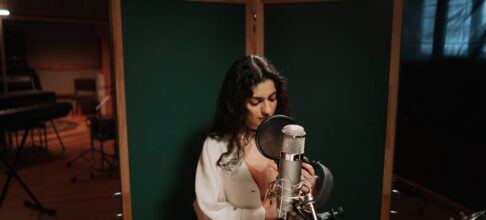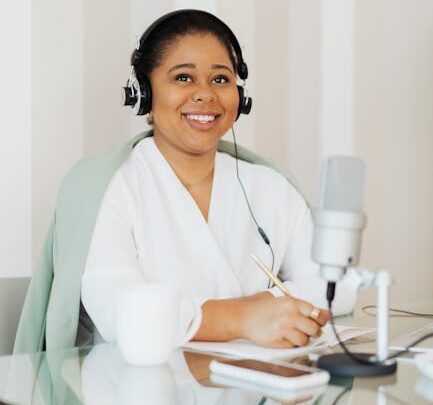
There’s a persistent myth among international content producers: that the leap from European to Brazilian Portuguese voice over is just a matter of swapping accents. Step into any São Paulo studio—or, for that matter, listen in on one of the remote sessions now so common post-—and it’s clear this is not only naive, but potentially expensive.
In actual campaigns handled by localization agencies like IYUNO-SDI Group or Dubbing Company Brasil, subtle choices around register, vocabulary, and even rhythm can make or break a project. Brazilian audiences are famously quick to spot when dialog sounds “off”—ask anyone who worked on Netflix’s expansion wave into Latin America. Titles hurriedly dubbed with generic or pan-Portuguese scripts saw spikes in complaints (and social media ridicule) about awkward phrasing and mismatched emotional tone.
In The Booths: What Actually Happens
During a typical voice over session in Rio de Janeiro's Babel Studio—one of the local outfits frequently tapped for global streaming projects—the process is methodical but never mechanical. Directors often pause mid-line not for technical glitches but for something more elusive: emotional authenticity. A recent project adapting an American animated series revealed how much hinges on word order alone; what feels natural in Lisbon might land flat or stilted in Recife.
Scripts are sometimes rewritten almost line by line. The translation team might spend as long tweaking a single joke as they do localizing an entire scene elsewhere. It’s not uncommon for actors to be coached through three or four versions of one phrase until the delivery feels right—not just linguistically, but culturally attuned to Brazil’s vast regional diversity.
Unscripted Challenges: Syncing Humor and Heart
Consider the example of wildlife documentaries produced for National Geographic. In , their Latin American division shifted their pipeline to prioritize in-market voice talent after noticing Brazilian viewership lagging behind Spanish-speaking peers by nearly %. The culprit? Voice overs that failed to capture the warmth and musicality characteristic of native Brazilian narration.
A workflow change followed: all voice over was moved to Rio studios using exclusively Carioca and Paulista talent pools, coupled with regionally-aware script adaptation teams. Within one year, audience retention metrics jumped by nearly %, according to internal reports leaked via industry groups.
AI Tools Join—but Don’t Replace—the Human Touch
Synthetic voices have entered the scene—witness Veritone MARVEL.ai being trialed by São Paulo ad agencies since late for fast-turnaround radio spots—but seasoned producers remain wary. AI-generated reads often lack both micro-pauses and certain melodic patterns that define authentic Brazilian speech. One creative director at a major mobile gaming publisher privately noted that while these tools can shave days off simple e-learning modules, they’re still miles away from matching the nuanced delivery expected in dramatic trailers or comedy shorts.
Historical Detour: Dubbing's Roots Run Deep
Brazilian dubbing has roots stretching back to the early 1960s when Rede Globo popularized telenovela soundtracks across South America. By the late ‘80s, demand exploded alongside imported cartoon series—the original run of "Cavaleiros do Zodíaco" (Saint Seiya) set records for localized animation viewership in Brazil’s southeast corridor. This era cemented expectations: characters should sound believably local while preserving universal story beats—a tightrope act that continues today.
Case Study: Gaming Gets Granular
Localization demands spike dramatically during big game launches—think CD Projekt Red’s "Cyberpunk " rollout in Brazil (). Here, Warsaw-based teams collaborated closely with Porto Alegre-based AudioElo Studios, exchanging daily reference files not just for language accuracy but for tone-matching specific demographic targets (teens vs adults; urban vs rural dialects).
One anecdote making rounds among project managers: original Polish lines translated directly resulted in player confusion during beta tests because certain slang terms had radically different connotations in Bahia versus São Paulo—necessitating last-minute rewrites recorded under intense time pressure.
Numbers and Nuances That Matter Most
The real scale? By conservative industry estimates, upwards of % of international video content distributed via Amazon Prime Video Brazil undergoes at least partial re-scripting before final voice recording begins—a step rarely discussed outside production circles.
And although AI platforms now account for roughly %–% of basic narration work (mainly corporate training), no serious entertainment brand dares risk full automation yet—not unless seamless cultural adaptation is guaranteed.
Practical Takeaways from Real Workflows:
- Script review isn’t optional—it’s iterative;
- Talent selection goes beyond vocal quality—it hinges on regional fit;
- Studio direction prioritizes emotion above literal translation;
- Even short-term adoption of AI tools requires human oversight;
- Regional variants inside Brazil often dictate entirely separate workflows (a campaign voiced for Rio may not resonate up north).
If there’s any consensus among professionals watching this space—from Berlin post-houses experimenting with remote VO pipelines down to boutique agencies scattered across Minas Gerais—it’s this: Mastery isn’t about hitting “record,” it’s about knowing exactly which voices will actually connect.