The first thing you notice, if you listen closely to Netflix's animated releases or any given trailer for a Ubisoft title, is not the script. It's the cadence — less polished, more lived-in. Voices that once belonged in carpeted booths now seem to spill out of home offices and echo with the peculiar anxiety of remote direction. The old guard of American voice over — the velvet tones honed in LA studios, the union-controlled rhythms — has been ambushed by something volatile. No one claims to have seen it coming quite like this.
A Hidden Shift Beneath Familiar Voices
In mid-, an audio producer at a mid-sized agency in Chicago said she was getting as many AI voice auditions as human ones for explainer videos. By , that ratio had flipped almost entirely in favor of synthetic voices — at least for budget digital content. This isn’t just about tech encroaching on jobs (though that’s real and raw); it’s about how quickly industry gatekeepers lost control over what “American” even means in voice delivery.
From Studio Booths to Bedroom Closets: Workflow Collapses
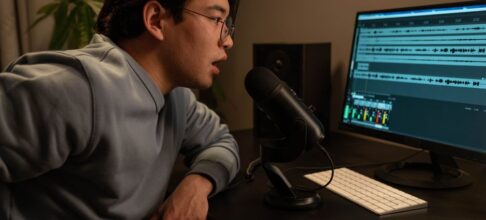
A decade ago, LA’s Soundelux studios could fill a day with national ad spots voiced by actors who booked weeks ahead and worked under strict union oversight. Now? Producers from Atlanta to Austin are stringing together sessions across five time zones using Source-Connect and Zoom, patching together performances from actors’ bedrooms and rental offices.
Take Audiomachine — best known for epic trailer music but also deeply involved in VO production for gaming — whose director told me their workflow included recording talent across Florida, Ontario, and Bucharest in a single day. They managed sync via shared cloud folders and asynchronous feedback; direction often happened by group chat rather than live feed.
The Accent Drift: What Does 'American' Even Mean Anymore?
Not long ago, major US brands wanted only neutral West Coast accents — think mid-2000s Disney Channel promos or Apple commercials circa . But since streaming platforms like Hulu began commissioning regionally flavored originals (see "Reservation Dogs" or "Ramy"), there’s been a subtle yet notable shift: casting directors request “light regional color” or “pan-North American” inflection.
This is partly practical (audiences expect diversity) but also economic. Polish-based localization houses like SDI Media now send requests for English reads tailored not just to California blandness but Texan warmth or New York sarcasm — because distribution footprints sprawl well beyond the coasts.
Case Study: Remote Campaign Production for Adidas Originals ()
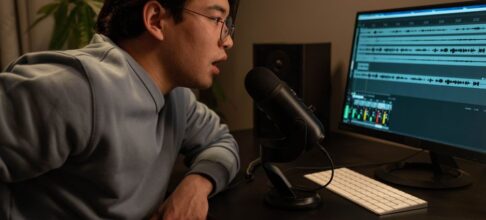
In late , Adidas ran a North America-wide campaign with simultaneous rollouts on Instagram Reels and YouTube Shorts. The campaign featured two lead voice talents working from Toronto and Los Angeles while three supporting voices delivered lines from Houston-area home studios using Rode NT1 mics hooked up through Audient interfaces.
Producers used Descript for rough-cut audio editing before final mixdowns in Pro Tools handled remotely by engineers based in Berlin. Turnaround? Less than five days per video asset – a rhythm unheard of pre-pandemic when sessions would be stacked sequentially inside agency-owned booths.
The AI Intrusion Nobody Wants To Talk About (But Everyone Does)
By Q1 , several US-based e-learning platforms (notably Udemy partners) quietly shifted nearly % of new course narration to generative AI voices sourced via ElevenLabs’ API tools. Freelance narrators noticed work drying up not because demand fell but because buyers could generate passable reads overnight without booking anyone at all.
Yet here lies irony: game studios such as Paradox Interactive explicitly reject synthetic voices for narrative-driven titles, citing negative test audience responses (“flat,” “unsettling,” “too clean”). In contrast, mobile games pumped out by Eastern European outfits routinely ship with fully AI-narrated characters — nobody complains until localization QA flags cultural errors built into machine learning data sets.
Union vs Non-Union: Old Fights Get Messy Online
In cities like Dallas where Funimation (now Crunchyroll) dubs anime at scale, there’s visible tension between unionized SAG-AFTRA veterans and newcomers hustling via Upwork or Voice123.com. Studio insiders say non-union work accounted for roughly half of indie animation projects completed during the pandemic era—a sharp rise from perhaps % back in early 2010s.
You can spot this divide on social media every week: seasoned LA talent bristle at casting calls offering $ flat per hour-long session; meanwhile young actors rack up credits voicing podcast ads or Twitch promos recorded on USB microphones between college classes in Portland or Minneapolis.
Tech's Double Edge: Democratization... Or Deluge?
Platforms like Bodalgo and Voices.com tout themselves as leveling the playing field—anyone with broadband can submit samples globally—but this has resulted in wild price competition and quality fluctuations that keep agency producers awake at night.
One creative director at an Australian ad house described her recent experience sourcing "American sound" VO talent from both Manhattan agencies and Manila freelancers: "The difference wasn't always obvious until we got into emotional readings." Meanwhile, Toronto-based interactive media teams report that client-side reviewers sometimes can't distinguish between Midwest-native actors and international performers trained specifically to mimic NPR hosts' delivery styles.
Unintended Consequences: Speed Kills Nuance?
Rapid file swapping means editors spend more hours correcting timing issues caused by asynchronous direction—a problem mentioned repeatedly by post supervisors at London’s Molinare studio during several cross-border campaigns last year. There are measurable losses too: ADR sessions used to average four hours per episode for major network drama dubs; now it’s closer to six because comping disparate takes adds complexity instead of saving time.
In commercial workflows observed at German creative agencies working with US brands—think BBDO Berlin adapting stateside scripts—it’s become common to request multiple accent versions upfront so regional marketing managers can tweak according to local preference without additional rounds of recording.
Whose Story Gets Told When Anyone Can Read It?
The biggest question isn’t technical—it’s philosophical. As American voice over morphs into a global commodity sliced up across gig platforms and algorithmic engines, whose stories get prioritized? Who gets left behind when buyers default to whoever uploads fastest—or whatever tool delivers cheapest?
There are still prestige gigs where legacy matters—audiobook publishers like Penguin Random House continue booking Emmy winners for headline releases—but these account for shrinking slices of an otherwise exploding pie. Most new entries never see a studio booth; they grind out corporate elearning modules or TikTok soundbites amid noisy apartments after midnight deadlines.
A Look Forward Without Easy Answers
It feels naïve now to talk about preserving tradition—the market doesn’t care much anymore whether your read sounds “authentically American” so long as it works on Spotify ads targeting Denver commuters next Monday morning. Instead we’re witnessing fragmentation paired with extraordinary opportunity—and undeniable loss—for those who remember how singular American voice work once felt before everything sped up all at once.