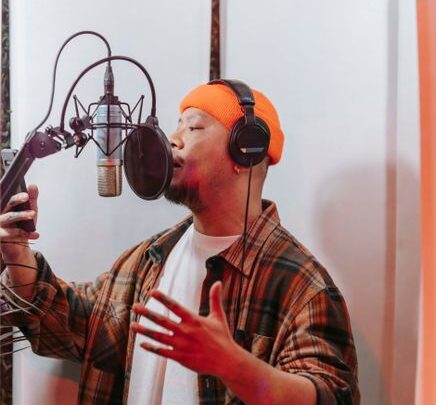
The first time I sat in on an Australian commercial voice-over session, it wasn’t the accent that surprised me. It was the negotiation—a subtle, relentless tug-of-war between authenticity and clarity. The client (a Sydney-based creative agency with a national supermarket account) wanted "real Aussie" but not so "ocker" that Queenslanders would tune out or, worse, that their own legal team would call it a stereotype. Every take balanced on this cultural tightrope.
This is the hidden choreography behind Australian voice over work—one rarely discussed outside production suites in Surry Hills or North Melbourne. While global studios might imagine voice acting as a universal craft, there are uniquely Australian essentials forged by history, market quirks, and shifting audience expectations.
From Soapies to Streaming: How Australia Carved Its Niche
In the late 1980s, as local soap operas like "Neighbours" and "Home and Away" hit international screens (and became unexpected training grounds for future film stars), something else took root: a homegrown voice talent pool. Early radio ads had already established familiar cadences—blunt but warm, with vowels stretched just enough to sound unpretentious. But by 2005, with the rise of pay TV and digital media campaigns for brands like Telstra and Qantas, scripts began demanding more range: from laconic humor to sincere urgency.
By 2012, several Melbourne-based studios reported that over 60% of their bookings were now for internet-bound content—YouTube pre-rolls, explainer videos for fintech startups (like WiseTech Global), and e-learning modules commissioned by universities across New South Wales. This shift didn’t just broaden opportunities; it demanded faster turnarounds and new delivery formats.
Not Just an Accent: Why Casting Is Half Translation
It’s easy to assume that casting an Australian voice is about hitting a certain phonetic note—a nasal "a," perhaps, or dropping Rs at the end of words. In reality? It’s market segmentation in disguise. National advertisers break down their demographic targets into micro-audiences based on region and class. A bank campaign aimed at rural Victoria won’t use quite the same tone as one for Sydney’s inner-west tech crowd.
A case in point: Edge Studio in Melbourne recently auditioned thirty voices for a single mobile provider ad spot meant for regional radio syndication. The brief specified “country credibility” without veering into parody or alienating urban listeners who might catch it online later. According to studio manager Fiona Leighton, only two takes survived both rounds of client review—a process she describes as “cultural translation under pressure.”
Workflow Realities: From Home Booths to Post Houses
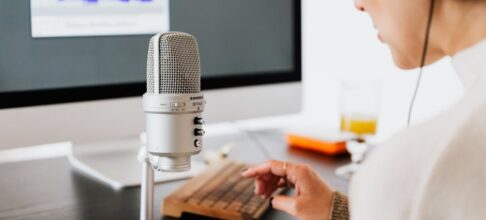
Covid-19 upended much of Australia’s traditional post-production workflow almost overnight in early 2020. By April that year, nearly 80% of active commercial VO artists were recording from home booths—using Source-Connect Standard instead of commuting into full-service facilities like Soundfirm or Risk Sound.
But these remote workflows weren’t universally smooth. One Brisbane-based animation studio producing educational series for ABC iView found themselves scrambling when latency issues on cloud-connected sessions added hours to what should have been a two-day job. Their solution? Pre-recording wild tracks locally before shipping files via encrypted Dropbox folders back to their audio post partner in Sydney—a patchwork fix common through much of 2021.
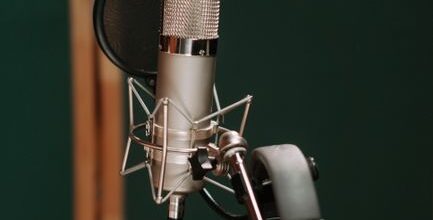
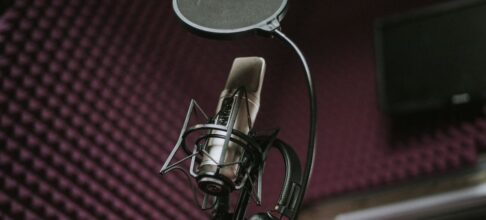
The result is a hybrid industry model today: most auditions and first-pass reads happen remotely (with modest setups ranging from $700 Rode microphones up through $3000 Neumann gear), while final mastering often returns to brick-and-mortar studios equipped with calibrated Genelec monitoring arrays.
The AI Experiment—and Pushback from Talent Unions
While synthetic voices have found eager buyers among e-learning firms (particularly those producing compliance modules at scale for mining companies in Western Australia), resistance remains fierce elsewhere. Equity Australia's Media Entertainment & Arts Alliance reports that by mid-2023 less than 5% of mainstream ad agencies used AI-generated voices for broadcast campaigns; most prefer human nuance despite marginal cost savings.
Still, tools like Respeecher are being quietly trialled in non-broadcast contexts—think chatbots integrated into NSW government info apps or placeholder narration during pre-vis animatics for children’s series pitched to Netflix ANZ.
Beyond the Brief: Adaptation Across Borders
Australian projects increasingly cross borders—not just physically but culturally too. In real campaigns observed at Sydney localization specialist VSI Australia, scripts destined for Southeast Asian markets are routinely re-cast with neutral-Australian accented talent rather than attempting faux-international English styles that risk alienating both expats and locals alike.
One ongoing example involves seasonal tourism content produced by Tourism Australia since mid-2019: they employ three distinct VO versions per campaign—one tailored for domestic audiences (inviting yet familiar), another softened slightly for Singaporean travelers (“clearer vowels,” per producer notes), and a third variant featuring light Kiwi inflections when targeting joint trans-Tasman initiatives with Air New Zealand.
Rate Cards Are Not Universal—and Why That Matters More Than Ever
Ask any freelance artist working out of Perth or Adelaide about rates and you’ll get markedly different answers than someone booked regularly via a major agency like EM Voices in Sydney. While union guidelines exist ($250–$450/hour is typical commercial baseline), actual pricing fluctuates wildly depending on platform rights (linear TV vs YouTube pre-roll vs Instagram stories) and exclusivity clauses.
A recent project run by an indie game developer on the Gold Coast illustrates this tension perfectly—they paid roughly $1k AUD total for all dialogue assets used in an episodic mobile title designed mainly for US/UK release but voiced locally due to budget constraints. The actors agreed knowing residuals were off-limits—but kept one eye warily on whether those lines would resurface later via TikTok clips or streamer commentary videos overseas.
When Regional Nuance Becomes Strategic Asset
There’s no monolithic “Australian sound.” An energy retailer launching green initiatives across Tasmania wants warmth without condescension; meanwhile a fintech startup targeting millennials asks specifically for Gen Z-sounding talent who can “land memes without sounding cringe.” These aren’t hypothetical requests—they come straight from brief documents circulated internally at multi-agency workshops held during Melbourne's Mumbrella360 conference last year.
And while larger markets like Sydney tend toward polished delivery (think smooth consonants reminiscent of ABC News Radio hosts circa early 2000s), smaller outfits operating out of Darwin may explicitly request looser diction to match local vernacular heard on Triple J Unearthed tracks.
Training Grounds: Where Do Voices Learn Their Craft?
Formal training programs remain surprisingly sparse compared to countries like Canada or Germany where state-funded drama schools routinely offer dedicated voice modules alongside stage acting curricula. In Australia, aspiring voice artists typically cobble together skills through short courses offered by NIDA Open or AFTRS workshops—or learn entirely via mentorship at boutique agencies such as RMK Voice Productions (whose alumni include talent featured regularly on SBS documentaries).
Online platforms now play a growing role too; since 2021 more than half of all entry-level demos reviewed by casting directors at Vox Talent came from remote submissions recorded using Audacity or Adobe Audition rather than legacy studio bookings—a pattern mirrored across much of Europe as well according to colleagues at Warsaw-based localization firm Altagram Group.
The Tech Layer Beneath Every Performance
Production managers speak less about microphones than about file management these days—but equipment still shapes outcomes dramatically. For example: Sennheiser MKH416 mics dominate high-end studio work throughout Sydney due to their ability to suppress city noise bleed-through during busy daytime sessions; meanwhile Blue Yeti USB mics remain ubiquitous among DIY podcasters hoping someday to parlay viral episodes into paid brand gigs via Nova Entertainment’s branded content division.
Cloud collaboration has become more sophisticated too—with Dropbox Business Teams accounts common even among sole traders handling multiple concurrent clients across Brisbane/Melbourne/Perth time zones each week.