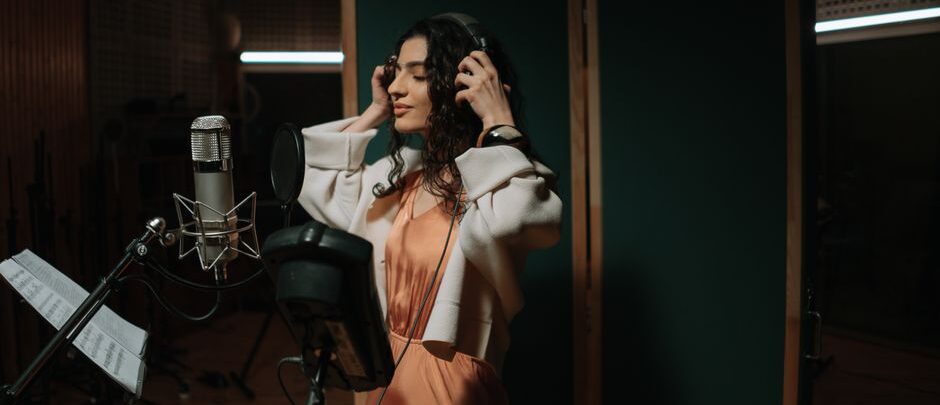
There’s a persistent myth among media professionals in Tehran: that Iranian voice over work has always been a tight, smooth-running machine. This belief rarely survives a real project. For years, the reality was a chaotic dance—part artistry, part improvisation. The evolution of Farsi voice over is less a polished arc and more an unpredictable zigzag between censorship, bootleg demand, satellite waves, Silicon Valley disruption—and lately, the quiet hum of neural networks in suburban studios.
The Era of Cassettes and Contraband Synchronization
Go back to the early 1990s. In West Tehran’s rented apartment “studios,” you’d find makeshift setups—a battered Sony tape deck, one lavalier mic shared by three performers, all reading from hand-annotated scripts. These were not legal productions; most were for bootleg VHS tapes smuggled in from Dubai or Istanbul. The voices on those tapes were often rushed, sometimes mismatched for character gender or age. Yet these efforts created what many now call the first generation of urban Farsi voice over artists—self-taught and uncredited.
A friend who worked at one such makeshift studio recalls how their workflow meant each actor recorded lines sequentially onto tape (no multi-track editing). If someone flubbed a line halfway through a scene, they’d have to rewind and start again—painstakingly layering performance on performance like analog palimpsest.
Satellite TV Arrives: A New Kind of Demand
By the late 1990s and early 2000s, satellite television arrived in Iran’s living rooms via Hotbird satellites. Major Persian-language broadcasters based outside Iran—like Manoto TV (London) and GEM Group (Istanbul)—needed dubbed content rapidly. Suddenly there was demand for cleaner workflows and semi-professional talent pools.
Studios like Pars Dub (a household name among Iranian expats) started recruiting voice actors who could deliver consistent characterizations with fast turnaround times. Their process typically involved:
- Receiving raw video files from international distributors by FTP
- Translating scripts overnight (often under pressure)
- Conducting marathon recording sessions using Pro Tools rigs imported from Europe
- Sending finished audio tracks back for final mixing abroad
- Mid-sized production houses in Berlin report that under 10% of their current output leverages neural TTS models for primary dialog tracks—but interest rises sharply when budgets are squeezed or deadlines tighten unexpectedly.
- In Australia-based agency campaigns aimed at Iranian expat communities around Sydney's Ryde district, synthetic narration is already standard for short-form ads but rarely trusted for long-form drama where emotive delivery matters most.
- Some independent podcasters have embraced AI-generated intros as time-savers but still insist on human hosts for main segments—a pattern echoed across smaller media outfits globally.
- Official restrictions limit access to pro-grade hardware/software inside Iran itself; many small studios still operate semi-legally under constant threat of closure or equipment seizure.
- Linguistic controversies flare up regularly over dialect choices (“standard” Tehrani vs regional accents), especially when diaspora-targeted content aims at broad appeal but risks alienating native listeners.
- Audience expectations keep rising; fans now compare domestic dubs not only against Turkish or Arabic versions but against global gold standards set by platforms like Netflix—even when access remains patchy at best inside Iran proper.
- Raw content arrives via encrypted Dropbox link from a client headquartered near Munich seeking pan-European distribution rights for their preschool series translated into nine languages including Persian.
- Parand divides scriptwork between three senior translators; two work onsite while one dials in via VPN from Toronto due to ongoing emigration trends among skilled linguists post-2022 economic shifts.
- Recording takes place late nights due to power rationing schedules; actors are scheduled around rolling blackouts common during summer months.
- Final audio stems are uploaded directly onto the client’s cloud-based review platform where German QA leads provide timestamped notes within hours—not weeks as would have been typical before widespread fiber rollout circa 2015–2016.
- End product debuts simultaneously on YouTube Kids channels across Europe—a feat simply out of reach even five years ago without hybrid cloud/Persian expertise partnerships spanning continents and time zones alike.
- The patchwork growth owes as much to regulatory squeeze as it does creative ingenuity;
- Diaspora networks routinely fill gaps left by official restrictions at home;
- No two studio workflows look exactly alike—even within the same city block let alone across borders from Istanbul to Melbourne;
Turnaround time shrank from weeks to days—a milestone that old-school cassette dubbers could hardly imagine.
Commercial Localization: Netflix Enters the Picture
Around 2017–2018, global streaming platforms quietly began testing Persian interfaces and content options behind closed beta walls. Netflix never officially launched in Iran due to sanctions—but its influence sparked new expectations everywhere else Farsi speakers lived (Los Angeles’ Westwood neighborhood being unofficially called “Tehrangeles” is no accident).
Localization vendors serving Turkish or Arab markets suddenly had inquiries about Farsi dubs for series like "Money Heist" or "Stranger Things." One Warsaw-based localization company reported in 2019 that nearly 20% of their Middle Eastern workflow requests included Farsi as an additional target language—a figure unheard-of five years prior.
In practice: companies like BTI Studios (since merged into IYUNO-SDI), working out of London or Dubai branches, developed dedicated pipelines just for Persian projects. Typical workflow included cloud-based script management tools (like ZOO Digital's platform) allowing translators in Iran to collaborate remotely with directors based in Stockholm or Paris—sidestepping political complexities while preserving linguistic nuance.
Video Games & Interactive Media: Not Just Cartoons Anymore
Farsi dubbing wasn’t limited to film and TV. By mid-2020s, game publishers—especially mobile app studios targeting diaspora youth—began experimenting with full Farsi VO tracks. German indie studio HandyGames used Tehran-based freelancers to localize dialogue for their puzzle title "Townsmen." They leveraged Source Connect for real-time direction across continents—a setup unimaginable just a decade earlier.
While budgets remained modest compared to English or Japanese dubs, this marked a shift: interactive narrative titles like Ubisoft’s “Assassin’s Creed Chronicles” received partial fan translations with amateur VO overlays distributed through Telegram groups frequented by Iranian gamers worldwide.
AI Voices & Synthetic Narrators: Promise and Peril
Recently, attention has shifted toward generative AI tools promising hyper-realistic synthetic speech tailored to Persian phonetics. Companies like Respeecher—which made headlines assisting Hollywood deepfake projects—have quietly begun pilot programs training custom Farsi voices using hours of sampled dialogue provided by major audiobook publishers in Mashhad and Shiraz.
Yet industry insiders remain divided on adoption rates:
Lingering Tensions—and Quiet Innovations
Despite technological leaps forward, fundamental issues persist:
Case Study: A Studio Workflow From Mashhad To Munich
Consider a recent scenario involving Parand Studio—a mid-sized operation based in Mashhad specializing in children’s animation dubbing:
Looking Ahead Without Nostalgia—or Naivety
It would be easy (and lazy) to say that Farsi voice over finally found its stride thanks only to technology’s march forward—the truth is far messier:
yet somehow audiences expect seamless results regardless of provenance or process errors along the way!
So next time you hear crisp Persian narration over your favorite anime dub on Telegram—or stumble across an impeccably voiced trailer for an indie game emerging out of Berlin—it might help remember: none of this arrived smoothly nor will tomorrow’s breakthroughs unfold according to plan.