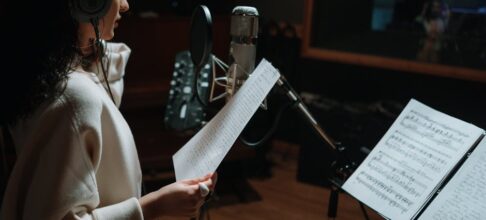
It’s 2017. Sarajevo’s buzzing with film festival energy and the old cobblestones outside Kino Meeting Point are slick from a summer downpour. Inside, Croatian director Ana’s new drama is screening—except tonight, the voice in the headphones isn’t hers. It’s a familiar Sarajevo baritone, translating heartbreak and humor into Bosnian for an audience that demands both nuance and authenticity. The crowd laughs at the right moments; you can feel the relief in the translation booth.
This is not the start of some sweeping regional trend—more like a recurring paradox for Bosnian voice over work: it must be invisible yet perfect, local yet international.
Local Voices in Global Streams
The reality? In 2023, less than one percent of Netflix's Balkan content was dubbed or voiced over locally—most was imported in Serbian or Croatian (the platforms call these “regional adaptations”). Yet when Turkish soap operas air on OBN or Hayat TV in Bosnia, their Bosnian voiceover teams are paid by-the-episode to painstakingly strip out foreign inflections. These jobs are coveted but rare: a typical team at Studio Prizma might juggle three telenovelas per season, splitting work between two full-time engineers and five actors. Turnaround can be brutal—sometimes less than 48 hours per episode.
But international platforms have rarely invested directly in native Bosnian VO pipelines. Instead, mid-tier localization agencies like Zagreb-based Sinkronizacija.hr often subcontract to studios across ex-Yugoslavia. A common scenario: a German game developer contracts Lionbridge Poland for a European rollout; Lionbridge outsources Balkan languages to an agency in Slovenia; then that agency calls up Prizma when they hit Bosnian.
The Post-War Media Patchwork
Bosnia’s media ecosystem never rebuilt its infrastructure at scale after the war ended in 1995—the country has just two major post facilities with multi-voice recording capability (Prizma Sarajevo and Artikulacije Tuzla). Most other work happens piecemeal: freelance actors recording from home booths with borrowed Rode NT1s and Audient interfaces. The patchwork persists because demand remains modest compared to Croatia or Serbia (where national broadcasters commission hundreds of hours yearly).
The result? Many independent filmmakers still opt for subtitling only—a practical choice echoed by Damir Ibrahimović, veteran producer at Deblokada Film:
> "Even now, most of our festival submissions stay subtitled. For actual dubbing into Bosnian we’d need double or triple our usual budget—and that simply isn’t available unless we have co-production money from France or Germany."
When Scale Meets Identity: Advertising & Gaming Workflows
Advertising tells a different story. In real campaigns observed by Vienna-based media agency Jung von Matt/Donau targeting ex-Yu diaspora audiences across Austria and Germany, Bosnian voice work gets top billing alongside Serbian and Croatian—because minute accent differences drive click-through rates up to 18% higher among targeted segments.
A common workflow: scripts are written centrally (often Berlin), recorded simultaneously in all three languages using actors sourced via online casting platforms like Bodalgo.com—but post-production QA happens back home in Sarajevo or Banja Luka. One campaign for Red Bull’s Balkan market launch cycled through four male voices before settling on a singer from Zenica who could deliver both urban youth slang and formal register convincingly enough for client sign-off.
In gaming? It’s still niche but growing—Unity-powered indie games translated by small Bosnian teams have started appearing on Steam since around 2019. One example: an educational VR project based in Mostar sourced all child voices locally through drama schools due to privacy laws about exporting underage recordings across EU borders.
AI vs Human: An Uneven Contest So Far
What about synthetic voices? Unlike Spanish or French markets where AI tools like Respeecher or Replica Studios are replacing bulk e-learning reads at scale (with up to 40% cost savings reported by Parisian studio Lingua Vox), Bosnia lags behind on this curve.
Why? Lack of high-quality datasets is part of it—but so is cultural resistance among local producers who recall decades of forced linguistic standardization during Yugoslav times. As one engineer at Artikulacije Tuzla told me last year:
> "We tried using ElevenLabs’ beta model for ADR on a documentary pilot... But even locals picked up tiny mismatches instantly—it sounded more like Belgrade than Brčko!"
Translation: for emotionally loaded material (newsreels, children’s animation), only human-tuned intonation passes muster with Bosnian audiences attuned to micro-regional differences.
Pricing Realities and Budget Squeeze
Rates remain stubbornly low by West European standards—a broadcast-ready spot typically pays €100–€150 per finished minute at top studios; freelancers will often accept half that if remote delivery is allowed (a practice increasingly common since COVID-19 lockdowns). By contrast, Polish or Czech studios regularly quote €250–€400/minute for comparable quality.
This cost pressure helps explain why so many projects favor hybrid workflows: initial recording done locally but final mixing/QC completed abroad where budgets stretch further thanks to larger facilities and automation tools.
For example, Austrian TV films dubbed into Bosnian routinely pass through Prague-based SDI Media before returning for final review by native speakers back home—a tangled web that keeps costs predictable but fragments creative control.
A Historical Note: The Era of Voiceover Narration
Go back twenty years—to early 2000s cable TV—and you’ll find another oddity unique to post-socialist countries: “lector” narration over original dialogue instead of full-cast dubbing (still standard today on Discovery Channel Bosnia). This minimalist style persists because it slashes production time down to mere days per feature film—but also because older viewers grew accustomed during leaner times when every second counted against razor-thin budgets.
Netflix briefly experimented with lector tracks during its first year operating regionally (2016) but dropped them after analytics showed low engagement among younger audiences raised on YouTube-style direct address.
Talent Pools & Training Gaps
Most new voice talent emerges organically—from theater troupes or radio stations rather than formal training programs—which means there’s little pipeline planning compared to Croatia’s HRT-backed workshops or Serbia’s long-running acting conservatories.
Voice directors complain privately about inconsistent availability (“We lose two good narrators every September—they go back teaching school”) yet also praise how quickly untrained talent adapts when coached intensively over short projects—a necessity given most jobs run less than three weeks start-to-finish including revisions.
Where Next?
Is there real growth ahead? Maybe—but only if streaming giants decide that micro-localization matters enough to invest directly rather than outsourcing twice removed via pan-Balkan agencies. Until then, expect more cross-border patchwork—and plenty of late-night sessions splicing together lines from five different apartments across Sarajevo and Mostar while thunder rolls outside.