The Danish Dilemma: Small Language, Big Expectations
Danish voice over (VO) sits awkwardly at the crossroads between global content pipelines and fiercely local demands. Unlike German or French—or even Swedish—Danish remains a relatively niche language for international media. According to figures from Nordisk Film Distribution, only around 5% of major Hollywood productions are dubbed into Danish each year; most are subtitled instead. But when it comes to children’s animation or gaming platforms like Nintendo Switch, full Danish dubbing isn’t just preferred—it’s contractually required by Scandinavian distributors.
This tension means VO professionals here must be versatile and agile. "For every big Disney project there are twenty smaller gigs—IVR systems, museum guides, food delivery apps," explains Mikkel Toft Jensen, who manages Copenhagen-based Sound Bureau Studio. Their team rarely records blockbuster titles but handles weekly requests for short-form content from both domestic brands (like Arla Foods) and international corporations targeting Nordic markets.
Workflow Realities: From Script to Session in 48 Hours
The turnaround time is brutal by most standards—especially compared to larger markets where longer lead times are possible. A common pattern among agencies like Admix Global (with production teams spanning Stockholm and Aarhus) involves receiving English-language scripts on Monday morning and delivering polished Danish narration before Wednesday lunch.
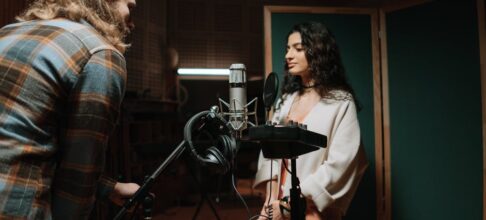
The workflow? First pass translation by an in-house linguist familiar with industry jargon—sometimes using AI-assisted tools such as DeepL Pro to accelerate draft versions. Human editors then review tone and idiom for native authenticity (as literal translation often sounds wooden). Only after that do voice actors step into the booth—a process that typically lasts less than two hours per session. Editing engineers then clean up breaths and plosives using iZotope RX8 or similar suites before final QA approval.
One recurring challenge lies in matching pace: "Danish tends to use fewer syllables per second than English," notes voice director Anne-Marie Salomon at Egmont Studios—which complicates timing for synced video content originally produced abroad. Occasionally this leads to rushed retakes or subtle script rewrites on-the-fly during sessions.
The Streaming Tsunami—and What It Didn’t Bring
When Netflix expanded its Nordic operations around 2016, many Danish VOs braced for a flood of high-profile dubbing work akin to what happened in Spain or Poland. Reality proved different: while some original series were fully dubbed ("The Rain," notably), most imported dramas remained subtitled due to audience preference and cost constraints.
Still, streaming did nudge up demand for specific genres—notably kids’ shows (think “Carmen Sandiego” or “Hilda”). A mid-sized studio like SDI Media Denmark saw its annual children’s animation output nearly double between 2017 and 2021; yet adult-targeted projects plateaued early on. Market insiders estimate that only about 30% of all streamed content aimed at under-18s now gets dubbed into Danish—a significant boost from pre-2010 levels but nowhere near the saturation seen elsewhere.
Gaming & App Localization: Where Nuance Reigns Supreme
A more consistent driver has been interactive media. Case in point: Kiloo Games—a well-known developer from Aarhus behind titles like “Subway Surfers”—regularly commissions nuanced character voices not just for main dialogue but also micro-interactions (“ouch!”, “let’s go!”). A typical mobile game might require hundreds of brief audio assets per language.
European localization vendors such as Synthesis Group have responded by assembling rosters of native-speaking talent specializing in everything from game trailers to dynamic app prompts. In these contexts brevity matters as much as emotional tone; actors frequently record dozens of takes so directors can select just the right blend of casualness and clarity demanded by UX designers targeting six-year-olds—or sixty-year-olds—across five countries simultaneously.
Old-School Commercials vs Digital Micro-content: Changing Tides Since 2009
If you rewind to the late 2000s, most Danish VO revenue flowed through traditional TV spots and radio ads booked via agencies like Bates Y&R Copenhagen or Mindshare Denmark. Today those big-budget campaigns still exist—but they’re outnumbered almost ten-to-one by digital micro-content: Instagram bumpers for LEGO Group launches; Facebook explainers narrated for Danske Bank; TikTok stings ordered last-minute by fashion chain Bestseller.
This fragmentation means many seasoned VOs now maintain home studios equipped with Neumann TLM 103 mics and Audient preamps—partly out of necessity since pandemic-era workflows cemented remote recording as standard practice post-2020.
Case Study Snapshot: Skuespillerhuset’s Evolving Model
Consider Skuespillerhuset—a boutique agency based near Kongens Nytorv—which pivoted hard toward remote work during Denmark’s initial COVID lockdowns. By June 2020 nearly all their contracted talent was set up with Source Connect-enabled rigs at home; management coordinated daily casting calls via Slack channels organized around project urgency rather than client size.
A recent campaign they handled involved rebranding efforts for Bang & Olufsen’s smart speakers sold across EMEA markets—a package requiring five separate regional narrations delivered within four days, plus several rounds of feedback implemented overnight due to timezone differences with London-based creative leads. The result? More flexibility—but also more pressure: “We used to meet everyone face-to-face,” notes agent Maria Friis Lassen, “now we’re chasing WAV files across three continents.”
Is AI Coming For The Booth?
Some disruption looms large—and uncomfortably close—for mid-tier jobs especially IVR prompts or simple e-learning modules increasingly fulfilled by text-to-speech platforms like Respeecher or Amazon Polly (both adopted experimentally by local post-houses since late 2022).
Notably though, premium clients remain wary: one insurance campaign managed by Adapt Agency trialled AI-generated narration but reverted quickly after negative internal feedback on vocal warmth (“synthetic voices still miss subtle humor cues,” said their creative director). Still—the tech advances rapidly enough that many freelancers hedge bets by offering both live reads and supervised AI generation services depending on budget constraints.
Cultural Quirks & Hidden Landmines
Unlike Norwegian—with its multiple official forms—or Finnish—with its ultra-localized slang—Danish presents fewer dialect hurdles but carries potent cultural landmines buried beneath seemingly neutral phrasing. Experienced VOs recall cases where minor tonal missteps caused controversy; an infamous example being a government safety PSA withdrawn in 2014 after complaints about perceived condescension in narrator delivery style ("for os er det ikke bare teknik – det er følelser," quipped one affected artist).
Commercial clients routinely run test screenings with small focus groups before sign-off—a safeguard unusual outside Scandinavia but considered essential here given Danes’ legendary sensitivity to forced cheerfulness or perceived insincerity on airwaves.
Looking Forward—Or Just Sideways?
If there’s a lesson threading through recent years it may simply be adaptability trumps scale when your market hovers below six million speakers globally—and when so much work flows invisibly from afar via cloud-based pipelines stretching from Amsterdam to Singapore back to Odense.
What keeps this world running isn’t always obvious talent—or cutting-edge tech—but relentless attention paid during those silent afternoons beneath city streets where someone fine-tunes thirty seconds of audio destined never even to reach her own family’s TV set.