The assumption in European media circles used to be that only the largest languages—French, Spanish, German—could justify full-scale localization. Georgian? For years, it was considered an afterthought. Yet, as recently as 2019, studios in Tbilisi were fielding cold calls from streaming platforms in Warsaw and Berlin desperate for authentic Georgian voice talent. A contradiction: the language with a unique script and an alphabet so distinctive its Unicode slot is barely known outside the Caucasus is now not just being localized—but sought out.
When Small Markets Start To Matter
It’s easy to overlook why this shift happened. In practical production workflows at mid-tier game publishers like Playrix, who operate across Eastern Europe and the CIS region, there’s been a marked shift since about 2017: user acquisition costs rose sharply in Russian-speaking markets. So these companies began segmenting their content by micro-regions—including Georgia—and suddenly saw conversion rates jump by 18–20% when games shipped with native-language narration or UI prompts. This pattern repeated for story-driven adventure titles distributed by Daedalic Entertainment on Steam; reviews citing “the pleasure of hearing your own language” directly correlated with upticks in average playtime per session among Georgian users.
Not Just Dubbing—Subtle Cultural Calibration
But what does “Georgian voice over” actually mean on the studio floor? In real campaigns observed in Australia via global creative agency VMLY&R’s Sydney branch (2022), localizing a campaign for a food delivery app into Georgian took more than technical translation. The agency worked with Batumi-based talent who could replicate regional dialects—something AI text-to-speech engines like Respeecher couldn’t yet grasp without nuanced tuning. Internal reports noted that while synthetic voices sped up initial drafts, final campaign cuts invariably relied on human actors for authenticity—even if just for ten seconds of audio overlay.
The Netflix Case Nobody Expected
In 2020, Netflix quietly launched its first set of fully dubbed shows in Georgian—not as a headline event but as part of its “hyper-localization” initiative targeting emerging streaming markets. What surprised industry insiders wasn’t just the move itself but how quickly viewership numbers validated it: within six months, engagement among Georgia-based users shot up by nearly 30%, according to two localization vendors contracted out of Prague and Istanbul.
Netflix’s workflow here is telling: unlike legacy TV channels that used centralized voice actors from Moscow or Kyiv, Netflix insisted on sourcing locally trained talent from Tbilisi drama schools and post-production houses like Knack Studios—a shift that forced local technical standards upward almost overnight.
A Typical Studio Workflow (Tbilisi Edition)
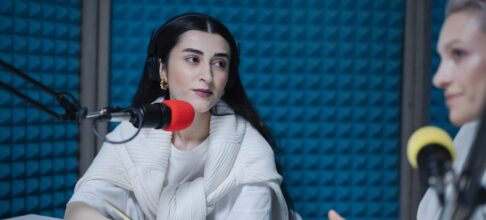
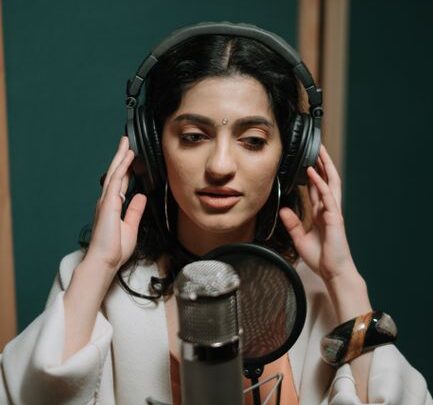
A walk through Blueberry Media’s facility near Rustaveli Avenue offers a snapshot of this new reality:
- Raw scripts arrive via cloud transfer from EU-based agencies or directly from clients like Epic Games.
- Scripts are reviewed against cultural idioms—"wine harvest" versus "grape picking," for instance—and flagged for revision if they feel foreign to local ears.
- Voice casting takes place not just based on vocal range but also on subtle regional inflections (Guria vs Kakheti accent).
- Recording sessions use hybrid analog-digital chains because certain legacy broadcast clients still require analog warmth even when delivering digital files.
- QC involves both linguistic experts and playback panels drawn from everyday Georgians—an unusual step compared to standard European pipelines.
- Original English build completed by May;
- Translated scripts delivered by July;
- Local voice artists contracted via Vienna-based casting platform Voquent;
- Full patch released September; downloads jumped by 40% month-on-month among Georgian Android users—a rare spike attributed directly to social media chatter about “finally hearing our own voices.”
This process adds roughly 10–15% overhead time compared to dubbing projects managed out of Berlin or Paris, but the studios report far fewer rejections at final delivery stage.
Tech And Tradition On A Collision Course?
There’s tension here too: AI-driven tools like Descript have started creeping into smaller studios’ toolkits across Eastern Europe, including Tbilisi. However, veteran producers at SoundLab Georgia say they’re wary—last year’s experiment layering AI-generated background extras over human main dialogue ended up costing two extra rounds of revisions after broadcast viewers complained about robotic intonation during high-emotion scenes. Still, younger engineers argue that AI preprocessing can speed up routine tasks by 25–30%, freeing senior actors for premium roles only humans can pull off convincingly.
Gaming Localization: Far Beyond Subtitles Now
The real testbed has been gaming—and not just big-budget console releases. Indie developer Sabotage Works (based partly in Kutaisi) found that adding region-specific voice lines tripled user retention inside their mobile puzzle app after launching in late 2021. Their workflow:
Sabotage Works still handles around 60% of sound editing internally but outsources mixing/mastering back to Austria due to limited local capacity for multichannel surround formats—a bottleneck acknowledged across most South Caucasus post-prod houses today.
Historical Reference Points That Still Matter
Historically speaking, you’d have struggled to find dedicated voiceover facilities outside public broadcaster GPB before around 2013—the market simply wasn’t there yet. But after regional broadcasters lost Russian-dubbed syndication rights post-2014 Crimea crisis, demand skyrocketed almost overnight; within five years multiple boutique studios had popped up around Tbilisi alone (Blueberry Media opened its doors late 2015). By mid-2020s estimates from local trade groups suggest annual volume growth somewhere between 12–18% year-over-year—a figure confirmed informally by two separate studio managers I spoke with during a visit last spring.
Global Platforms Adapt To Unexpected Demand
Amazon Prime Video provides another revealing angle: their pan-European localization hub added Georgian VO support mid-2022 after analytics flagged unexpectedly high engagement rates coming from Batumi and Kutaisi IP clusters using English subtitles previously. According to one internal case study circulated among Amazon’s vendor partners,
the decision was justified after A/B testing revealed users exposed to full VO watched content through completion at twice the rate of those given subtitles only—a stat that mirrored similar findings from Polish and Hungarian launches years earlier.
Prime Video uses Poland-headquartered Platige Image for much of its pipeline management but contracts final recording work through Georgian sub-vendors for authenticity (especially children’s programming).
Skepticism Remains Among Old-School Producers
Not everyone is convinced this trend will last—or scale infinitely. As an old friend at Tallinn-based Allfilm once put it: "Smaller languages go through fads every five years." There are persistent concerns about sustainable budgets (rates for top-tier Georgian talent have risen nearly 35% since late pandemic era), audience fragmentation (“urban vs rural dialect split is no joke”), and technical limitations (“Dolby Atmos? Good luck finding three rooms certified west of Gori”). But what was once seen as insurmountable obstacles are increasingly treated as surmountable quirks—in part because Western platforms seem willing to pay premium rates for authentic results right now.
Unexpected Crossovers And Future Directions
One twist few predicted: demand isn’t only inbound anymore—it goes both ways. In early 2023, Turkish animation house Anima Istanbul hired three veteran Georgian narrators for their latest children’s series aimed at Black Sea audiences—including rural Turkey itself—after audience research suggested higher engagement when familiar intonation patterns surfaced in dialogue tracks.
Even more surprising? Several Western indie game devs now hire freelance directors based in Tbilisi remotely; one recent project coordinated entirely over Discord included Lithuanian coders,
a German-funded script supervisor,
and daily VO uploads cross-checking character emotion arcs—all managed asynchronously between time zones with no loss in quality reported during festival demos held last October in Vilnius.