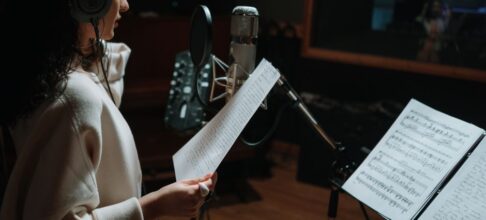
There are days when the waiting room at a Yerevan voice studio is silent, headphones hanging limp, empty water bottles rolling on the floor. Other times, you have three actors pacing, two clients arguing over a script revision (“He’d never say it like that!”), and someone from post-production waving a USB stick in the air.
That’s Armenian voice over—a world that’s equal parts tradition and turbulence. And now, with voices being replaced by AI scripts and platforms promising cheap dubs overnight, nobody really knows where the next contract will come from or what skills will even be marketable tomorrow.
The Old School Booths: 1990s to Mid-2010s
It wasn’t so long ago—think late 1990s through to about 2015—that almost every dubbed documentary or dubbed cartoon in Armenia was recorded in one of a handful of central Yerevan studios.
A typical workflow: producers from Public TV (H1) would bring in scripts hand-marked for pauses and emphasis. Directors—often doubling as editors—would line up local actors like Karen Janibekyan or Varduhi Varderesyan for marathon sessions lasting six hours. The software? Sometimes just Audacity or Cubase running on an old PC.
Payment was strictly per session; union rates were rare. Most projects were church-funded films or Soviet blockbusters re-released for Armenian television. By 2012, several small studios (like VoxBox and Dubbing.am) started shifting work towards ad campaigns and international brand promos. But workflows remained stubbornly analog: physical mixing boards, paper scripts, endless retakes because "the feeling just isn't there yet."
A Case from Warsaw: Localization Gets Smarter
I sat in on a pipeline meeting at a localization agency in Warsaw back in 2019—the same year Netflix started scaling up Eastern European dubbing for its regional launches.
The team walked through how Polish-language voice overs were organized using cloud-based tools like ZOOdubs and proprietary scheduling apps; all scripts shared via Google Docs, actor calendars synced automatically. When Armenian came up as a possible future target language (Netflix did briefly experiment with subtitled content into Armenian for kids’ programming), everyone agreed the lack of scalable local studio infrastructure was an obvious risk factor.
But there was also respect for “that old-school flavor” that Armenian voice talents brought to Soviet-era cartoons—a reminder that some markets still valued nuance over speed.
Script-to-Screen Realities: Today’s Fragmented Workflows
In modern-day Yerevan, you can find three parallel approaches to voice over:
- Studio-based dubbing for TV/radio spots (VoxBox still books out weeks ahead)
- Freelancer-driven e-learning narration via platforms like Upwork or Voquent (with many working from home setups)
- Experimentation with text-to-speech (TTS), mostly for explainer videos destined for diaspora audiences on YouTube or Facebook Watch.
- NGOs producing rapid-response PSAs sometimes use TTS as placeholders during edit cycles but replace them before final delivery,
- E-learning companies selling courses to the diaspora lean heavily on semi-manual solutions—using TTS only for modules where emotional tone isn’t crucial,
- Ad agencies representing Western brands continue to book live talent due to ongoing skepticism about TTS capturing cultural context (“You cannot fake ‘tsavt tanem’,” as one director put it).
The divide between them? Price and time.
Clients commissioning NGO awareness videos routinely ask if they can “just use AI” instead of paying $70–$100/hour for a seasoned actor with theater credentials. Yet major brands—think Coca-Cola Armenia's New Year campaign—still demand full-cast recordings with directed sessions and real-time feedback.
A recent case: An LA-based indie game developer wanted their mobile RPG localized into ten languages—including Armenian—for rollout across Georgia, Iran, and Russia-facing platforms. After querying three local studios, they opted for remote VO talent found through Voices.com paired with Tbilisi-based post-production engineers who could deliver under tight deadlines using mostly digital workflows.
Tech Creep: Where AI Actually Fits (and Fails)
For every headline about synthetic voices replacing humans worldwide, the reality is less conclusive inside Armenia’s borders—as of 2024 anyway. Current-gen TTS engines like Respeecher or ElevenLabs offer decent results in Russian, Turkish, even Georgian; but native Armenian output is still stilted.
In practice:
One interesting workaround spotted at an Australian media agency specializing in multicultural markets: They rely on bilingual Armenians living in Melbourne to record fast-turnaround lines using high-grade home setups—and then run these files through audio cleaning software before final mixdown. This hybrid model is becoming common among boutique agencies needing both authenticity and agility across multiple dialects.
Who Decides What Matters Next?
It’s not only about tech—it’s about trust. In most real-life projects I’ve seen this year (from pan-European insurance ads to small-scale cartoon pilots), directors spend more time worrying about *who* delivers the message than *how* it gets delivered.
Voice casting decisions are increasingly informed by social media presence (“Can she promote this spot on her Instagram?”) rather than just vocal range alone—a sharp contrast to pre-Instagram days when nobody cared what an actor looked like off-mic.
Meanwhile, international buyers evaluating dubbed content often ask whether translations feel “authentic”—even if they don’t understand a word of Armenian themselves!
Is it fair? Maybe not—but it’s shaping budgets nonetheless.
Numbers That Matter—and Those That Don’t Anymore
Industry insiders estimate that fewer than 20 dedicated voice-over actors currently handle over half of all commercial audio work produced within Armenia—a number roughly unchanged since the early 2000s despite population shifts abroad.
Remote freelance bookings have grown sharply since 2020; one mid-tier Yerevan studio cited nearly double the number of requests originating from Berlin and Paris compared to just five years ago.
Conversely, total spend per project has shrunk—the average radio spot pays about 25% less today than it did in 2018 according to several regular contributors interviewed last spring.
Much of this cost pressure comes from low-budget YouTube producers operating out of Germany or France who expect quick turnarounds at Fiverr-level rates but still want believable emotion and cultural cues embedded into each line read.